You Are Here — Or You Were, Until You Forgot How to Know
There's a particular kind of confidence that used to exist in America. It wasn't flashy. You wouldn't have noticed it unless it was gone. It was the confidence of knowing, without checking anything, roughly where you were.
A person who'd lived in Chicago for a decade knew which way the lake was. They knew that the street numbers climbed as you moved north and west from the Loop. They knew that if they were on Wabash and needed to get to Halsted, they were heading west, and it was going to take about this long, and there was a shortcut through the neighborhood with the good taco place. They carried the city inside them, imperfectly but usefully, the way you carry a language.
That knowledge didn't come from a class. It came from years of being wrong — of taking the wrong exit, of ending up somewhere unexpected, of slowly, through repetition and error, building a spatial model of a place that lived in the brain.
GPS didn't just change how we navigate. It changed what we know.
The Paper Architecture of the American Road
For most of the twentieth century, navigating an unfamiliar American city required genuine preparation. You consulted a paper map — the kind that folded into itself in a way that never quite worked in reverse. You traced a route with your finger before you left, memorizing the turns. You wrote key directions on a piece of paper and put it on the passenger seat.
If you got lost, you got lost. You pulled into a gas station. You asked a stranger. You looked at the sun to figure out which direction you were facing. You developed, through this process, a working relationship with physical space that was active and embodied.
Rand McNally road atlases were a fixture of every American glove compartment. AAA's TripTik — a custom-printed flip book of maps that members could request before long road trips — was a service people genuinely valued. Planning a route was a skill. Executing it was another skill. And the combination of both produced people who were genuinely competent in physical space.
Families drove cross-country without anyone knowing exactly where they were at every moment. Salespeople navigated territories of dozens of towns by memory and habit. Delivery drivers learned their districts the way surgeons learn anatomy — through repetition until it was automatic.
What the Brain Was Building
The hippocampus is the brain's navigation center. It's also, not coincidentally, central to memory formation. When you navigate using your own spatial reasoning — building what neuroscientists call a "cognitive map" — you're exercising a structure that does double duty in your mental life.
A famous study of London taxi drivers, conducted by neuroscientist Eleanor Maguire at University College London, found that cabbies who had spent years memorizing the city's famously complex street network had measurably larger hippocampi than the general population. The brain, in other words, had physically grown to accommodate the navigational demands placed on it.
More recent research has begun examining what happens when those demands disappear. A 2020 study published in Nature Communications found that people who rely on GPS show reduced activity in the hippocampus during navigation compared to those using traditional wayfinding methods. The brain, given a shortcut, takes it — and the structure that wasn't needed doesn't get the same workout.
This doesn't mean GPS is making us stupid. But it does mean that a cognitive capacity we developed over thousands of years of navigating the physical world is being used far less than it used to be — and that has consequences we're only beginning to understand.
The Pleasures of Getting Pleasantly Lost
Here's something the GPS era has mostly eliminated: the accidental discovery.
Anyone who drove around American cities before the smartphone era has a version of this story. You took a wrong turn, ended up in a neighborhood you'd never visited, found a record store or a diner or a park that became a regular destination. You discovered something because you didn't know exactly where you were.
Urban researchers have a term for this: serendipitous urbanism. The city as a space of unexpected encounter. Jane Jacobs wrote about it in The Death and Life of Great American Cities — the idea that the richness of urban life emerges from the unplanned, the accidental, the collision of people and places that nobody scheduled.
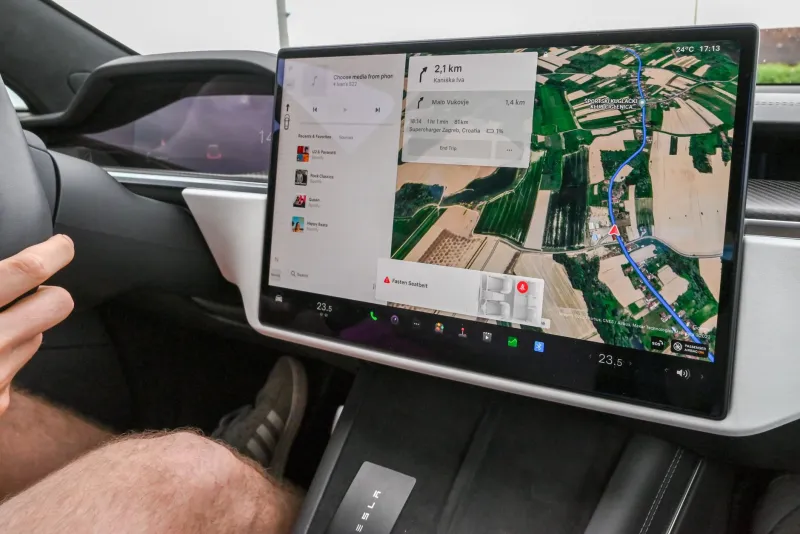
The blue dot on the map is extraordinarily efficient. It gets you where you're going by the fastest possible route, which usually means the most familiar roads, the most direct path, the least amount of deviation. It optimizes for speed. And in doing so, it systematically removes the conditions under which accidental discovery occurs.
The Trade We Made
It would be easy to frame this as a straightforward loss — technology taking something human and replacing it with something mechanical. But that's not quite right.
GPS has genuinely democratized navigation. People who might have been intimidated by unfamiliar cities can now move through them with confidence. Tourists experience more of a place in less time. Delivery drivers and rideshare operators work with an efficiency that simply wasn't possible before. For people with certain cognitive or anxiety-related conditions, turn-by-turn navigation has been quietly transformative.
And the old system had real costs too. Wrong turns wasted time. Getting lost in the wrong neighborhood could be genuinely dangerous. The spatial competence that came from paper maps was not equally distributed — it tended to favor people who drove a lot, who had access to good maps, who lived in places with legible street grids.
What we've traded is something subtler: the slow, effortful, rewarding process of learning a place. Of earning a city through years of wrong turns until it finally, gradually, becomes yours.
Finding Your Way Back
Some people are trying to reclaim this deliberately. Urban walkers who leave their phones in their pockets. Road trippers who buy paper atlases for the drive. Parents who give their kids directions without a device and let them figure it out.
It feels almost countercultural now — the act of not knowing exactly where you are and being okay with that. Of trusting the brain to build its own map, slowly, imperfectly, the way it always used to.
The blue dot will always be there when you need it. The question is whether we need it quite as much as we think — and what the brain might do with the space if we let it wander.