Hello, Central: The Woman Who Connected America — and Heard Everything

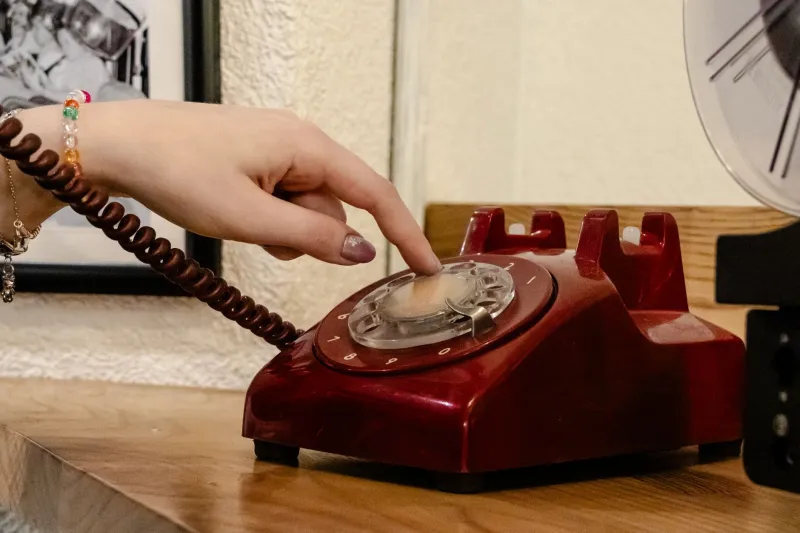
Photo by Photo by Museums Victoria on Unsplash on Unsplash
In a small town in Kansas in 1935, if you wanted to call the doctor, you picked up the phone and told the operator. She'd connect you, of course. But she might also mention that she'd just put through a call from the pharmacy, and did you know they'd gotten a new shipment of that cough syrup your youngest had been needing? She knew your youngest had been sick because she'd connected your call to the school nurse two days earlier. She knew about the pharmacy because she'd connected that call too.
This was not considered unusual. This was just how the phone worked.
The Original Network Nodes
The telephone switchboard operator was, for the first seven decades of American telephone history, the literal infrastructure of voice communication. Every call — every single one — passed through human hands. A caller would lift the receiver, and within seconds a voice would answer: "Number, please?" The operator would then physically plug a cable into the correct jack on a massive board of sockets and connections, completing the circuit that allowed two people to talk.
At the system's peak, there were roughly 350,000 telephone operators working in the United States. The overwhelming majority were women — a deliberate hiring choice that replaced the teenage boys who'd handled the job in the 1870s and 80s, after customers complained constantly about their rudeness and pranks. Women, telephone company managers decided, would be more patient, more pleasant, and more professional. They were right, and they built an entire industry around that calculation.
These women worked in large central offices — the "central" that callers addressed when they said "hello, central" — surrounded by the clicking and buzzing of hundreds of connections being made and broken simultaneously. The work was fast, demanding, and strangely intimate. An operator in a rural exchange might handle every call that passed through a community of a few thousand people. She knew who called the bootlegger. She knew when the banker's wife started calling a number that wasn't her husband's office. She knew when someone called the hospital at 2 a.m.
The Accidental Confidantes
The social position this created was genuinely peculiar. Operators were expected to maintain strict professional discretion — the telephone companies had rules about this — and most did. But the knowledge was unavoidable. In small-town America especially, the operator was a kind of involuntary keeper of community secrets, an accidental archivist of who was talking to whom.
This made operators simultaneously trusted and slightly feared. People knew their calls weren't truly private. There was a well-understood etiquette around it: you didn't say anything on the phone you wouldn't say in front of the operator, because in a meaningful sense, you were saying it in front of her. Communication was inherently semi-public in a way that shaped what people chose to communicate.
But there was another side to this. Operators became genuine resources for their communities. Ask any history of the American telephone system and you'll find accounts of operators who summoned emergency help before formal 911 systems existed, who talked frightened callers through medical crises, who located missing family members through their encyclopedic knowledge of local connections. In some communities, particularly rural ones, the operator was a de facto information service — she knew the train schedule, the doctor's hours, and whether the road to the next county was passable after last night's rain.
This was an accidental form of social infrastructure, built into the technology not by design but by necessity.
The Long Automation
The operator's displacement began in 1919, when the Bell System started introducing automatic switching equipment that could route calls without human intervention. The process was gradual — rural and small-town exchanges held on to human operators far longer than urban ones — but the direction was always the same. By the 1970s, most routine domestic calls were fully automated. By the 1990s, operator assistance was a specialty service, not a default.
 Photo: Bell System, via brandingstyleguides.com
The long-distance operator, that voice who used to help you place a call to your brother in Seattle, became first a novelty and then a memory. The local operator who knew your family vanished entirely. What replaced her was a system of extraordinary technical sophistication and zero human presence.
Today, American phone calls are routed through automated switching systems of almost incomprehensible complexity. Encrypted messaging apps ensure that not even the companies running the infrastructure can read what you're sending. End-to-end encryption, algorithmic call routing, and voice-over-internet technology have created a communications system of genuine privacy — the kind of privacy that was simply impossible when every call had a human intermediary.
The Privacy Paradox
Here's the thing worth sitting with: we got exactly what we wanted. Nobody wanted their calls overheard. Nobody enjoyed knowing that the operator could hear their business. The push toward automated, private, unmonitored communication was a rational response to a genuine limitation of the old system.
But something left with the operators that we didn't account for.
The incidental human contact that operator systems created — the "hello, central" that began every call, the brief exchange with a voice that actually knew you — was a small but real form of social connection woven into the daily infrastructure of American life. Millions of small-town Americans spoke to their telephone operator more regularly than they spoke to most of their neighbors.
Now Americans communicate more than ever — more messages, more calls, more channels, more volume — in conditions of near-perfect isolation. The messages route themselves. Nobody witnesses them. Nobody knows. We've traded the accidental community of the switchboard for the engineered privacy of the encrypted channel, and gained something genuinely valuable while quietly losing something we never thought to name.
The operator knew your business. She also, in a way that's hard to replicate algorithmically, knew you were there.