Ring Twice, Wait Months: The Era When America's Phone Lines Were Always Busy
Ring Twice, Wait Months: The Era When America's Phone Lines Were Always Busy
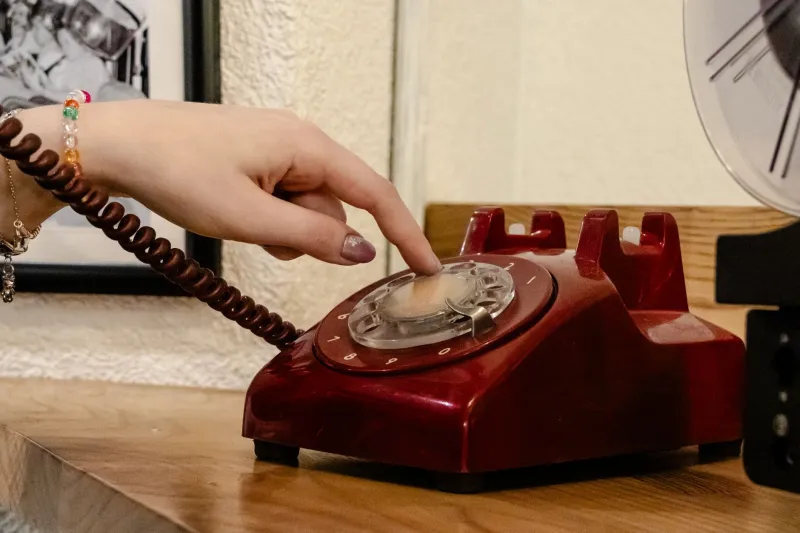
Picture this: you pick up the phone to call your sister across town, and instead of a ringtone, you hear that flat, rhythmic drone — the busy signal. You hang up. You wait five minutes. You try again. Busy. This wasn't a bad day. This was Tuesday.
For millions of Americans in the mid-20th century, the telephone was simultaneously one of the most transformative tools in their lives and one of the most reliably frustrating. The infrastructure holding it all together was permanently overwhelmed, perpetually patched, and genuinely incapable of keeping up with demand. And yet, somehow, people managed — with patience, creativity, and a relationship to communication that barely resembles anything we'd recognize today.
The Waiting List Nobody Talks About
Here's a detail that tends to shock modern readers: in many parts of postwar America, you couldn't simply call the phone company and expect a line installed within the week. In dense urban neighborhoods and rapidly growing suburbs alike, new telephone service came with a waiting list — sometimes stretching six months to a year or longer.
The Bell System, which dominated American telecommunications for most of the 20th century, was perpetually playing catch-up. World War II had diverted copper, equipment, and labor away from civilian infrastructure. When the war ended and the suburbs exploded, millions of families wanted phones simultaneously. The network simply wasn't ready.
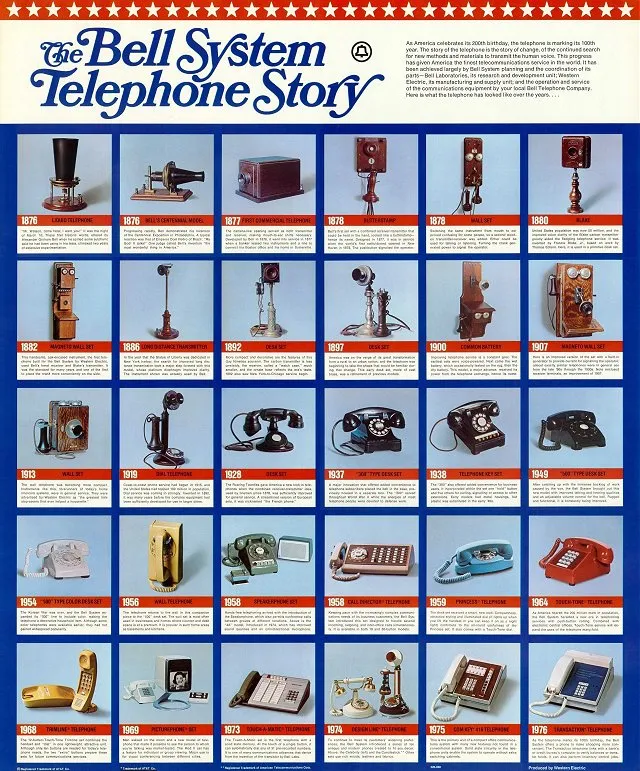 Photo: Bell System, via memorial.bellsystem.com
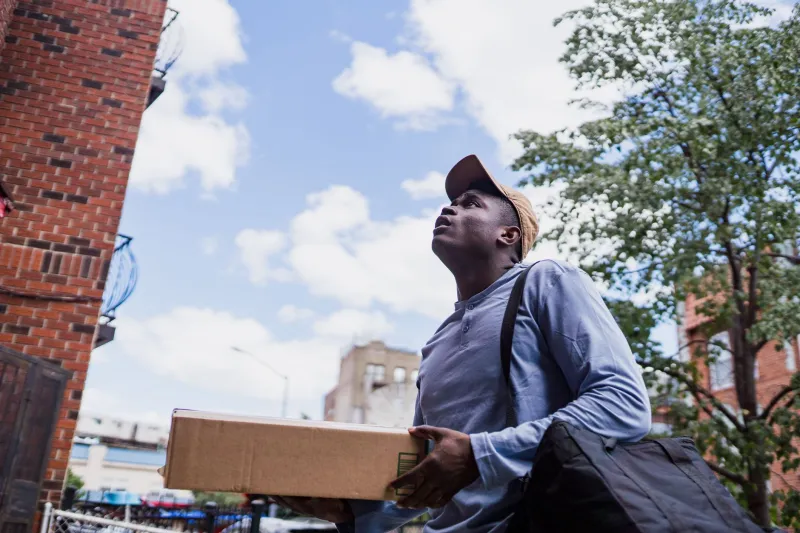
Some families waited so long that they made do with neighbors' phones, walking next door to make calls or ask to receive messages. It was a workaround that sounds almost comically inconvenient now, but at the time it was just the reality of living in a world where communication infrastructure was a scarce resource.
The Party Line: Sharing Your Conversations With Strangers
For those who did get phone service, the experience often came with a catch: the party line. Rather than having a dedicated private connection, many households — particularly in rural areas and smaller towns — shared a single telephone line with anywhere from two to ten other families.
The mechanics were simple and the privacy implications were obvious. Each household had a distinct ring pattern. Two short rings might be yours; one long and one short might be your neighbor's. You learned quickly to recognize what wasn't meant for you. The polite thing was to wait. Not everyone was polite.
Eavesdropping on party lines became something of an informal American pastime — equal parts gossip network and community bulletin board. Neighbors overheard neighbors. Feuds started. Romances were accidentally exposed. The telephone, sold as a tool of private communication, was in practice a semi-public forum for anyone on your shared line who happened to pick up at the right moment.
By the 1960s, private lines were becoming more common in cities, but party lines persisted in rural America well into the 1980s. The last rural party lines in the United States weren't retired until the early 2000s.
When Long Distance Was a Budget Item
Beyond the infrastructure constraints, there was the matter of cost. Long-distance calling in America wasn't just expensive — it was event-level expensive. A three-minute call from New York to Los Angeles in 1950 cost the equivalent of roughly $25 in today's money. Calling a relative in another state wasn't something you did casually. It was something you planned, budgeted for, and kept brief.
 Photo: Los Angeles, via upload.wikimedia.org
 Photo: New York, via www.surfingtheplanet.com
Families developed their own systems. Sunday evenings were popular for long-distance calls because rates dropped slightly. People wrote letters for everything that didn't require an immediate answer — which, it turned out, was most things. When the phone did ring from far away, it carried weight. It meant something important enough to spend real money on.
There was also the matter of operator assistance. For much of the early and mid-20th century, long-distance calls required routing through a human operator who physically connected the circuits. You'd tell the operator the number, wait while she placed the call, and then be informed whether the line was available or whether you'd need to try again later. The whole process could take minutes. Sometimes longer.
The Busy Signal as a Way of Life
Perhaps the most universally shared experience of that era was the busy signal itself — that repetitive electronic pulse that told you the line was occupied and your timing was simply wrong. There was no voicemail to catch the call. No text message to send in parallel. If someone was on the phone when you called, you had two options: wait and redial, or give up entirely.
This created a kind of communication rhythm that's completely alien to modern life. You couldn't always reach someone when you needed to. Important conversations got delayed by hours. Plans fell apart because connections couldn't be made in time. And people adapted, building buffer time and contingency thinking into their daily lives in ways that modern instant connectivity has largely eliminated.
What Instant Connection Cost Us
Today, the average American can video-call someone in Tokyo, send a voice message to a friend in rural Montana, and join a group call with a dozen people across five time zones — all from a device in their pocket, all for free, all within about thirty seconds.
The engineering achievement behind that reality is genuinely staggering. The frustrations of party lines, waiting lists, and operator-routed long-distance calls belong to a world that feels almost fictional.
But something shifted in the transition beyond just convenience. When communication required effort — when you had to plan a call, budget for it, wait for the right moment — the act of reaching out carried a different kind of meaning. The busy signal wasn't just an annoyance. It was a reminder that other people had lives happening simultaneously, that connection wasn't guaranteed, and that patience was a fundamental social skill.
We solved the infrastructure problem. We built a network that never sleeps, never runs out of capacity, and connects billions of people without friction. What we didn't anticipate was how thoroughly we'd take it for granted — and how the very effortlessness of modern communication would quietly drain it of some of its weight.
The busy signal is gone. The waiting is gone. Whether everything that came with them was worth losing is a question worth sitting with.