From Victory Gardens to Grocery Apps: America's Century-Long Journey Away From Food
When Dinner Started in the Backyard
In 1943, Eleanor Patterson spent her mornings checking tomato plants, her afternoons canning vegetables, and her evenings planning the next day's meals around what her Victory Garden would provide. Like 20 million other American families during World War II, the Pattersons grew nearly half their food in their backyard. Eleanor's granddaughter Sarah gets her groceries delivered to her apartment door every Tuesday at 3 PM sharp, selected by an algorithm and picked by someone she's never met.
 Photo: Eleanor Patterson, via p7.storage.canalblog.com
The distance between these two experiences represents one of the most dramatic lifestyle changes in American history—the complete transformation of how we acquire the food that keeps us alive.
The Weekly Expedition
Before supermarkets dominated American towns, grocery shopping was a multi-stop journey that could consume an entire day. Families visited the butcher for meat, the baker for bread, the dairy for milk and eggs, and the greengrocer for produce. Each shop specialized in its products, and shopkeepers knew their customers by name, their preferences, and often their family histories.
Mrs. Patterson would start her weekly rounds on Saturday morning, armed with a carefully planned list and multiple cloth bags. At Murphy's Butcher Shop, she'd discuss the best cuts for Sunday dinner. At Kowalski's Bakery, she'd pick up fresh bread still warm from the oven. The dairy delivered milk to her doorstep twice a week, but cheese and butter required a special trip.
This system wasn't just about shopping—it was about community. The butcher might mention that the Johnsons were expecting their third child. The baker would save the end pieces for families he knew were struggling. The greengrocer would set aside the best apples for his most loyal customers.
The Supermarket Revolution
Piggly Wiggly opened America's first true supermarket in Memphis in 1916, but the concept didn't spread nationwide until after World War II. Suddenly, families could buy everything they needed under one roof. Self-service replaced personal interaction. Shopping carts replaced cloth bags. Fluorescent lights replaced natural daylight.
 Photo: Piggly Wiggly, via assets.vogue.com
The efficiency was undeniable. What once took an entire Saturday morning could now be accomplished in an hour. Prices dropped as supermarkets achieved economies of scale that small specialty shops couldn't match. Variety exploded as national brands competed for shelf space.
But something was lost in the consolidation. The personal relationships that had defined food shopping for generations began to disappear. The butcher who knew exactly how you liked your steaks was replaced by pre-packaged meat in plastic wrap. The baker who made your birthday cakes was replaced by an industrial bakery three states away.
The Garden That Fed America
While Eleanor Patterson was navigating the specialty shops of downtown, she was also tending a garden that would have impressed a commercial farmer. Victory Gardens weren't cute hobby plots—they were serious food production operations that kept American families fed during wartime rationing.
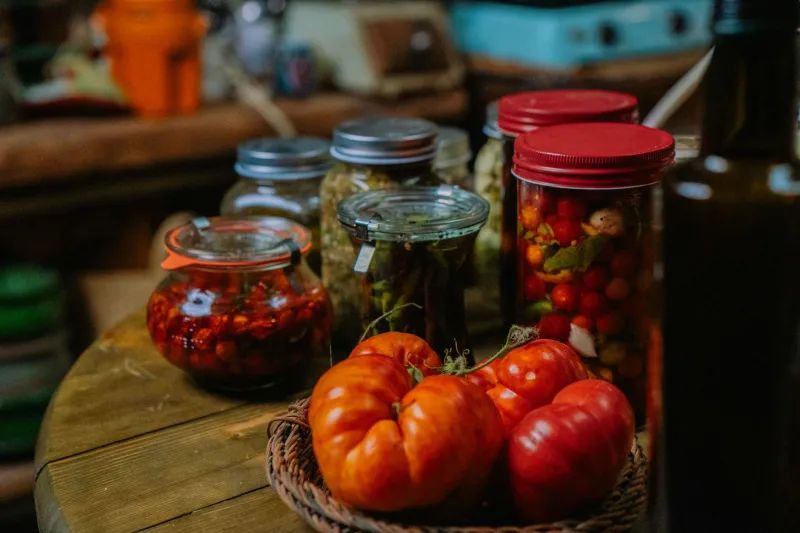
By 1944, American families were growing 40 percent of their vegetables in backyard and community gardens. These weren't just tomatoes and lettuce—families grew beans, corn, squash, and root vegetables that could be preserved for winter consumption. Canning, freezing, and root cellars extended the garden's bounty through the year.
The knowledge required was extensive. Successful gardeners understood soil composition, companion planting, pest management, and preservation techniques. They planned their gardens like military campaigns, calculating exactly how much food they could produce and preserve to supplement their purchased groceries.
The Convenience Explosion
The 1970s brought frozen dinners, microwave ovens, and the beginning of America's love affair with convenience food. Suddenly, meals that once required hours of preparation could be ready in minutes. TV dinners promised liberation from the kitchen, and millions of American families embraced the promise.
Fast food restaurants, which had existed since the 1940s, exploded across the suburban landscape. McDonald's went from 200 locations in 1960 to over 3,000 by 1974. Drive-throughs eliminated even the need to leave your car. Food became faster, more convenient, and increasingly disconnected from its origins.
The microwave oven, once a luxury item costing $500 in 1970 dollars, became standard in American kitchens by the 1980s. Frozen food aisles expanded to accommodate hundreds of options. Fresh cooking began to feel like an unnecessary chore rather than a daily necessity.
The Digital Delivery Revolution
Today's food procurement would seem like science fiction to Eleanor Patterson. Sarah opens an app on her phone, scrolls through thousands of products, and taps to add items to her virtual cart. An algorithm suggests additional items based on her purchase history. She checks out without human interaction, and her groceries appear at her door within hours.
The efficiency is staggering. What once required multiple trips to different shops, then a weekly expedition to the supermarket, now takes five minutes on a smartphone. Sarah can order groceries while riding the subway, sitting in a meeting, or watching Netflix. The friction has been almost entirely eliminated from food procurement.
Instacart, DoorDash, and Amazon Fresh have created an entirely new category of worker—the personal shopper who navigates grocery stores for strangers. These shoppers make decisions about produce ripeness, meat quality, and product substitutions for customers they'll never meet. The personal relationship between customer and food purveyor still exists, but it's mediated by an app and limited to text messages about whether organic bananas are an acceptable substitute for regular ones.
The Knowledge We've Lost
The transformation of food procurement has coincided with a dramatic loss of food knowledge among American families. Eleanor Patterson could identify dozens of vegetable varieties, knew which cuts of meat were best for different cooking methods, and understood seasonal availability like a farmer.
Today's Americans are largely disconnected from these realities. Many can't tell when produce is ripe, don't know what cuts of meat they're buying, and expect strawberries in January without considering the environmental cost. The knowledge that once passed from generation to generation has been replaced by nutritional labels and Google searches.
This disconnect has real consequences. Americans waste about 30 percent of their food, partly because they don't understand how to store it properly or use it before it spoils. The skills that allowed previous generations to stretch food budgets and minimize waste have been lost in the rush toward convenience.
The Paradox of Choice and Connection
Modern Americans have access to foods that Eleanor Patterson could never have imagined—exotic fruits from six continents, artisanal cheeses from small farms, organic vegetables grown without pesticides. The variety available in a typical supermarket dwarfs what was available even to wealthy families a century ago.
Yet this abundance comes with its own challenges. The average American grocery store stocks 40,000 different products, creating a paradox of choice that can be overwhelming. Decision fatigue sets in as customers navigate endless options, often defaulting to familiar brands or whatever an algorithm suggests.
Some Americans are pushing back against the convenience culture, seeking to reconnect with their food sources. Farmers markets have experienced a renaissance, community gardens are sprouting in urban areas, and meal kit services promise to bridge the gap between convenience and cooking knowledge.
Time Gained, Skills Lost
The evolution of food procurement has given Americans something precious: time. The hours that previous generations spent growing, shopping for, and preparing food have been freed up for other pursuits. This liberation has enabled everything from dual-career families to the explosion of leisure activities that define modern life.
But we've also lost something valuable—the deep connection to the food that sustains us. When Eleanor Patterson bit into a tomato from her Victory Garden, she knew exactly where it came from, how it was grown, and what it took to bring it to her table. When Sarah orders groceries through an app, she's accessing a global food system of incredible complexity and efficiency, but she's also completely disconnected from the process that feeds her.
The question isn't whether this transformation has been good or bad—it's simply been inevitable. But understanding what we've gained and lost helps us make more conscious choices about how we want to relate to the most basic human necessity: the food that keeps us alive.