Ring, Ring, Nobody: The Era When a Busy Signal Was a Dead End
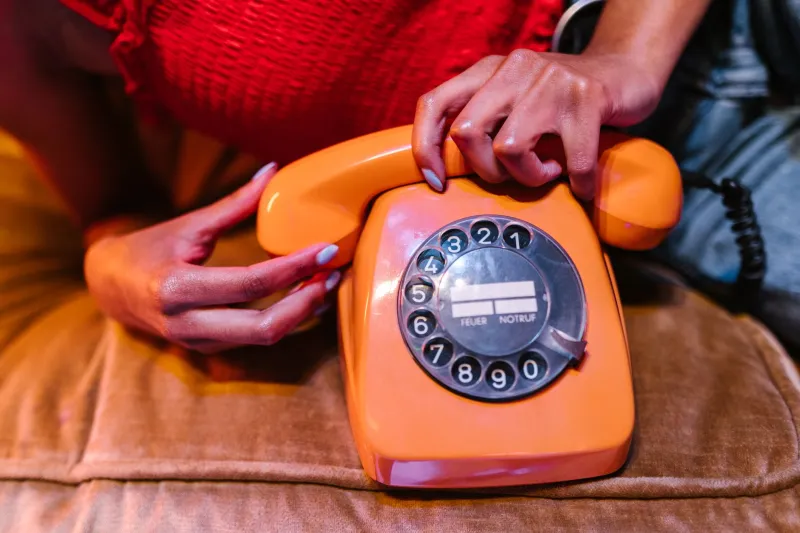
There's a sound that an entire generation of Americans grew up dreading — a flat, rhythmic pulse coming through the handset after you'd dialed all seven digits and held your breath. Not a ring. Not a voice. Just that mechanical, indifferent tone: busy. Call ended. Try again later.
For anyone under thirty-five, the busy signal is basically a historical artifact, like telegrams or carbon paper. But for much of the twentieth century, it was a genuine fact of daily life — a reminder that communication had hard limits, and that reaching another human being was never guaranteed.
One Line, One Conversation, Zero Flexibility
Here's the basic physics of the problem: most American households ran on a single telephone line. One line meant one conversation at a time. If your mom was chatting with her sister, nobody else was getting through — not for five minutes, not for an hour. There was no queue. No notification. No way for the caller to even leave a message. You simply got the busy signal, hung up, and waited.
Call waiting didn't arrive in American homes until the late 1970s, and even then it took years to spread widely. Voicemail for residential customers was essentially a 1980s and '90s phenomenon. Before those technologies existed, the telephone was a remarkably blunt instrument — powerful when it connected, completely useless when it didn't.
And it often didn't.
The Planning That Busy Signals Forced
What's striking, looking back, is how much advance coordination a busy signal economy required. You couldn't just call someone whenever a thought occurred to you. You had to think about when they'd likely be home, whether they'd be on another call, and whether the moment was even worth the attempt.
Families developed informal protocols. Long-distance calls — still expensive enough in the mid-twentieth century to be genuine events — were scheduled almost like appointments. "I'll call Sunday at seven" was a real commitment, written down, planned around. If something went wrong and the line was busy at seven, you waited, tried again at seven-fifteen, and hoped.
For urgent situations, the workarounds were remarkably analog. You left a note with a neighbor. You sent a telegram. You drove over. The idea that a person might simply be unreachable by phone wasn't a crisis — it was a normal condition of existence that everyone quietly accommodated.
Teenagers and the Occupied Line
If you grew up in the 1960s or '70s with a teenager in the house, you know exactly where this is going. The household phone was a battleground. Teenagers — especially in an era before any alternative existed — treated the family telephone line as personal property, sometimes occupying it for hours at a stretch.
For everyone else in the orbit of that household, this was simply maddening. Parents waiting for a callback from a doctor. Friends trying to confirm plans. Relatives calling from out of state. All of them hitting that same flat busy tone, over and over, with no recourse whatsoever.
It's one of those small domestic frustrations that sounds almost quaint now but genuinely shaped family dynamics for decades. The phone wasn't just a communication tool — it was a shared resource that had to be negotiated, rationed, and occasionally fought over.
When Businesses Ran on Busy Signals Too
It wasn't just homes. Small businesses — the kind that ran on one or two lines — faced the same constraints. A busy signal at a local plumber or dentist's office didn't mean you'd eventually get through to a hold queue. It meant you hung up, waited twenty minutes, and tried again. Repeat as needed.
For businesses that depended on incoming calls — florists around Valentine's Day, travel agents during summer booking season, tax preparers in April — the busy signal was essentially lost revenue. You couldn't capture a caller who'd already given up and dialed someone else.
This reality quietly shaped how businesses staffed their phones, how they advertised, and how they managed customer expectations. The friction was real, and everyone had simply learned to work around it.
What the Busy Signal Actually Meant About Time
There's something worth sitting with here: the busy signal enforced a kind of patience that modern life has almost entirely eliminated. When you couldn't get through, you waited. You tried again. You accepted that communication had a pace of its own, and that pace wasn't always yours to control.
That friction had costs — genuine ones. Urgent messages were delayed. Opportunities were missed. People made decisions without information they were trying to get. None of that was good.
But the friction also had a side effect worth acknowledging: conversations that did connect tended to matter. You didn't call someone to share a passing thought or send a quick update. You called because you had something to say, and you'd already decided it was worth the attempt. There was a certain intentionality baked into every successful phone call — a small but real sense that the connection had been earned.
The Instant-Access World We Built Instead
Today, the idea that you might genuinely fail to reach someone — not because they're ignoring you, but because the communication infrastructure simply won't allow it — is almost incomprehensible. Calls roll to voicemail. Texts arrive whether the recipient is free or not. Video calls can be scheduled or spontaneous. The always-on expectation is so deeply embedded that being unreachable, even briefly and voluntarily, has become a kind of statement.
We solved the busy signal problem completely. What replaced it is a world where human availability is presumed, expected, and sometimes quietly resented when it falls short.
The clock moved fast on this one. A generation that grew up redialing a busy number twenty times to reach a friend now lives in a world where a text left unread for three hours prompts genuine concern. The distance between those two realities is one of the stranger journeys modern life has taken — and most of us barely noticed the transition happening.