Staring at Nothing: The Quiet Superpower America Accidentally Threw Away
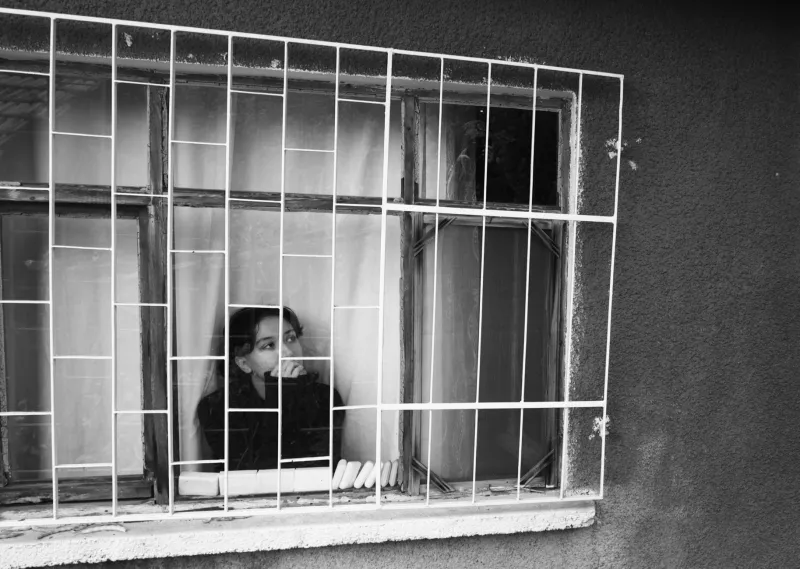
There was a specific kind of afternoon that older Americans remember well. Maybe you were stuck in the back seat on a long family drive through Indiana, watching fence posts blur past the window. Maybe you were wedged into a plastic chair at the DMV, a numbered ticket in your hand, watching the clock refuse to move. Nothing to read. Nothing to do. Nowhere to be, mentally speaking, except exactly where you were.
That was boredom. And without quite realizing it, we got rid of it entirely.
The Waiting That Used to Fill Our Days
For most of the twentieth century, dead time was simply a fact of American life. Commuters on the Chicago El stared at their shoes. Families eating at diners waited for their food without a glowing rectangle to consult. Kids draped themselves over living room furniture on slow Sunday afternoons, ceilings their only entertainment. Office workers watched the minute hand drag itself around the clock face.
Nobody liked it, exactly. But they endured it. And in enduring it, something interesting happened — the mind, with no external input to process, turned inward. It wandered. It made strange connections. It revisited old problems from new angles. It invented things.
The research on this is surprisingly consistent. A 2014 study published in Psychological Science found that people who were assigned boring tasks before a creative challenge significantly outperformed those who jumped straight into the creative work. The boring task, it turned out, wasn't wasted time. It was warm-up time for the parts of the brain that generate original thought.
Another study from the University of Central Lancashire found that participants who completed a dull, repetitive activity before a creative exercise — copying numbers from a phone book, if you can imagine — demonstrated notably higher scores on divergent thinking tests afterward. Doing nothing useful, it seems, makes the brain more useful.
The Invention of the Endless Scroll
The iPhone launched in 2007. Within five years, smartphone ownership in the United States had crossed 50 percent. Within a decade, it was nearly universal among adults under 50. And with those devices came something genuinely new in human history: the complete elimination of unoccupied time.
Now every waiting room is a content delivery opportunity. Every red light is a scroll session. Every elevator ride gets a podcast. The average American now spends somewhere between four and five hours a day on their phone — and that number climbs every year. We have, effectively, outsourced our idle moments to an industry whose entire business model depends on making sure we never experience a single second of mental quiet.
Social media feeds, news apps, short-form video — all of it is engineered to be relentlessly compelling. The algorithms aren't neutral. They're specifically designed to prevent the exact mental state that boredom used to produce: the wandering, unfocused, slightly dissatisfied state where the brain starts generating its own material instead of consuming someone else's.
What the Brain Does When Nobody's Watching
Neuroscientists call it the default mode network — the set of brain regions that activate precisely when you're not focused on a specific task. For a long time, researchers assumed this network was essentially idle, just the brain spinning its wheels. They were wrong.
The default mode network is now understood to be deeply involved in self-reflection, creative problem-solving, empathy, and what psychologists call "autobiographical planning" — the process of thinking about your own life, where you've been, and where you want to go. In other words, the brain isn't resting when you're bored. It's doing some of its most important work.
Mary Helen Immordino-Yang, a neuroscientist at the University of Southern California, has argued that suppressing this network — by constantly feeding the brain external stimulation — may be eroding our capacity for moral reasoning and self-understanding. When we never sit with ourselves, she suggests, we lose the mental muscle for figuring out who we are.
That's a significant claim. But look around any subway car or airport gate and it's hard to dismiss.
The Boredom That Built Things
Some of America's most celebrated creative minds were enthusiastic defenders of doing nothing in particular. Einstein famously took long, unstructured walks. Thomas Edison napped deliberately, holding ball bearings in his hands so that the moment he drifted off and dropped them, the noise would wake him — keeping him in that liminal, half-asleep state where his mind apparently did its best work. Lincoln wrote letters he never sent, just to let his thoughts run somewhere.
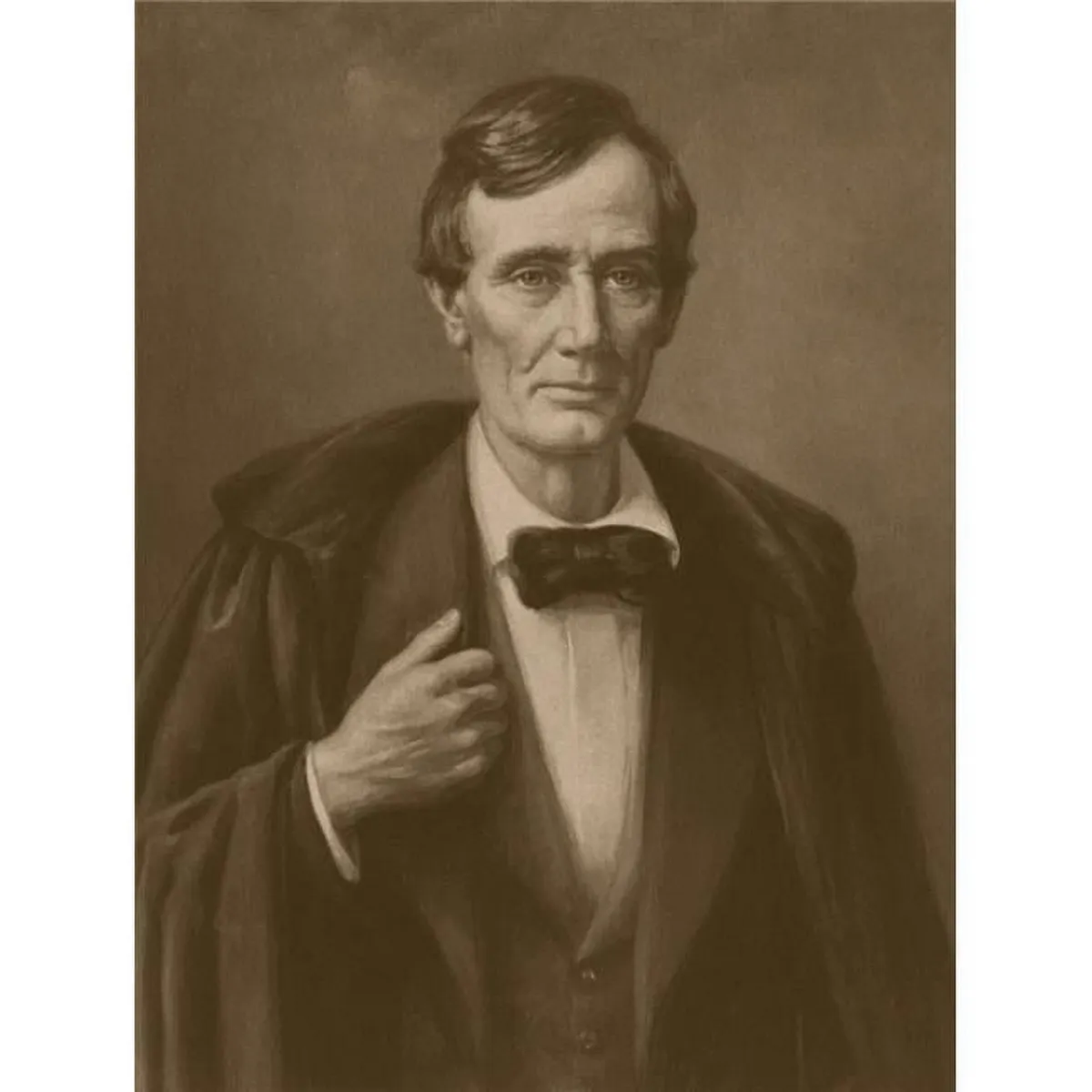 Photo: Abraham Lincoln, via i5.walmartimages.com
 Photo: Albert Einstein, via ratu.ai
These weren't eccentric habits. They were intuitive strategies for accessing the same mental state that researchers now understand as cognitively essential.
Even at the cultural level, boredom had a productive function. The music, literature, and art that came out of small-town America in the mid-twentieth century — the restlessness, the yearning, the desperate creativity of people who had nowhere much to go and nothing much to do — was, in a very real sense, manufactured from boredom. Bruce Springsteen has said as much. So have countless writers who grew up in places where Friday night at the Dairy Queen was the main event.
Getting Lost on Purpose
Here's the irony: having eliminated boredom, many Americans are now paying to get it back. Meditation apps — themselves delivered through the same devices that destroyed our idle time — market themselves on the promise of mental quiet. Journaling is having a moment. "Digital detox" retreats charge real money to take your phone away for a weekend.
We didn't realize what we had until we'd already traded it for infinite content.
The clock on this one moved fast. A single generation grew up knowing a world where boredom was unavoidable, and raised kids who have never once had to sit with an unoccupied mind. What that second generation is losing — in creativity, in self-knowledge, in the capacity to generate rather than consume — won't be obvious for years.
But the fence posts are still out there, blurring past the window. The question is whether anyone's looking at them anymore.