Thirty Miles of Silence: The Commute America Turned Into a Content Feed
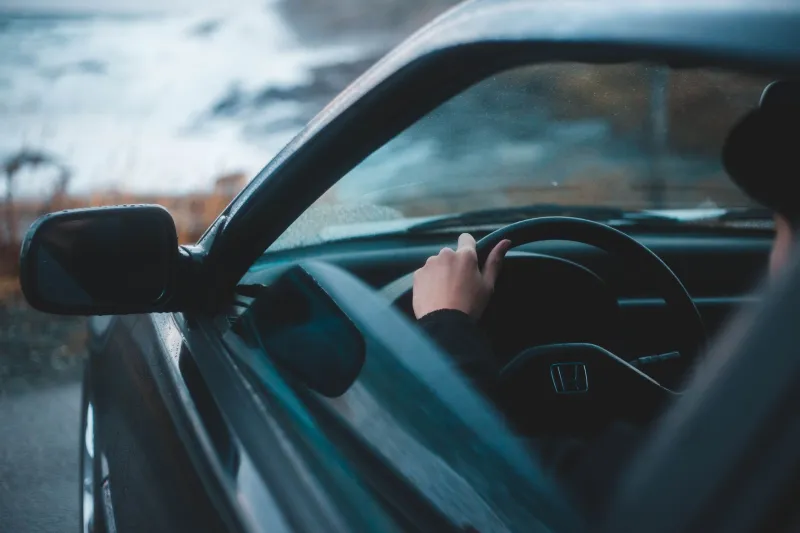
For most of the twentieth century, the American commute was a strange kind of gift. Nobody called it that, of course. People called it traffic, called it a grind, called it forty-five minutes of their life they'd never get back. But buried inside that frustration was something genuinely rare: a block of time with no social obligation attached to it.
You were in a box, alone, moving through the world. And your mind could do whatever it wanted with that.
The Original Thinking Machine
Before smartphones, before Bluetooth, before the podcast industry turned every commute into a seminar, most American drivers spent their time behind the wheel in a kind of productive mental drift. You'd replay a conversation from the day before. You'd work through a problem at work without consciously trying to. You'd rehearse what you were going to say at dinner, or let your thoughts wander through something you'd read that morning.
Psychologists have a name for this state: default mode network activation. It's what the brain does when it's not focused on a specific task — and it turns out it's extraordinarily useful. This is when the brain consolidates memories, processes emotions, and generates creative connections between unrelated ideas. In other words, the boring commute was doing serious cognitive work.
The radio existed, sure. AM news, FM rock, maybe a traffic report. But passive listening at low engagement is very different from the active consumption we do today. The music played; the mind still wandered. The commute remained, in a meaningful sense, yours.
The Colonization of the Car
The first real invasion came with the cell phone. By the late 1990s, the car had a second occupant — whoever was on the other end of the call. The physical solitude remained, but the mental solitude was gone. You were no longer driving; you were multitasking. And multitasking, as every neuroscientist will tell you, is mostly just doing two things badly at once.
Then came the smartphone, the navigation app, and the podcast boom — and the commute transformed completely. Today, the average American driver makes an active choice about what to consume before they even turn the key. A true-crime series. A productivity podcast. An audiobook they've been meaning to finish. A phone call to a parent they owe a conversation to.
None of these are bad choices individually. But collectively, they represent something significant: the complete elimination of unscheduled mental time from the American day.
Think about your schedule. You wake up and check your phone. You work, you attend meetings, you answer messages. You eat lunch while reading something. You drive home — and you put something in your ears. You arrive home and the evening's social demands begin. When, exactly, does your mind get to just think?
What the Neuroscientists Are Noticing
Researchers who study attention and creativity have been raising quiet alarms about this for years. A landmark study from the University of British Columbia found that mind-wandering — the very thing we're trying to eliminate with podcasts and calls — is closely linked to creative insight and future planning. When we give the brain nothing to do, it doesn't go idle. It goes to work on the things we haven't had time to process.
Mary Helen Immordino-Yang, a neuroscientist at USC, has argued that the default mode network isn't a luxury — it's essential to the development of moral reasoning and self-understanding. In plainer terms: the time you spend staring at a highway and not thinking about anything in particular might be exactly when you figure out who you are and what you actually believe.
We've engineered that time out of existence. And we did it willingly, because the alternative — sitting with our own thoughts — can feel uncomfortable. Silence, it turns out, is something many of us have quietly learned to avoid.
The Navigation Problem
There's a related irony in what GPS has done to the commute. Before turn-by-turn directions, driving required active spatial engagement. You had to know where you were. You had to read the environment, anticipate turns, build a mental model of your city. That process kept one part of the brain usefully occupied while other parts were free to roam.
Now, a voice tells you what to do in 400 feet. The spatial challenge is gone. But rather than freeing up more mental space, we've simply filled it with audio content. We traded one kind of engagement for another — and the one we traded away happened to be the kind that built something lasting in the brain.
The Commute You Didn't Know You Needed
There's a growing counter-movement, quiet but real. Some commuters are deliberately leaving their earbuds at home. Driving in silence. Letting the mind do its thing. It feels strange at first — almost transgressive, like you're wasting time. But people who try it often report the same thing: they arrive at work with better ideas, and they arrive home in a better mood.
The old commute wasn't just dead time. It was buffer time — a decompression chamber between the demands of work and the demands of home. It let you arrive somewhere as a slightly different person than the one who left.
We filled that chamber with content, and now we wonder why we feel like we're always running behind — on sleep, on processing, on just figuring out how we feel about things.
The road is still there. The silence is still available. We just have to choose it.