Chairs Against the Wall: The Waiting Room That Used to Hold America Together
Somewhere around 1987, in a pediatrician's office in suburban Ohio, a six-year-old with a sore throat sat next to a seventy-year-old man with a bad knee. They had nothing in common. They would never see each other again. And yet they spent forty minutes in the same room, breathing the same recycled air, flipping through the same water-stained copies of People magazine, occasionally exchanging the small, wordless acknowledgments that strangers share when they're stuck together somewhere.
This happened millions of times a day, in every city and town in America. And we didn't think of it as anything. It was just waiting. It was just the doctor's office.
The Room That Time Forgot
The medical waiting room was one of America's great democratic spaces. It didn't care who you were. Rich, poor, young, old, anxious, stoic — everyone sat in the same vinyl chairs under the same fluorescent lights, everyone got handed the same clipboard, and everyone waited. The Cleveland Clinic waiting room and the free clinic waiting room were different in scale and comfort, but they were recognizably the same kind of place.
And in that sameness, something happened. People talked. Not deeply, not always, but genuinely. A mother with a feverish toddler would get a sympathetic look from an older woman who'd been there. Two men in their sixties might discover they'd both grown up in the same part of Pittsburgh. A teenager, bored and mortified to be there, might end up in a conversation with a retired teacher who said something that stuck with them for years.
This wasn't therapy. It wasn't community organizing. It was just the ordinary human friction of being placed near strangers with nowhere else to be — and it produced something real.
The Magazine as a Cultural Artifact
Consider the waiting room magazine. It was always six months old. It was always slightly damp. Someone had always done the crossword in pen, badly. And it was a perfect snapshot of what the country was thinking about at some point in the recent past — which celebrities were feuding, which diet was going to change everything, which political story had briefly consumed the national conversation.
Reading a waiting room magazine was a genuinely communal act. You'd pick up a copy of Time or Sports Illustrated and know that dozens of hands had held it before yours. You'd see the pencil marks, the torn-out recipes, the circled phone numbers. The magazine was evidence that you were not the first person to sit in this exact chair, in this exact kind of anxiety, waiting for someone to tell you whether everything was going to be okay.
Nobody has replaced the waiting room magazine with anything that does the same job. The smartphone replaced it with a portal to your own private world — which is more comfortable and infinitely less interesting.
The Clock on the Wall
Time moved differently in a waiting room. Anyone who's experienced it knows this. Twenty minutes could feel like an hour. The clock on the wall — always the same kind of clock, white face, black numbers, a slight institutional hum — seemed to move in geological time.
But here's the thing about time moving slowly: it forced a kind of presence that modern life has almost entirely eliminated. You couldn't scroll. You couldn't optimize. You sat with your thoughts, or you talked to someone, or you watched a child play with the communal toy box in the corner and remembered what it was like to be that unselfconscious.
Medical anxiety — the specific, low-grade dread of waiting to hear news about your body — was a shared experience. Everyone in that room was carrying some version of it. And there was a strange comfort in that. You weren't alone in your worry. The guy across from you with the reading glasses and the nervous leg was right there with you.
The Efficient Erasure
Modern healthcare has been relentlessly focused on eliminating the wait. And from a pure logistics standpoint, this is unambiguously good. Online scheduling, text reminders, digital check-in kiosks, virtual queues that let you wait in your car — all of these represent genuine improvements in patient experience and operational efficiency.
Telemedicine, accelerated dramatically by the pandemic, has taken this further. For millions of Americans, the doctor's office is now a video call from the kitchen table. No commute, no parking, no waiting. Just a screen and a face and a conversation.
The efficiency gains are real. The access improvements — especially for rural patients, elderly patients, people with mobility limitations — are genuinely important. Nobody is seriously arguing we should bring back the two-hour wait just to restore the social texture of the experience.
But something has quietly left with the waiting room. A friction point, yes — but also a gathering point. A place where the American healthcare experience, for all its inequality and dysfunction, briefly looked the same for everyone in the room.
What We Carry Out With Us
There's a concept in sociology called "third places" — spaces that are neither home nor work, where people mix informally and social bonds form accidentally. Robert Putnam wrote about the decline of these spaces in Bowling Alone, tracking how Americans gradually retreated from the shared public life they'd once taken for granted.
The waiting room was never glamorous enough to make Putnam's list. But it was, in its way, one of these spaces. Involuntary, uncomfortable, and oddly humanizing.
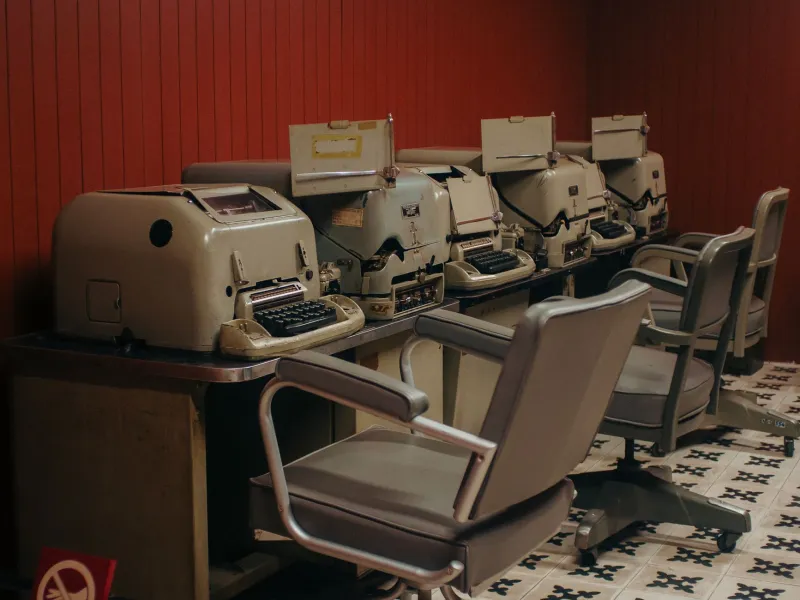
Now we wait in our cars, watching the app for a text that says the doctor is ready. It's better, mostly. But the room is empty. And the chairs against the wall aren't talking to anyone.