The Recipe That Died With Grandma: How America Traded Its Kitchen Secrets for a Barcode

Somewhere in a drawer — maybe your grandmother's kitchen, maybe an aunt's house in Ohio — there's probably an index card with a recipe written in fading ink. The measurements might be approximate. "A handful of this." "Season to taste." "Cook until it smells right." It assumes knowledge the writer never thought to explain, because in her world, everyone already knew.
That card is a document of a vanishing civilization.
When the Kitchen Was a Laboratory
For the better part of American history, the family kitchen was a place of genuine craft. Spices were ground by hand. Sauces were built from scratch, adjusted by intuition, and refined over decades. Vegetables were preserved at the end of summer in glass jars lined up along basement shelves. Bread was a weekly project, not a grocery item. And the knowledge required to do all of it lived in people's hands and memories, not in cookbooks.
This wasn't romanticized homesteading. It was practical necessity. In the early twentieth century, most American families simply couldn't afford the convenience products that would later replace homemade food. Heinz ketchup existed, but so did the habit of making your own. Campbell's soup was on the shelf, but so was the expectation that a woman who couldn't make a decent stock from a chicken carcass was somehow falling short.
The food that came out of those kitchens was intensely personal. A pot of red gravy in a New Orleans household tasted nothing like the pot of red gravy three blocks away, because both were the products of specific hands, specific memories, specific adjustments made over generations. You couldn't buy either one. You could only inherit it.
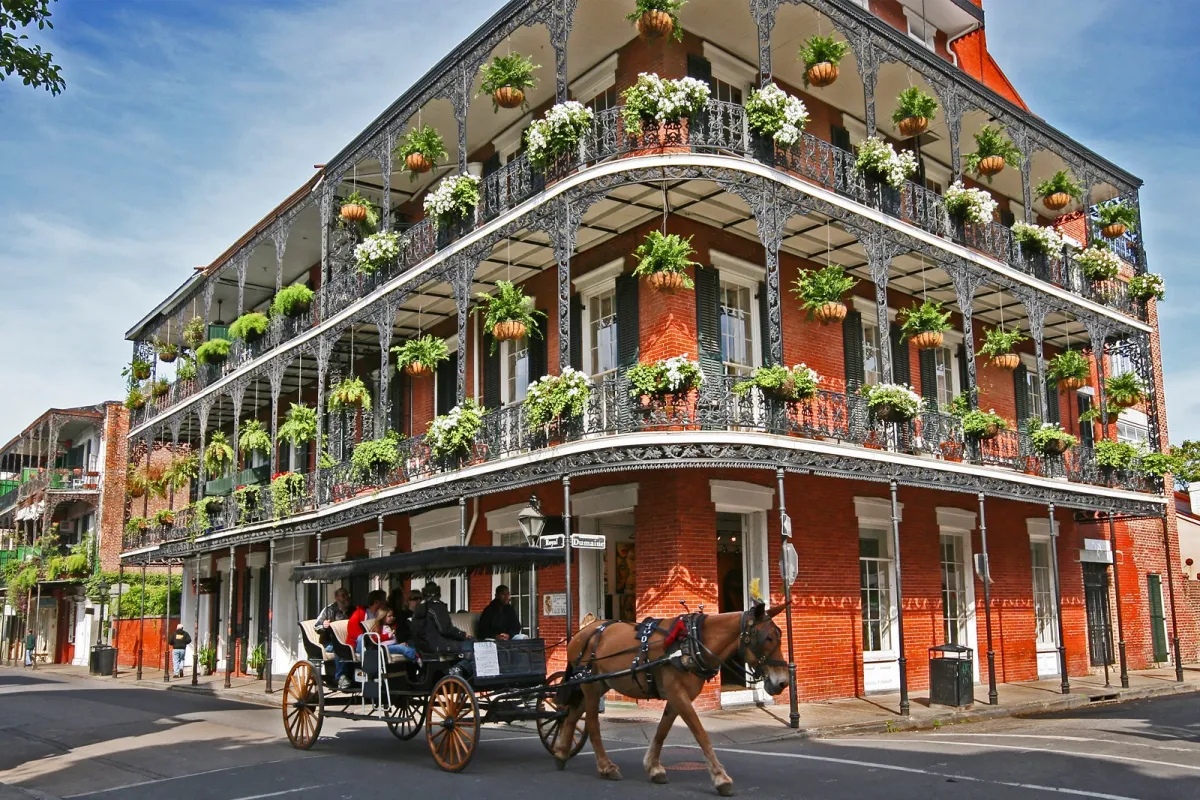 Photo: New Orleans, via a.cdn-hotels.com
The Industrial Interruption
The transformation happened in waves. The first came in the early twentieth century, when processed food manufacturers convinced Americans — partly through advertising, partly through genuine convenience — that factory-made products were cleaner, more reliable, and more modern than anything made at home. Crisco replaced lard. Wonder Bread replaced the weekly loaf. Jell-O arrived as a symbol of progress.
The second wave hit after World War II, when returning prosperity, the rise of the suburbs, and the expansion of the supermarket system made convenience food not just available but aspirational. Women entering the workforce in larger numbers needed time-saving solutions. Frozen dinners, instant mixes, and canned everything weren't laziness — they were rational responses to genuine time pressure.
By the 1970s and 80s, the shift was essentially complete. A generation of Americans grew up watching their parents open cans rather than build sauces, buy bread rather than bake it, and reach for the spice rack rather than the mortar and pestle. The culinary knowledge that had been passed down through lived experience — watching, helping, absorbing technique through proximity — simply stopped being transmitted.
When those grandmothers and great-aunts died, they took their kitchens with them.
The DoorDash Endpoint
Today's food landscape would be unrecognizable to a 1930s American cook. The average US household now spends more money on food away from home than on groceries — a milestone crossed for the first time in 2015 and never reversed. Meal kit services deliver pre-portioned ingredients with laminated instruction cards, because the assumption that you know what to do with a leek can no longer be made.
DoorDash, Uber Eats, and Grubhub have essentially turned cooking into an opt-in activity rather than a baseline life skill. In major American cities, it's entirely possible — and increasingly common — to go weeks without turning on a stove. The kitchen, in many apartments, is effectively decorative.
Mass-produced condiments have become so dominant that most Americans have no reference point for what homemade versions taste like. Hellmann's mayo is just what mayo tastes like. Heinz is just what ketchup is. The idea that these were once approximate stand-ins for something more personal and more varied has been entirely lost.
The Sourdough Revolt
And yet — something is pushing back.
The pandemic years produced one of the stranger cultural phenomena of recent memory: millions of Americans, suddenly stuck at home, began fermenting things. Sourdough starter became a household obsession. Canning tutorials flooded YouTube. Farmers markets surged. The word "fermentation" entered mainstream vocabulary in a way it hadn't since before refrigeration made it unnecessary.
This wasn't just hobby behavior. It was, for a lot of people, something that felt almost urgent — a reaching toward a kind of knowledge that modern life had quietly removed from their grasp. Learning to make kimchi or pickle your own cucumbers or bake bread from a live culture isn't just cooking. It's recovering a relationship with food that industrialization spent a century dismantling.
The sourdough boom faded when offices reopened and DoorDash reinstalled itself on everyone's phone. But the underlying impulse didn't entirely go away. Recipe restoration has become a genuine cultural project, with people interviewing elderly relatives, scanning handwritten cards, and posting reconstructed family recipes in online communities dedicated to exactly this kind of culinary archaeology.
The Thing You Can't Buy Back
Here's what makes this particular loss different from most: it's irreversible in a specific way. You can rebuild the technique. You can learn to grind spices and make stock and preserve summer tomatoes. What you can't recover is the specific evolution of flavor that happened across four generations of the same family kitchen — the accumulated adjustments, the particular combinations, the dishes that tasted like a specific place and a specific history.
That knowledge wasn't written down because it didn't need to be. It lived in people. And people, eventually, leave.
The index card in the drawer is what survived. Treat it accordingly.