Sixteen and Sweating: When Summer Meant Real Work, Not Resume Building
The 6 AM Wake-Up Call That Built Character
Picture this: It's June 1965 in Detroit, and 16-year-old Tommy Martinez is setting his alarm for 5:30 AM. Not for summer school or SAT prep, but for his job at the local Ford parts warehouse. For the next three months, he'll spend eight hours a day lifting, sorting, and learning what a dollar actually costs in human effort.
Fast-forward to today, and that same teenager is more likely sleeping until noon before heading to an unpaid internship at a nonprofit, carefully curated to look impressive on college applications. The transformation of the American teenage summer represents one of the most dramatic shifts in how young people prepare for adulthood — and it happened so gradually that most of us missed it entirely.
When Work Meant Work
In the 1960s and 70s, summer employment for teenagers wasn't just common — it was expected. Nearly 60% of 16-19 year olds worked during summer months, and these weren't the carefully orchestrated "learning experiences" of today. They were real jobs with real consequences.
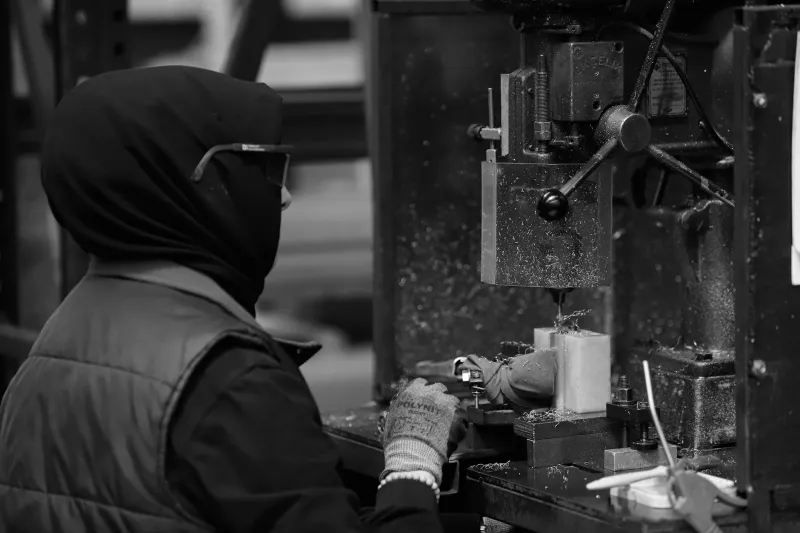
Teenagers worked construction, hauling materials under the blazing sun. They stood behind retail counters for eight-hour shifts, learning to handle difficult customers without calling for a manager. They worked factory assembly lines, restaurant kitchens, and farm fields. The work was often monotonous, sometimes dangerous, and always physically demanding.
But here's what made it different: these jobs paid actual money. A summer of work could fund a car, contribute meaningfully to family finances, or provide genuine financial independence. More importantly, failure had real consequences. Show up late too often, and you were fired. Mess up an order, and it came out of your pay. The stakes were immediate and tangible.
The Great Internship Migration
Today's summer landscape looks radically different. The teenager who once would have been stocking shelves at Woolworth's is now updating spreadsheets at a marketing firm — for free. The shift from paid summer jobs to unpaid internships represents more than just an economic change; it's a fundamental reimagining of what teenage summers are supposed to accomplish.
Modern parents, terrified by college admission statistics and armed with articles about "building competitive applications," have transformed summer from earning season to positioning season. The result? A generation of teenagers who understand strategic networking better than the value of an hour's labor.
Consider the numbers: teenage summer employment peaked in 1978 at nearly 72% and has been declining ever since. Today, fewer than 35% of teenagers work summer jobs. Meanwhile, unpaid internship programs have exploded, creating a parallel economy where experience, not money, is the supposed currency.
What We Lost in Translation
The old system was far from perfect. Many of those summer jobs were dead-ends, offering little in terms of career development or skill-building. Working in a factory didn't necessarily prepare you for the modern economy, and plenty of teenagers spent their summers doing genuinely mindless work.
But something important was embedded in that experience: the direct connection between effort and reward. When you worked eight hours and received a paycheck that could buy something meaningful — a stereo, a car payment, school clothes — you understood viscerally how the economy functioned. You learned that money represented time and effort, not something that appeared when you needed it.
Today's internship model, while offering more relevant experience, has severed that connection. When work doesn't pay, it becomes abstract. When summers are about building a resume rather than building a bank account, the relationship between labor and livelihood becomes theoretical.
The Privilege Problem
Perhaps most significantly, the shift from paid work to unpaid experience has created a new form of inequality. In 1965, any teenager could get a summer job and earn real money. Family connections helped, but they weren't essential. Hard work and reliability were often enough.
Today's internship economy requires a different kind of capital: social connections, geographic proximity to white-collar employers, and most crucially, the family financial stability to work for free. The teenagers who can afford to spend summers building impressive resumes are the same ones who were already positioned for college success. Meanwhile, the teenagers who need to earn money are increasingly shut out of the experiences that college admissions offices value.
The Unintended Consequences
This transformation has created a generation gap that goes beyond the usual cultural differences. Parents who learned about money by earning it often struggle to relate to teenagers who learn about career development through strategic positioning. The result is a disconnect not just about work, but about the fundamental nature of economic life.
When a parent says "get a job" to a teenager today, they often mean something completely different than their own parents meant. The job is supposed to teach responsibility and work ethic, but it's also supposed to enhance college applications and provide networking opportunities. It's a lot to ask from a summer position at the local ice cream shop.
The Skills That Slipped Away
Beyond the financial literacy, those old summer jobs taught skills that are harder to quantify but no less valuable. They taught teenagers how to work with people unlike themselves, how to handle physical discomfort, and how to persist through boring, repetitive tasks. They provided early exposure to workplace hierarchies, union dynamics, and the reality that most work isn't personally fulfilling.
Modern internships, focused on resume-building and career exploration, often shield teenagers from these harder truths about working life. The result is a generation that may be better prepared for professional careers but less equipped for the mundane realities of economic life.
What the Clock Delta Reveals
The transformation of teenage summer work reflects broader changes in how Americans think about preparation, opportunity, and success. We've traded immediate economic education for long-term strategic positioning, assuming that the benefits of the old system — financial literacy, work ethic, economic reality — will somehow emerge naturally.
But as any parent trying to explain the value of money to a teenager who's never earned it can attest, some lessons require direct experience. The question isn't whether today's approach is better or worse, but whether we understand what we've given up in the exchange.
The 16-year-old setting that 5:30 AM alarm in 1965 learned lessons that no amount of resume-building can replicate. Whether that trade-off was worth it may depend on which future we're actually preparing our teenagers to inhabit.