The Great Sleep Robbery: How America Learned to Brag About Being Tired
"I only got four hours of sleep last night," she announced to the conference room, like a badge of honor pinned to her blazer. Heads nodded in understanding—even admiration. In modern America, sleep deprivation has become our strangest form of competitive sport.
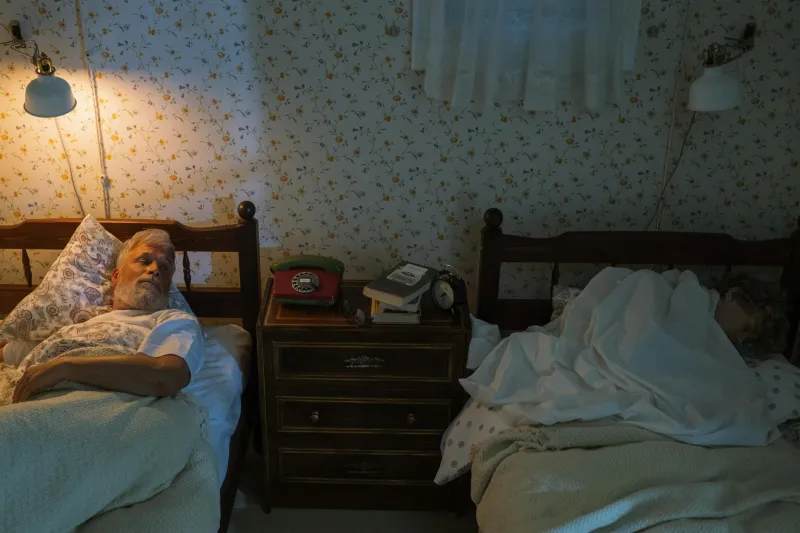
But rewind the clock just 70 years, and that same statement would have triggered concern, not congratulations. In 1950, the average American slept 8.5 hours per night. They went to bed when the sun set and woke when it rose, following rhythms that had governed human life for millennia. Sleep wasn't something to optimize, track, or sacrifice—it was simply what people did when darkness fell.
When Sleep Was Sacred
Pre-war American households operated on what historians call "natural time." Without the constant glow of screens or the pressure of 24/7 connectivity, people followed their circadian rhythms like a biological compass. Bedtime was often 9 PM. Wake-up was typically 6 AM. Nine hours of sleep wasn't an aspiration—it was the default.
Families structured their entire lives around this rhythm. Dinner happened early enough to allow proper digestion before bed. Evening activities were limited by available light. Radio programs respected the sanctity of bedtime, with most broadcasting ending by 10 PM.
Even more fascinating: many Americans practiced what sleep researchers now call "biphasic sleep." Historical records describe a "first sleep" from roughly 9 PM to midnight, followed by a period of quiet wakefulness (used for prayer, reflection, or intimate conversation), then a "second sleep" until dawn. This wasn't insomnia—it was a natural pattern that industrial lighting would eventually erase.
The Invention of Sleep Guilt
The transformation began in the 1960s, accelerated by three cultural shifts that fundamentally changed how Americans thought about sleep. First, television extended the day artificially, keeping families awake well past natural bedtime. Second, the rise of dual-income households compressed leisure time into evening hours. Third, and most importantly, American culture began equating sleep with laziness.
The phrase "you can sleep when you're dead" entered popular vocabulary in the 1970s, perfectly capturing the new attitude. Sleep became something to overcome, not embrace. Business culture started celebrating the executive who worked 80-hour weeks and the entrepreneur who survived on coffee and determination.
By the 1990s, sleep deprivation had become a peculiar form of status signaling. The exhausted worker wasn't pitied—they were admired for their dedication. The parent who functioned on four hours of sleep wasn't offered help—they were praised for their sacrifice.
The Numbers Don't Lie
The statistics reveal the scope of America's sleep recession. In 1942, Americans averaged 7.9 hours of sleep per night. By 2013, that number had dropped to 6.8 hours. Today, one-third of American adults get less than seven hours of sleep regularly—a threshold that sleep scientists consider the minimum for basic health.
The economic costs are staggering. Sleep deprivation costs the American economy an estimated $411 billion annually in lost productivity. Drowsy driving causes roughly 6,000 deaths each year—more than drunk driving in some states. Yet we continue to treat sleep as optional.
Meanwhile, our devices track everything except the one thing that might actually help: simply going to bed earlier. The average American now owns 2.5 sleep-tracking devices but has gained only 11 minutes of sleep over the past decade.
The Technology That Stole the Night
Electric lighting was just the beginning. Each technological advance promised to give us more time, but somehow we ended up with less rest. Television moved the living room into the bedroom. Personal computers brought work home. Smartphones brought everything everywhere.
The blue light emitted by screens suppresses melatonin production, essentially telling our brains it's perpetual daytime. Yet the average American now spends over seven hours daily looking at screens, with much of that exposure happening in the evening hours when our ancestors would have been winding down.
Social media has created what researchers call "revenge bedtime procrastination"—staying up late to reclaim personal time that feels stolen by work and obligations. We scroll through feeds at midnight, not because we're particularly interested in our high school classmate's dinner photos, but because those minutes feel like the only time that belongs to us.
The Sleep Industrial Complex
Modern America has responded to its sleep crisis by building a $13 billion sleep industry. We buy weighted blankets, white noise machines, sleep apps, and mattresses that cost more than used cars. We track REM cycles, measure sleep efficiency, and optimize our bedrooms like NASA spacecraft.
Yet all this technology and spending addresses symptoms, not causes. The fundamental problem isn't that we lack the right mattress or sleep app—it's that we've created a culture that treats sleep as weakness rather than necessity.
What We Lost in the Dark
Beyond the obvious health consequences, America's sleep recession has cost us something more subtle: the ability to be alone with our thoughts. Those quiet evening hours that our ancestors used for reflection, conversation, and mental processing have been replaced by screens and stimulation.
Historians note that many of history's greatest insights came during those twilight hours between sleep phases—what they called "the watching hours." We've optimized those hours away, replacing contemplation with consumption.
The Long Road Back to Rest
Interestingly, some Americans are rediscovering what their grandparents knew instinctively. The "sleep hygiene" movement essentially teaches people to recreate the conditions that existed naturally before electric lights: dark rooms, cool temperatures, and consistent bedtimes.
Companies are slowly recognizing that exhausted employees aren't productive employees. Some progressive firms now offer nap pods and flexible schedules that honor circadian rhythms rather than fighting them.
But the deeper challenge remains cultural. We need to stop treating sleep deprivation as a virtue and start recognizing it as what it actually is: a sign that something in our lives is fundamentally out of balance.
The next time someone brags about surviving on four hours of sleep, remember what we used to know: that rest isn't laziness, it's restoration. And that the most radical thing you can do in modern America might just be getting a good night's sleep.