Ink on the Doorstep: The Morning Ritual That Once Kept America in Sync

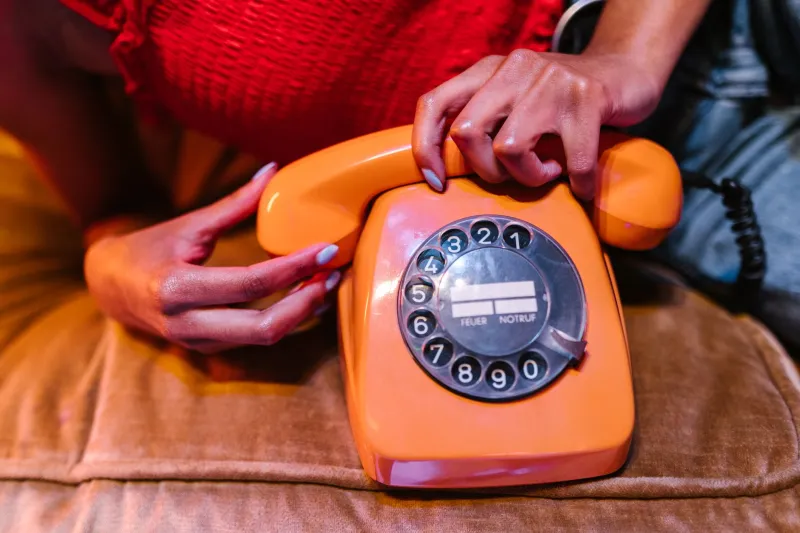
Photo by Photo by Vitaly Gariev on Unsplash on Unsplash
Somewhere around five-thirty in the morning, a kid on a bicycle would sail down your street and fling a folded newspaper in the approximate direction of your front door. By the time you came downstairs in your bathrobe, it was waiting for you on the porch — slightly damp if it had rained, rubber-banded or tucked into a plastic sleeve if the carrier was conscientious. You'd pour coffee, unfold it at the kitchen table, and spend twenty minutes with the news.
That was it. Twenty minutes, once a day. And somehow, America managed to stay informed.
The Architecture of the Daily Paper
The American newspaper at its peak was a genuinely impressive piece of editorial engineering. A metropolitan daily might run sixty or seventy pages, organized into sections that readers navigated like familiar rooms in a house. Front page for national and international news. Local section for city government, crime, and high school sports scores. Business pages for the markets and economy. Comics, crossword, weather, classified ads. Obituaries, which people read more carefully than they'd ever admit.
The structure was deliberate. Editors made decisions — real decisions — about what mattered, what went above the fold, what got buried on page fourteen. Those choices weren't always right, and they weren't always unbiased. But they reflected a considered judgment about the shape of the day's events. Readers who disagreed could write a letter to the editor, which might appear in the paper three days later, after someone had read it and decided it was worth printing.
The whole system operated on a twenty-four-hour clock. News happened. Reporters covered it. Editors shaped it. Printers ran it. Carriers delivered it. Readers read it. Then the cycle reset. There was a natural rhythm to it, a pulse, and American daily life synchronized around that pulse in ways that are easy to underestimate now.
The Breakfast Table as National Forum
The newspaper didn't just inform people. It gave them a shared text to react to. When the front page carried a story about a congressional vote or a local scandal or a factory closing, families across the city were reading the same account over the same cup of coffee at roughly the same time. Dinner conversations that evening had a common starting point. Arguments at the barbershop or the diner were arguments about the same set of reported facts.
This shared informational baseline was so ordinary that nobody thought to name it. It was just how things worked. You knew what was in the paper because everyone read the paper. Your neighbor's opinion about the mayor was formed by the same article yours was. You might disagree about what it meant, but you were disagreeing about the same thing.
For kids, the newspaper was also a quiet education in how the adult world was organized. Sports pages taught statistics and geography — you learned that Cincinnati had a baseball team before you could have found Ohio on a map. Comics taught narrative sequencing. Classifieds taught that everything had a price. Weather maps taught you to read symbols. All of it arrived every morning, uninvited, free with the subscription.
When the Clock Stopped Having a Face
The transition from daily newspaper to continuous digital news stream didn't happen all at once. It was gradual — a slow erosion rather than a sudden collapse. The internet arrived. News websites launched. Cable news had already been running twenty-four hours since the 1980s. Then smartphones arrived and made every pocket a newsroom.
By the early 2010s, the architecture of the daily paper had essentially been dissolved. There was no longer a front page in any meaningful sense — every story competed for attention in a stream that never ended and never rested. The twenty-four-hour news cycle became the twenty-four-second news cycle. Breaking news alerts arrived before journalists had confirmed the basic facts. Opinion and reporting blurred together in feeds that made no visual distinction between the two.
Circulation numbers tell the story plainly. American daily newspaper circulation peaked at roughly 63 million copies in 1984. By 2022, it had fallen below 20 million, and many of those were digital subscriptions, consumed on phones in fragments rather than read cover to cover at a kitchen table. Hundreds of local papers have closed entirely. Thousands of communities now have no dedicated local reporting at all.
The paperboy is largely gone too. Most carriers today are adults in cars, delivering to the dwindling number of households that still subscribe to a print edition. The image of a kid on a bicycle at dawn, arm cocked back in a practiced arc, is already more nostalgic than functional.
What the Finite Day Gave Us
Here's the thing about the daily newspaper that's hard to appreciate until it's gone: it ended. You read it, and it was done. The news had a shape. It had a beginning and a conclusion. You could finish it.
The contemporary news experience has no such boundary. It arrives before you're awake and continues after you've gone to sleep. It doesn't distinguish between a geopolitical crisis and a celebrity's social media post — both arrive as notifications with identical urgency. The volume is infinite and the curation is algorithmic, optimized for engagement rather than significance.
Researchers have spent the last decade documenting the psychological effects of this shift — the anxiety, the exhaustion, the paradox of feeling simultaneously overloaded with information and uncertain what's actually true. None of that is simple to untangle. But it's worth sitting with the contrast for a moment.
For most of the twentieth century, America received its news once a day, read it at a table, and then got on with living. The world didn't seem less informed for it. The conversations didn't seem less rich. And people, by most accounts, didn't spend their days in a state of ambient dread about what the next alert might bring.
The clock moved forward. The news never stopped. Whether that's purely progress is a question worth asking while the coffee's still hot.