Four Papers, Four Realities: The Noisy, Complicated Glory of When Cities Had Real News Wars
On any given morning in 1955, a resident of Chicago could choose between four major daily newspapers. They weren't interchangeable. The Tribune came at the world from a firmly conservative angle. The Sun-Times tilted the other way. The Daily News had its own personality, its own columnists, its own sense of what the city was. Each paper had reporters who covered the same city council meeting and came home with different stories — not because they fabricated anything, but because they were genuinely looking at the world through different lenses.
This wasn't a bug. It was the chaotic, inefficient, occasionally infuriating engine of how American cities understood themselves.
The Economics That Made It Possible
To understand what American cities once had, you have to understand what made it financially viable. For most of the 20th century, local newspapers were extraordinary cash-generating machines. Display advertising — department stores, car dealerships, grocery chains — flowed almost exclusively through print. Classified ads were a monopoly business: if you wanted to sell your car or rent your apartment, you ran an ad in the paper. There was no alternative.
This advertising revenue was so reliable, so substantial, that it supported not just one newsroom but multiple competing ones in the same city. New York at its peak had more than a dozen daily papers. Los Angeles, Philadelphia, Detroit, and Boston all supported competitive newspaper markets well into the postwar decades. Reporters were plentiful. Editors were opinionated. And the competition between papers for scoops, readers, and advertiser loyalty kept everyone sharp.
The business model also created something that's easy to overlook: genuine editorial independence through financial security. A paper with a robust advertising base didn't need to chase clicks or optimize for engagement. It needed to be read — and being read, in an era without alternatives, meant being trusted, interesting, and locally relevant.
The Morning Fight at the Breakfast Table
American households in the 1950s and '60s often had strong opinions about which paper they took. It was a kind of identity marker, like which church you attended or which baseball team you rooted for. In cities with multiple papers, neighbors might be reading entirely different accounts of the same event — and arguing about it at the diner or across the backyard fence.
That friction had a function. If you read the Tribune every morning and your brother-in-law swore by the Sun-Times, you were going to have Thanksgiving conversations that required you to defend your interpretation of events against someone who had read a genuinely different account. You couldn't simply curate your way out of disagreement. The disagreement showed up at dinner.
This wasn't comfortable. It wasn't supposed to be. But it meant that even people who read only one paper were regularly aware that other readings of reality existed, because other readings were physically present in the same city, on the same newsstands, being read by the same neighbors.
The Collapse That Came From Every Direction
The newspaper industry's financial unraveling is one of the most studied business collapses in modern American history, and it came from multiple directions simultaneously. Craigslist arrived in the late 1990s and quietly eviscerated the classified ad business — a revenue stream that had been largely invisible to readers but absolutely foundational to newsroom budgets. Display advertising followed eyeballs online. Google and Facebook built advertising platforms so precisely targeted that the broad-reach model of newspaper advertising began to look like a relic.
The numbers are staggering in retrospect. The Pew Research Center has documented that American newspapers lost more than half their newsroom employees between 2008 and 2020. More than 2,000 local papers closed between 2004 and 2020. Entire counties became what researchers call "news deserts" — places where no professional journalist is regularly covering local government, courts, or schools.
What replaced the multi-paper city wasn't a single dominant paper. It was often nothing. Or, more precisely, it was a national media landscape of cable news networks and algorithmically curated social feeds that showed people content optimized for engagement — which, in practice, meant content that confirmed what they already believed.
From Competing Truths to Parallel Universes
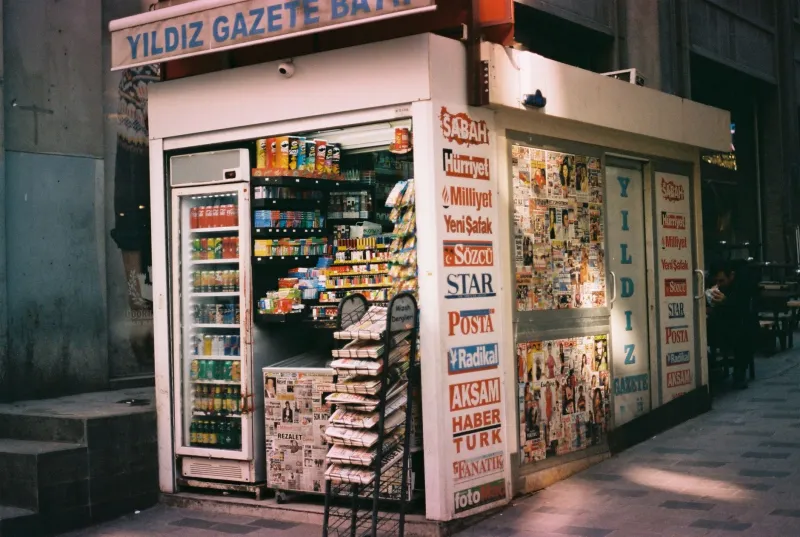
Here's the uncomfortable irony at the center of this story: the era of multiple competing newspapers, for all its editorial bias and occasional yellow journalism, produced a media environment where people were regularly exposed to viewpoints they hadn't chosen. You bought your paper, but you also walked past the other papers on the newsstand. You heard your coworker quote a columnist you'd never read. The competing papers existed in the same physical space, visible to everyone.
The algorithmic news feed is, in theory, a universe of infinite information. In practice, it's a mirror. The recommendation engine learns what you engage with and serves you more of it. Political scientists have documented the polarization effects extensively — Americans in 2024 don't just disagree about policy, they often operate from entirely different sets of facts, sourced from entirely different information ecosystems that rarely intersect.
Whether this is worse than the biased newspaper culture of the 1950s is a genuinely complicated question. Those papers had real blind spots — civil rights coverage in mainstream white papers was often shameful. Labor issues were frequently framed through the lens of advertiser interests. The golden age of competitive newspapers was golden for some Americans more than others.
But the loss of the structure — the idea that a city's information environment was shared, contested, and physically present — has proven harder to replace than anyone anticipated.
What a City Loses When the Papers Go Quiet
Research from the University of Notre Dame found that when local newspapers close, municipal borrowing costs go up — because without watchdog journalism, bond markets price in higher risk from unchecked local government. Studies from other researchers have linked local news deserts to lower voter turnout, higher corruption rates in local government, and reduced civic participation.
These aren't abstract cultural losses. They're measurable economic and democratic consequences of a business model that collapsed faster than any replacement could be built.
The four-paper city was loud, biased, competitive, and sometimes irresponsible. It was also, in ways we're still calculating, doing something essential — not just informing citizens, but creating the conditions for a shared, if contested, public reality.
The clock moved fast on this one. The presses slowed. The buildings went quiet. And the conversation that used to happen across competing front pages moved somewhere that doesn't have a newsstand.