The Folder in the Filing Cabinet: When Your Entire Health History Fit in One Manila Envelope
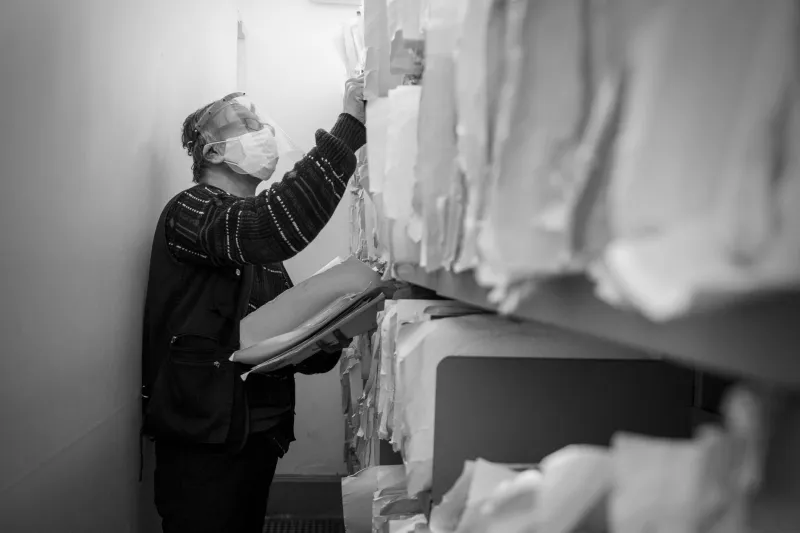
Somewhere in a storage unit in suburban Ohio, there's probably a filing cabinet that nobody has opened in twenty years. Inside it, tucked behind tax returns and mortgage documents, might be a yellowed manila folder with a name written in ballpoint pen across the top. Inside that folder: a handwritten record of every doctor's visit, every prescription, every childhood illness and adult complaint, stretching back decades. The entire medical biography of a human life, on maybe thirty pages of paper.
For most of the 20th century, that folder — or something very much like it — was the complete and total extent of what the American healthcare system knew about you. One doctor. One office. One cabinet. That was it.
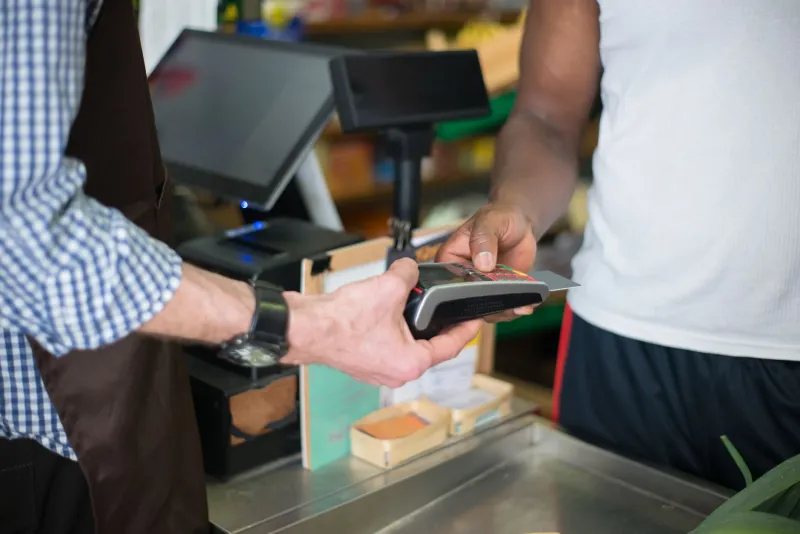
Compare that to today, where your health data might live simultaneously across a primary care physician's electronic system, three different specialist portals, a hospital network, a pharmacy chain's database, your insurance company's records, and a wellness app on your phone. The contrast is so vast it's almost hard to hold both realities in your head at once.
One Doctor, One Folder, One Version of You
The family physician of mid-20th century America occupied a role that was equal parts medical professional and personal archivist. The records they kept were handwritten — sometimes meticulously, sometimes in a shorthand that only they could reliably decode. A patient's history was whatever that doctor remembered, supplemented by whatever they'd written down.
This system had a kind of intimacy that's genuinely hard to replicate digitally. Your doctor knew your family. They'd treated your parents, maybe your grandparents. They remembered the broken arm from 1958 and the bout of pneumonia in 1964 not because a computer flagged it, but because they were there. The medical record wasn't just a document — it was a relationship.
But the fragility was real and consequential. If you moved to another city, you didn't take a digital file with you. You took whatever your old doctor was willing to write down in a transfer summary, which was often incomplete. If your doctor retired or died, their records might be absorbed by a successor, sold to a records storage company, or simply lost. Patients who switched providers essentially started over, reconstructing their history from memory — which is to say, imperfectly.
Hospitals kept their own records separately from physicians' offices. Specialists maintained their own files. There was no mechanism for any of these systems to speak to each other. A cardiologist in Boston had no reliable way to know what a general practitioner in Phoenix had prescribed three years earlier. The patient was often the only connecting thread between their own providers.
When Losing the Folder Meant Losing the Story
The consequences of this fragmentation showed up in ways that ranged from inconvenient to genuinely dangerous. Medication interactions were missed because prescribers didn't know what else a patient was taking. Allergies went unrecorded at critical moments. Diagnostic tests were repeated unnecessarily because results from a previous provider were unavailable.
And then there was the simple matter of fires, floods, and the passage of time. Paper degrades. Filing cabinets get lost in moves. Medical offices close. A 1973 fire at the National Personnel Records Center in St. Louis destroyed millions of military service records — a catastrophic reminder that paper-based systems are only as durable as the building they're stored in.
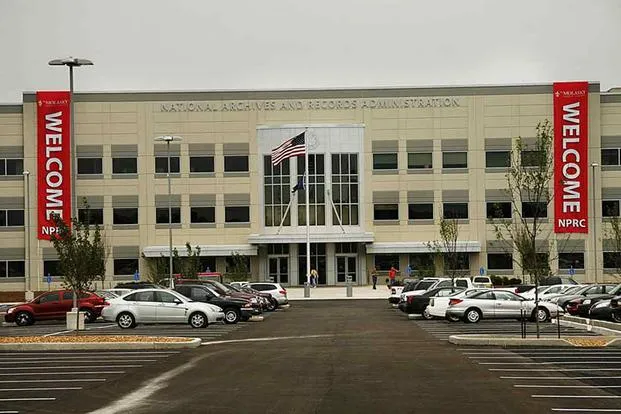 Photo: National Personnel Records Center, via images01.military.com
Patients with complex medical histories who moved frequently, or who received care across multiple systems, were particularly vulnerable. Their story existed in fragments scattered across different offices, none of which communicated with the others. Assembling a coherent picture required detective work — phone calls, written requests, waiting weeks for paper copies to arrive by mail.
The Digital Turn and Its Promise
The push toward electronic health records in America accelerated dramatically with the Health Information Technology for Economic and Clinical Health Act of 2009, which provided financial incentives for healthcare providers to adopt certified electronic systems. Within a decade, the majority of American physicians had transitioned away from paper records.
The benefits were real and significant. Prescriptions became legible — no more pharmacists squinting at handwriting that might say "10mg" or might say "100mg." Records could be shared across providers within the same network in seconds. Allergy flags appeared automatically. Test results uploaded directly from labs without being transcribed by hand. For patients with complex conditions managed across multiple specialists, the improvement in coordination was substantial.
Patient portals — the online interfaces that let Americans view their own lab results, message their doctors, and request prescription refills — gave people access to their own health information in a way that simply didn't exist before. For the first time, your medical record wasn't something that happened to you and then disappeared into a filing cabinet. It was something you could read, track, and engage with.
What the Pixels Don't Capture
But the digital transformation of American healthcare also introduced complications that the manila folder era never had to confront.
Data security became a genuine concern in a way it never was when records were paper. Health data breaches have affected tens of millions of Americans over the past decade — hospital systems hacked, insurance databases exposed, personal medical information sold on the dark web. A folder in a filing cabinet could be stolen by someone who broke into one office. A compromised digital system can expose millions of records simultaneously.
There's also the matter of interoperability — or the persistent lack of it. Despite decades of effort and billions of dollars in investment, American electronic health records systems still frequently can't talk to each other. A patient who receives care at a hospital using one system and a specialist using a different one may still find their records siloed, their information failing to flow between providers the way the digital revolution promised it would.
And something subtler was lost in the transition. The handwritten folder represented a relationship — one doctor who knew your whole story, who had written it down themselves, who carried context that no database field could capture. The modern patient portal is comprehensive and accessible, but it's also clinical in a way that the old system, for all its flaws, wasn't. Your record is now less a narrative and more a dataset.
Your Health, Everywhere and Nowhere
The clock delta between the manila folder and the cloud-based health record is enormous — measured not just in decades but in fundamental assumptions about privacy, ownership, and the nature of the doctor-patient relationship.
We have more data about our health than any previous generation of Americans. We can check our lab results at midnight, message our doctors without calling, and carry a complete medication list on our phones. The old system's fragility and opacity were genuine problems that caused genuine harm.
But as your health data multiplies across systems, platforms, and databases you've never heard of, it's worth asking a question the filing cabinet era never required: who actually owns the story of your health? Once, the answer was simple — it sat in one folder, in one office, in the care of one physician who knew your name.
Today, the answer is considerably more complicated.