Paper, Pencil, and a Plan: The Lost Discipline of the Handwritten Grocery List
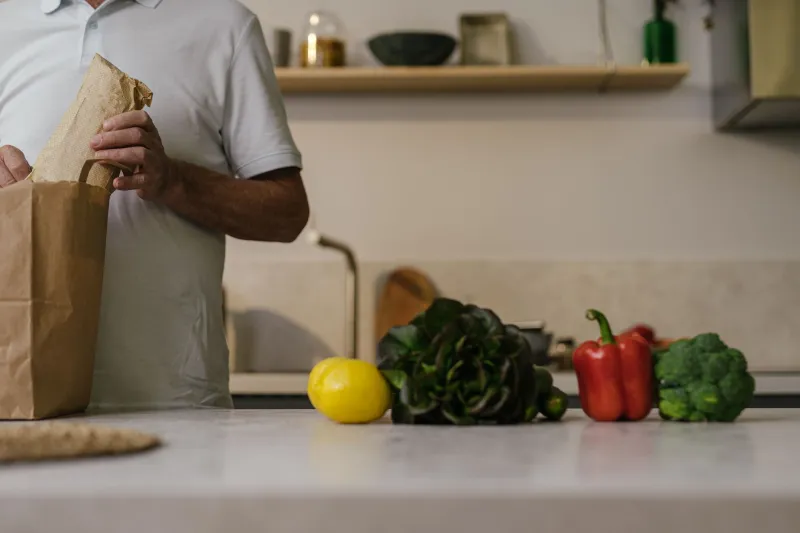
At some point before leaving for the store, someone in the household sat down and thought. Really thought. What do we need? What did we run out of? What are we making this week? The answers got written down — sometimes on a notepad, sometimes on the back of an envelope — and that piece of paper became the entire operating system for a week of meals.
It sounds almost quaint now. But the handwritten grocery list was doing a lot of invisible work.
The Ritual Behind the Refrigerator
For most of the twentieth century, grocery shopping in American households followed a recognizable rhythm. You shopped once a week, maybe twice. You worked from what you had. You wrote down what you needed. And you stuck — mostly — to what was on the list.
The list itself usually started at the refrigerator. You checked what was low, what was gone, what had gone bad. Then came the mental inventory of the pantry. Then the week's meals, sketched out loosely in your head: Tuesday is pasta, Thursday is chicken, Sunday is whatever's left. From that rough plan came the list.
This was meal planning, even if nobody called it that. It was budgeting, even if nobody wrote a spreadsheet. It was intentional consumption, built into the weekly routine without anyone having to make it a lifestyle brand.
The List as a Financial Tool
Here's what the handwritten list did that we don't talk about enough: it forced a spending decision before you entered the store.
Once you wrote something down, you'd already decided to buy it. And if it wasn't on the list, there was at least a moment of friction — a small internal negotiation — before it ended up in the cart. That friction wasn't perfect, but it was real. It slowed impulse spending down just enough to matter.
Studies on consumer behavior consistently show that unplanned purchases account for a significant chunk of grocery spending — some estimates put it above 50 percent of the average shopping trip. The list didn't eliminate impulse buys, but it gave you a baseline. It gave you a reason to say no, that's not why I came here.
For households watching their budgets — which was most households, for most of American history — that baseline mattered enormously. You knew roughly what the trip was going to cost before you walked in. There were no surprises.
What Replaced the List
Today, grocery shopping has been redesigned from the ground up to eliminate the kind of deliberate thinking that a handwritten list required.
Delivery apps surface personalized recommendations based on your order history. Store apps send you coupons for things you didn't know you wanted until the notification arrived. "Frequently bought together" suggestions append themselves to every item in your cart. And if you're shopping in person, store layouts have been engineered for decades specifically to slow you down and expose you to as many products as possible.
None of this is accidental. It's the infrastructure of impulse.
And then there's the sheer volume of options. A mid-sized American grocery store in the 1970s stocked around 9,000 products. Today, the average supermarket carries closer to 40,000. Writing a list when there were 9,000 items was a reasonable act of navigation. Walking into 40,000 items without a plan is something else entirely.
The Cognitive Cost of Convenience
There's a mental dimension to this that goes beyond money. Writing a grocery list required you to hold your household in your head — its rhythms, its preferences, its inventory, its schedule. You had to know what you had, what you needed, and what you were planning to make. That's not trivial cognitive work. It's a form of domestic fluency that got practiced every single week.
When apps and delivery services absorb that work, they're not just saving time. They're replacing a habit of attention. The household that once knew exactly what was in the pantry now has a vague sense that things will arrive when ordered. The family that once planned Tuesday's dinner on Sunday is now deciding at 6 p.m. what to add to a cart that will show up in two hours.
Convenience is real. But so is the cost of outsourcing that much of your own domestic awareness.
What the List Knew
The handwritten grocery list was never sophisticated. It was usually scrawled, sometimes illegible, occasionally forgotten on the kitchen counter. But it represented something worth noticing: a household that had thought ahead, made a plan, and showed up at the store with intention.
It also represented a relationship with food and money that was grounded in reality rather than in what an algorithm thought you'd probably add to your cart.
There's nothing stopping anyone from writing one today. Pen still works. Paper still exists. The discipline, though — the habit of sitting down before you shop and actually thinking — that's the part that's quietly disappeared. And it's costing us more than we realize.