The Friday Night Ritual: What We Surrendered When Browsing Became Scrolling
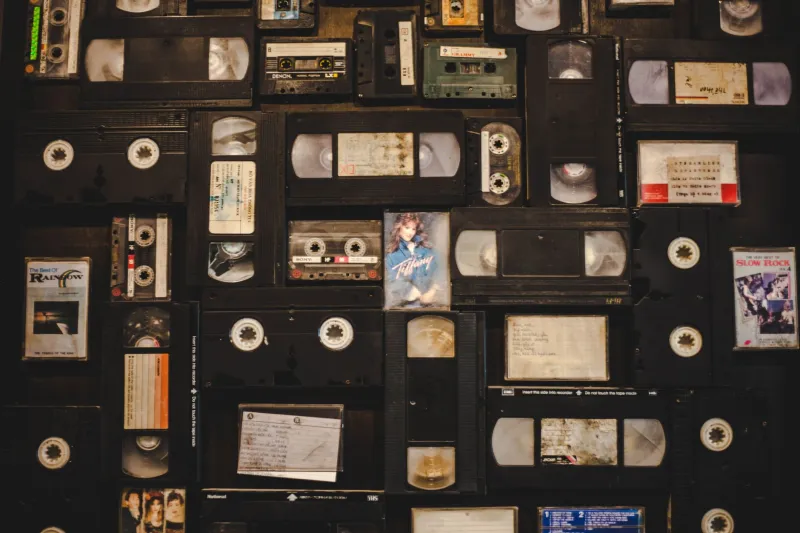
There was a specific kind of Friday night energy that no streaming platform has ever managed to replicate. You'd pile into the car, drive to Blockbuster or Hollywood Video or that one local place with the handwritten index cards taped to the shelves, and walk in with absolutely no plan. The smell of plastic cases. The hum of the overhead lights. Somewhere near the back, a TV looping a trailer nobody asked for. And in front of you: a finite number of choices, each one demanding your actual attention.
That was the video store. And it was, in ways we're only now beginning to appreciate, a surprisingly sophisticated system for making decisions.
The Scarcity That Made You Choose Better
Here's the thing about limited options: they force commitment. When your local store had maybe three hundred new releases and another wall of catalog titles, you couldn't punt. You had to pick something and live with it. You read the back of the box. You looked at the cast. You weighed whether you were in the mood for a thriller or something dumb and fun. You made a judgment call with incomplete information and then you owned that choice.
This sounds trivial, but it wasn't. Behavioral economists have spent decades documenting what's now called the paradox of choice — the well-established finding that more options don't make people happier, they make people more anxious and less satisfied with whatever they ultimately select. The video store, by accident of its physical constraints, solved this problem before anyone had properly named it.
Netflix, by contrast, has somewhere north of 5,000 titles available in the US at any given moment. Disney+, Hulu, Max, Prime Video, Apple TV+ — add them up and you're looking at a catalog that would take multiple human lifetimes to watch. The result, for most people, isn't cinematic abundance. It's a low-grade paralysis that ends with everyone watching a comfort rerun.
The Clerk Who Changed Your Taste
If you were a regular at a good video store, you had a person. Maybe it was the guy with the film school opinions who steered you toward Kurosawa when you came in asking for action movies. Maybe it was the woman who knew your family and kept a mental note that your kids were old enough for PG-13 now. Maybe it was just whoever was working the counter that night, bored enough to actually talk.
These interactions were, functionally, a recommendation algorithm — but one built from genuine human knowledge and real conversational context. When that clerk told you Fargo was worth your time, they weren't optimizing for watch-time metrics or subscriber retention. They just thought it was a great movie and wanted you to see it.
The streaming recommendation engine is a marvel of engineering. It knows your history, your ratings, your viewing patterns, the time of day you usually watch, and probably a dozen other signals you never consciously provided. And yet it has a strange tendency to show you things that are exactly like things you've already seen. It confirms your existing taste rather than expanding it. The video store clerk, when they were good, did the opposite.
The Walk Home Was Part of the Movie
There's a detail about the video store experience that rarely gets mentioned in the nostalgia pieces: the anticipation. You chose your movie, drove home, made the popcorn, and then you watched it. That gap — twenty minutes, maybe thirty — was part of the experience. You thought about what you were about to see. You got ready for it.
Streaming collapsed that gap to zero. You make a selection and the thing begins playing before you've fully committed to watching it. There's no threshold to cross, no minor ceremony of preparation. This makes the experience feel lower stakes, which in turn makes it easier to bail after twenty minutes if something else catches your eye.
Video store rentals had a deadline. You had the tape or the disc for a night, maybe two. You were going to watch it, because the clock was ticking and the late fee was real. That mild pressure was enough to make you follow through, which meant you actually finished movies, sat with their endings, and formed real opinions about them.
What Convenience Actually Cost
It would be dishonest to pretend the video store era was pure magic. It wasn't. New releases were always checked out on Friday nights. The horror section was a gamble. Some stores alphabetized by first name for reasons no one could explain. And if you lived in a rural area or a neighborhood that didn't have a store nearby, none of this applied to you at all.
Streaming fixed real problems. It made film history accessible to anyone with a connection. It eliminated the late fee, the wasted trip, the unavailable title. These are genuine improvements, and they matter.
But somewhere in the process of making everything available instantly, we lost the ritual. We lost the walk through the aisles, the weight of the plastic case in your hand, the moment of actual commitment when you carried something to the counter. We traded a deliberate, slightly effortful experience for one that requires almost nothing from us — and we're starting to notice the difference.
The clock moved forward on this one, as it always does. But sometimes looking back at what we left behind, you wonder if speed was the only thing worth measuring.