When Buying Meant Saving: The Quiet Revolution of Consumer Debt
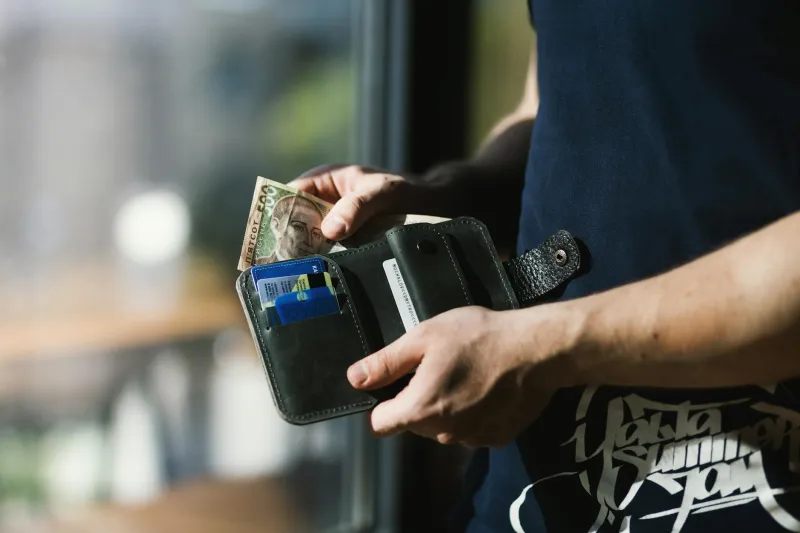
The Cash-Only World
In 1945, a typical American family's path to ownership looked like this: you wanted something, so you saved for it. Years passed. You set money aside each week. You watched the balance grow in a passbook at your local bank—a literal book where transactions were written by hand. When you had enough, you bought the thing. Then you owned it.
This wasn't virtue. It was necessity. Credit existed, but it was stigmatized. If you borrowed money to buy a car, you were a reckless person. If you bought furniture "on time," you were admitting you couldn't afford it—which meant you were poor. Department stores offered charge accounts, but they were framed as a convenience for regular customers, not as a substitute for having money.
The psychology of this system was profound. Buying something meant you had genuinely saved for it. Ownership carried with it a sense of accomplishment. You had delayed gratification and proven you were responsible. Debt, by contrast, was shame. It meant you'd failed to plan, failed to save, failed to be prudent.
A house was the one major exception. Mortgages were acceptable because they were long-term, secured by the property itself, and because buying a house was considered a marker of stability and maturity. But even then, the down payment mattered enormously. In 1950, you were expected to put down 30–40% of the purchase price in cash. The remaining debt was something to be paid off methodically, a burden to be carried but also a sign of serious intent.
The Diners Club Moment
On February 8, 1950, Frank McNamara sat at a restaurant in New York City and realized he'd forgotten his wallet. The embarrassment was acute. But it sparked an idea: what if restaurants could issue a card that proved you could pay? What if you could charge your meal, and settle up once a month?
The Diners Club card was born from that moment. It wasn't a credit card in the modern sense—it was more like a charge account that you paid in full each month. But it was revolutionary. It meant you could eat at a restaurant without cash in your pocket. You could prove your creditworthiness with a small piece of cardboard.
The first year, Diners Club had 200 members. By 1955, it had 250,000. The card became a symbol of sophistication, of being the kind of person who ate at nice restaurants and traveled. It was aspirational.
But Diners Club was still fundamentally different from modern credit cards. You had to pay your balance in full each month. It wasn't debt—it was convenience. The real transformation came with Visa and Mastercard in the 1960s, which introduced the concept of revolving credit: you could carry a balance month to month, paying interest on whatever you didn't pay off.
This was the true revolution, though hardly anyone noticed it as such at the time.
The Slow Normalization of Debt
The credit card industry grew through the 1960s and 1970s, but adoption was still gradual. Older Americans, shaped by the Depression, remained skeptical. Paying interest on everyday purchases seemed wasteful and irresponsible. The idea of carrying debt as a permanent state was alien.
But younger Americans—people born after World War II, raised in prosperity—had a different relationship with the future. They expected things to get better. They believed they'd earn more money tomorrow than they made today. From that perspective, borrowing to buy something now made sense. You could enjoy the thing while paying for it over time.
The credit card industry understood this psychology and exploited it brilliantly. Credit cards weren't marketed as debt. They were marketed as freedom, convenience, and status. "Don't leave home without it," American Express advertised, suggesting that the card itself was a form of security.
By the 1980s, credit cards had become ubiquitous. Banks mailed unsolicited cards to millions of Americans. Interest rates were high—18%, 21%, sometimes higher—but that barely mattered because the payments seemed manageable. You could buy a television and pay $30 a month. You could buy clothes and spread the cost across several months. The total interest paid was invisible, buried in the monthly statement.
The Psychology of Invisible Debt
This is the genius and the danger of the credit card: it decouples purchase from payment. In the cash world, buying something meant watching money leave your hand. The pain was immediate and visceral. With a credit card, you swipe, you get the thing, and the bill arrives later. The psychological impact is entirely different.
Research in behavioral economics has confirmed what the credit card industry discovered empirically: people spend more when they use credit than when they use cash. It's not because they're irrational. It's because the pain of payment is delayed and diffused. A $100 purchase on a credit card feels like a $10 monthly payment for ten months. The cost is spread across time and mixed with other purchases, making it hard to grasp the true total.
By the 1990s, this had become the norm. Americans carried credit card debt as a matter of course. The average household with credit card debt owed roughly $2,000 in 1990. By 2000, that had risen to $4,000. By 2010, it was $7,000. And these are averages—many households owed far more.
The shift in psychology was complete. Debt was no longer shameful. It was normal. It was how you bought things. The question wasn't "Should I borrow for this?" but "Which card should I use?"
From Savers to Borrowers
The personal savings rate in America tells the story starkly. In 1960, Americans saved roughly 8% of their disposable income. By 1980, that had risen to 11%—the peak of American saving. After that, it declined steadily. By 2000, Americans were saving about 3% of disposable income. By 2010, it was below 4%. Today, it hovers around 4–5%, with significant variation by income level.
Meanwhile, consumer debt has exploded. In 1960, total consumer debt (including mortgages) was about $150 billion. In 2024, it's over $17 trillion. Adjusted for inflation and population, the growth is staggering.
What changed isn't that Americans became less responsible. It's that the entire financial infrastructure shifted to make borrowing easier and saving less rewarding. Interest rates on savings accounts, which once matched inflation, fell to near zero. Credit card companies became more aggressive. The cultural messaging shifted from "save for what you want" to "have what you want now."
There's also a class dimension to this story. The wealthy still largely operate in the old system—they save, they buy with cash or deferred payment options that are cheaper, they avoid high-interest debt. But for middle and working-class Americans, credit cards became the primary tool for consumption. When emergencies happen—medical bills, job loss, unexpected expenses—credit card debt becomes not a choice but a necessity.
The Permanent Condition
Today, the average American household carries credit card debt of roughly $6,000. Many carry multiples times that. The monthly payment becomes as routine as rent or utilities—a permanent line item in the budget, something you've accepted as an unchangeable part of modern life.
This would have seemed impossible and immoral to an American in 1950. The idea of paying interest on a meal, on clothes, on everyday purchases, would have been incomprehensible. But it's become so normalized that we barely think about it.
The credit card companies have won so completely that the old way of thinking—save first, buy later—now seems quaint. Young people today often don't even have a savings account. They have credit cards and student loans and car payments. Debt is the default.
What We Gained and Lost
There are real benefits to this system. Credit allows people to buy homes, cars, and educations without waiting decades. It provides a safety net when emergencies arise. It democratized consumption—you don't have to be wealthy to own nice things.
But something fundamental shifted in how we think about ownership, responsibility, and the future. When you save for something, you think about whether you really need it. When you borrow for it, that question disappears. The interest you pay is the cost of not thinking.
The American dream, once built on saving and delayed gratification, is now built on borrowing and immediate consumption. We've optimized the present at the expense of the future, and called it progress.
The credit card sits in your wallet, lighter than a dollar bill, carrying more power than any physical currency ever could. It's the invisible mechanism through which we've collectively decided that having things now is worth paying more for them later. Whether that's a good trade is a question we've largely stopped asking.