When Strangers Shared Silence: The Death of America's Accidental Meeting Places
When Strangers Shared Silence: The Death of America's Accidental Meeting Places
There was a time when waiting meant more than just killing time. It meant sitting in a room full of strangers, sharing the collective experience of boredom, anxiety, or anticipation. The waiting room—whether at the doctor's office, the DMV, or the airport gate—served as America's accidental democracy, a place where CEOs sat next to construction workers, where teenagers flipped through the same outdated magazines as grandparents, where everyone was equally powerless against the tyranny of "please take a number."
Today, that world has quietly vanished.
The Theater of Shared Discomfort
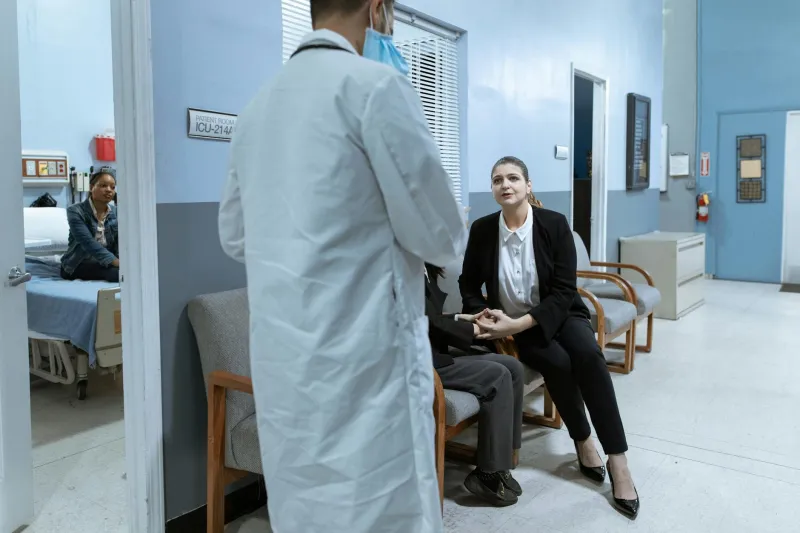
Walk into any medical office in 1985, and you'd find a carefully orchestrated social experiment. Twenty strangers arranged in uncomfortable chairs, united by nothing except their mutual submission to institutional time. The receptionist behind bulletproof glass held absolute power. The coffee table magazines were always three months old. The fish tank bubbled in the corner like a meditation bell.
People made eye contact. They commented on the weather. A mother might ask another parent about their child's age. Someone would inevitably complain about the wait, and others would nod in solidarity. These weren't friendships being born—they were micro-communities forming around shared inconvenience.
The DMV elevated this experience to an art form. Lines snaked through fluorescent-lit rooms where Americans from every economic bracket stood together, equally miserable, equally powerless. The wealthy couldn't buy their way out. The connected couldn't pull strings. Everyone waited, and in that waiting, something remarkable happened: they became equals.
The Great Optimization
Then came the apps. Online appointment scheduling. Digital check-ins. Text message notifications that let you wait in your car instead of the lobby. Mobile boarding passes that eliminated the need to arrive early at the gate.
Each innovation solved a real problem. Who wants to sit in an uncomfortable chair for an hour when you could be productive elsewhere? Why should anyone endure the DMV when you can renew your license online? The improvements were genuine—and they were universally welcomed.
But something else disappeared along with the inefficiency.
The Isolation Upgrade
Today's waiting experience is radically different. Medical offices have touchscreen check-in kiosks and send text updates about delays. Patients arrive precisely when called and leave immediately after. The waiting room, when it exists at all, is populated by people staring at their phones, earbuds firmly in place, each person existing in their own digital bubble.
Airports have become transit zones where travelers navigate from security to gate to plane without meaningful human interaction. Self-service kiosks handle check-in. Mobile apps provide boarding passes. Even the gate areas, once social spaces where delayed passengers bonded over shared frustration, have become silent galleries of people absorbed in their devices.
The DMV has largely moved online, and when physical visits are required, appointment systems have eliminated the democratic misery of the endless line. You arrive at your designated time, complete your business efficiently, and leave. No waiting. No conversation. No shared experience of bureaucratic absurdity.
What We Lost in the Translation
Those old waiting rooms weren't just inefficient—they were accidentally profound. They created what sociologists call "weak ties"—brief connections between strangers that, while seemingly insignificant, actually strengthen the social fabric of communities.
In waiting rooms, Americans encountered people they'd never meet otherwise. The executive learned that the janitor was saving for his daughter's college tuition. The suburban mom discovered that the elderly man reading Field & Stream was a Korean War veteran. These weren't deep relationships, but they were humanizing moments that reminded people that their community was bigger and more diverse than their usual social circles.
The shared experience of institutional waiting also created a peculiar form of civic education. Everyone learned that sometimes, regardless of status or urgency, you simply had to wait your turn. It was a lesson in equality that money couldn't buy and influence couldn't shortcut.
The Price of Convenience
Today's optimized systems have undeniably improved our lives. We waste less time. We experience less frustration. We can schedule our interactions with institutions around our other commitments.
But we've also eliminated one of the last truly democratic spaces in American society. The waiting room was a place where social and economic differences temporarily dissolved into shared human experience. Rich and poor, young and old, educated and working-class—everyone was equally subject to the same institutional rhythms.
Now, even when we do find ourselves waiting, we're not really present with each other. We're texting, scrolling, streaming, or working remotely. The physical space remains, but the social space has evaporated.
The Silence Between Us
Perhaps most significantly, we've lost the experience of shared boredom—and the small talk, observations, and human moments that grew from it. In our rush to eliminate inefficiency, we've also eliminated the spaces where strangers became slightly less strange to each other.
The waiting room may have been uncomfortable, inconvenient, and sometimes maddening. But it was also one of the few places where Americans from different walks of life were forced to simply exist alongside one another, sharing time if not conversation, experiencing the same small frustrations and minor victories.
In optimizing away the wait, we've optimized away something harder to measure but perhaps equally valuable: the accidental community that formed when strangers had no choice but to share the same uncomfortable chairs, the same stale air, and the same slow march of institutional time.
The efficiency was worth gaining. The question is whether the isolation was worth accepting in return.