The Sound of Unavailability
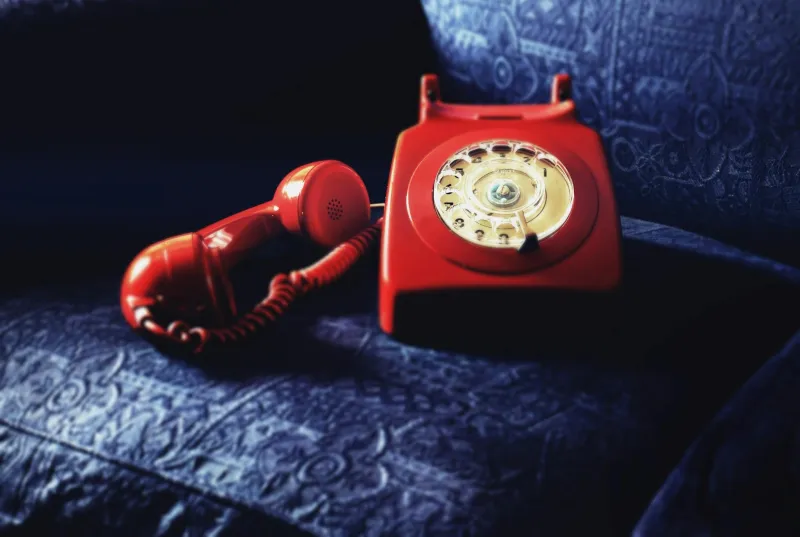
There was a time in America when being unreachable wasn't rude — it was inevitable. Pick up any phone between 1950 and 1980, dial a number, and you might hear that familiar rapid beeping: the busy signal. Someone was already using that line, and you'd simply have to wait.
This wasn't a technical failure. It was how phones worked. Each household had one line, sometimes shared with neighbors on party lines. When that line was occupied, it was occupied. No call waiting, no voicemail, no text messages as backup. You got a busy signal, hung up, and tried again later.
And nobody thought this was a problem.
The Rhythm of Disconnection
The busy signal created a natural rhythm to American communication. You'd call your friend to make weekend plans, hear that distinctive tone, and simply try again in twenty minutes. Maybe you'd call your mom to check in, get a busy signal because she was talking to your aunt, and call back after dinner.
This wasn't inconvenience — it was life. The busy signal taught patience and created boundaries that nobody had to negotiate or defend. Your phone line was yours when you were using it, and others would wait their turn.
Families developed strategies around this limitation. Important calls happened at agreed-upon times. Teenagers learned to keep conversations reasonably short, knowing others might need the line. The phrase "I'll call you back" actually meant something, because sometimes you had to.
When Emergencies Had to Wait
Even urgent matters worked differently. If you needed to reach someone immediately and got a busy signal, you had limited options. You could drive over to their house, ask a neighbor to check on them, or simply keep trying. Emergency services had priority lines, but for everything else, urgency had to accommodate availability.
This created a different relationship with time and crisis. People planned more carefully, anticipated delays, and accepted that immediate communication wasn't always possible. A busy signal on Christmas morning while trying to wish family well wasn't a technological failure — it was a sign that lots of people were doing the same thing you were.
The Technology That Changed Everything
Call waiting, introduced widely in the 1970s, began eroding this natural disconnection. Suddenly, being on the phone didn't mean being unavailable — it meant juggling multiple conversations. The busy signal became less common, replaced by the ability to interrupt one call for another.
Cordless phones in the 1980s extended our reach within homes. Cell phones in the 1990s extended it everywhere. Each innovation chipped away at the concept of being genuinely unreachable. By the 2000s, a busy signal had become almost extinct, replaced by voicemail, call forwarding, and multiple devices.
The Always-On Expectation
Today, being unreachable requires deliberate effort. We have smartphones, tablets, smartwatches, and computers, all capable of receiving calls, texts, emails, and dozens of other forms of instant communication. The expectation isn't just that you can be reached — it's that you should be reached, immediately, regardless of what you're doing.
We've created elaborate systems to manage this constant availability: Do Not Disturb modes, airplane mode, and complex notification settings. We schedule "digital detoxes" and "unplugged weekends" to recreate what the busy signal once provided automatically.
What We Lost in Translation
The busy signal protected something valuable: the right to be engaged elsewhere without explanation or apology. When someone got a busy signal, they understood you were talking to someone else, and that was sufficient. No need to explain who, why, or for how long.
This natural barrier created space for deeper conversations. Knowing that others couldn't reach you while you were on the phone meant both parties could focus completely on their discussion. There was no pressure to cut conversations short for incoming calls, no anxiety about missing something important happening elsewhere.
The busy signal also protected family time in ways we're still learning to appreciate. Dinner conversations, homework help, and bedtime stories happened without interruption because the outside world literally couldn't get through. The phone line was occupied, and that was that.
The Paradox of Perfect Connectivity
We solved the busy signal problem so completely that we created a new one: the impossibility of being unavailable. Today's communication tools offer infinite ways to reach each other, but they've also created infinite pressure to respond immediately.
The phrase "sorry, my phone was dead" has become our closest equivalent to the busy signal — a socially acceptable excuse for temporary unreachability. We've had to invent technological solutions (airplane mode, Do Not Disturb) to recreate boundaries that once existed naturally.
Looking Back at the Sound of Limits
The busy signal wasn't just a technical limitation — it was a boundary that protected personal time and attention. It forced callers to be patient and recipients to be present. In eliminating this small inconvenience, we've created a world where being fully present with one person means actively excluding everyone else.
Perhaps the busy signal's greatest gift wasn't the information it provided — that someone was unavailable — but the permission it granted to wait, to try again later, and to accept that not everything needed to happen right now. In our rush to connect everyone to everything instantly, we might have disconnected ourselves from the quiet value of being occasionally, unavoidably, perfectly unreachable.