When Learning Meant Living: How America Traded Master Craftsmen for YouTube Tutorials
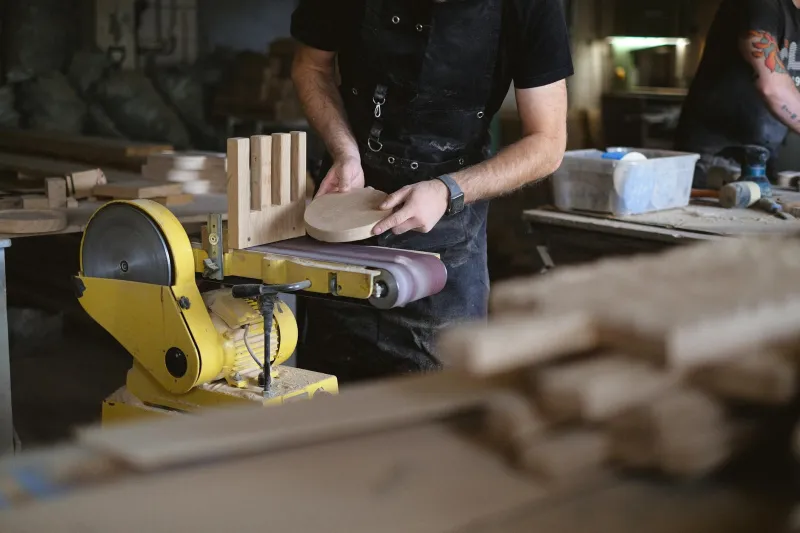
When Learning Meant Living: How America Traded Master Craftsmen for YouTube Tutorials
In 1850, if you wanted to learn how to build a cabinet, you didn't watch a video. You didn't take a class. You found a master craftsman and convinced him to let you sweep his shop floors for the privilege of watching him work. If you were lucky — and persistent — he might eventually let you hold his tools.
This was the world of apprenticeship, where knowledge flowed like honey: slowly, carefully, and only to those willing to wait.
The Sacred Ritual of Slow Learning
American apprenticeship wasn't just job training — it was a way of life. A young man (and it was almost always a man) would live with his master for seven years, learning not just the craft but the entire ecosystem around it. A printer's apprentice didn't just learn to set type; he learned how to mix ink, maintain the press, deal with difficult customers, and run a business.
Benjamin Franklin famously apprenticed to his brother James, a printer in Boston. The arrangement was legally binding — Franklin couldn't just quit if he got bored or found something better. He was committed, and so was his master, who provided room, board, and gradually increasing responsibility.
The relationship was intensely personal. Masters knew their apprentices' families, their strengths, their character flaws. They taught not just technique but ethics, work habits, and the unwritten rules of their trade. Knowledge wasn't just transferred — it was embodied, lived, breathed.
The Human Chain of Mastery
This system created something remarkable: an unbroken chain of expertise stretching back generations. A master carpenter in 1800 Philadelphia had learned from someone who learned from someone who might have built houses in colonial times. Each link in the chain added refinements, innovations, and hard-won wisdom.
The apprentice-journeyman-master progression meant that by the time someone could call himself a master craftsman, he had typically spent 10-15 years perfecting his skills. A master wasn't just someone who knew how to do something — he was someone who had made every possible mistake and learned from them.
Consider the blacksmith's apprentice. He didn't start by making horseshoes. He spent months just learning to maintain the fire at the right temperature, to recognize the subtle color changes in heated metal, to develop the rhythm and strength needed for hours at the anvil. By the time he touched his first piece of iron, his body and mind had been shaped by thousands of hours of observation and preparation.
The Great Acceleration
The industrial revolution began chipping away at apprenticeship in the mid-1800s. Factories could train workers faster by breaking complex jobs into simple, repetitive tasks. Why spend seven years learning to make an entire shoe when you could learn to operate a sole-cutting machine in a week?
The GI Bill after World War II accelerated the shift toward formal education. Veterans could get college degrees instead of apprenticeships, and suddenly a bachelor's degree became the new gateway to middle-class prosperity. Trade skills, once the backbone of American craftsmanship, began to seem old-fashioned.
By the 1970s, most apprenticeship programs had withered away, surviving mainly in a few trades like plumbing and electrical work — and even those were increasingly supplemented by classroom instruction rather than pure hands-on learning.
The YouTube University Era
Today, if you want to learn to build a cabinet, you have options Benjamin Franklin couldn't have imagined. YouTube hosts millions of tutorials. Online courses promise to teach woodworking in weeks instead of years. Weekend workshops offer crash courses in everything from blacksmithing to bread-making.
The advantages are obvious: accessibility, speed, convenience. You can learn basic carpentry skills in your spare time without quitting your day job or moving across the country to find a master craftsman. The barrier to entry for most skills has never been lower.
A modern learner can access expertise from around the world. Want to learn Japanese woodworking techniques? There's a video for that. Interested in traditional French pastry methods? Dozens of chefs share their secrets online. The democratization of knowledge means that specialized skills once guarded by guilds are now available to anyone with an internet connection.
What We Gained — and What We Lost
The shift from apprenticeship to digital learning represents one of the most dramatic changes in how humans acquire skills. We've gained speed, accessibility, and choice. We've lost depth, relationship, and the patient cultivation of true mastery.
Modern learning is wide but often shallow. A YouTube tutorial can teach you how to make a dovetail joint, but it can't teach you how wood feels different on humid days, or how to adjust your technique when working with a piece that has hidden knots. It can't provide the hundreds of small corrections and insights that come from working alongside someone who has made that joint thousands of times.
We've also lost the human element — the mentorship, the gradual building of character alongside skill, the sense of belonging to a tradition larger than yourself. The master craftsman wasn't just teaching technique; he was passing on a way of seeing, a standard of excellence, a pride in work that extended far beyond the immediate task.
The Unmeasurable Loss
Perhaps most importantly, we've lost the concept of true mastery itself. In the apprenticeship system, becoming a master meant something specific and hard-won. Today, anyone who completes an online course or gets a certification can claim expertise. The word "master" has been diluted to near meaninglessness.
This shift reflects broader changes in American culture: our impatience with slow processes, our faith in technological solutions, our preference for individual achievement over collective tradition. We've optimized for efficiency and forgotten that some things — wisdom, character, deep skill — can't be rushed.
The old apprenticeship system wasn't perfect. It was often exclusionary, rigid, and slow to change. But it understood something we've forgotten: that the most valuable knowledge isn't just information that can be transferred quickly. It's wisdom that must be lived, practiced, and embodied over time.
In our rush to learn everything faster, we may have lost the ability to learn anything truly deeply. The question isn't whether we can go back — we can't. But we might ask whether, in all our acceleration, we've left something essential behind.