When Books Had Addresses: How America Lost 10,000 Places to Get Lost in Stories
The Neighborhood Oracle
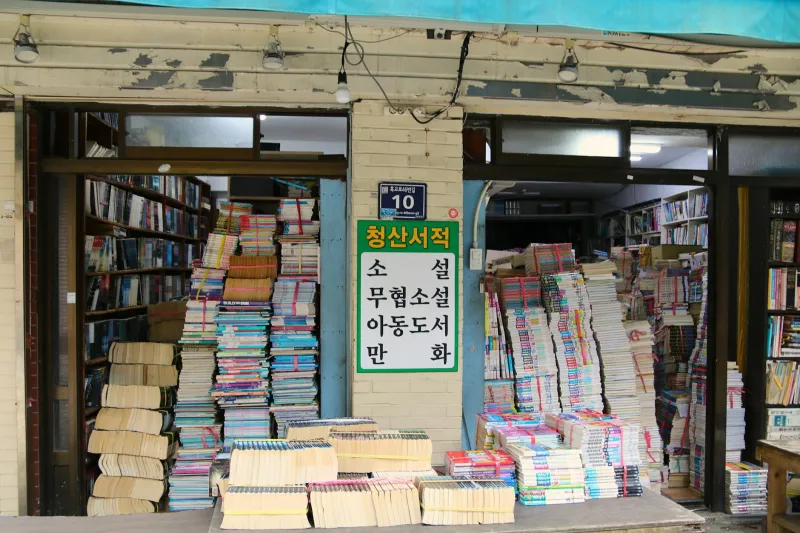
Walk into any American town in 1991, and you'd likely find at least one independent bookstore. Not a chain, not a superstore — just a local shop where the owner knew which mystery novels would keep you up all night and could recommend the perfect cookbook for your skill level. These weren't just retail spaces; they were cultural institutions where browsing was an art form and serendipity ruled.
America had over 10,000 independent bookstores then. The person behind the counter had probably read half the inventory. Book clubs met in cramped back rooms. Authors showed up for readings where twelve people constituted a decent crowd. You could spend an hour wandering sections you'd never explored, stumbling across books you didn't know you needed.
Today? Fewer than 2,000 independent bookstores remain.
The Superstore Revolution
The first wave of change arrived in the form of superstores. Borders and Barnes & Noble promised something revolutionary: every book you could want under one roof, plus coffee. These warehouse-sized spaces offered selection that small shops couldn't match — 100,000 titles versus the typical independent store's 10,000.
Americans embraced the convenience. Why visit three different bookstores to find a specific title when one massive store guaranteed it would be there? The superstores added comfortable seating, cafes, and evening events. They became destinations for dates, study sessions, and lazy weekend afternoons.
But something subtle was lost. The superstores employed staff who knew inventory systems, not necessarily books. Recommendations came from corporate algorithms rather than personal passion. The quirky, unexpected discoveries that came from a shop owner's eccentric taste gave way to bestseller displays and promotional endcaps.
The Digital Tsunami
Then came Amazon. What started as an online bookstore in 1995 seemed like a curiosity — who would buy books without touching them first? The answer: almost everyone.
Amazon offered something no physical store could match: infinite shelf space. Every book ever printed, available with next-day delivery. Customer reviews replaced the bookstore clerk's recommendations. "Customers who bought this item also bought" became the new discovery mechanism.
The numbers tell the story starkly. By 2020, Amazon controlled roughly 50% of all book sales in America — print and digital combined. Meanwhile, Borders collapsed entirely in 2011, closing 399 stores in a single year. Barnes & Noble, once the destroyer of independents, now fights for survival against the very digital forces it helped unleash.
What Got Lost in Translation
Buying a book today takes thirty seconds. Open an app, tap "Buy Now," and the book appears on your device or arrives at your door tomorrow. It's remarkably efficient. It's also remarkably sterile.
The old bookstore experience was inherently social and unpredictable. You might discover a new author because their book was shelved next to your favorite. A fellow browser might recommend something completely outside your usual genre. The bookstore owner might hand-sell you a novel that hadn't found its audience yet.
These interactions shaped reading culture in ways we're only beginning to understand. Independent bookstores were tastemakers, introducing readers to diverse voices and unconventional narratives that might never surface in an algorithm-driven recommendation system. They fostered literary communities where readers connected over shared discoveries.
The Speed of Everything
Today's book-buying culture reflects our broader relationship with instant gratification. Want to read a book mentioned in a podcast? Download it immediately. Curious about an author referenced in an article? One click delivers their entire catalog. The friction that once existed between wanting and having has virtually disappeared.
This immediacy has democratized reading in remarkable ways. Physical location no longer determines access to books. Readers in rural areas enjoy the same selection as those in major cities. Niche interests can be satisfied instantly rather than requiring special orders that took weeks to arrive.
But the speed also eliminates the contemplation that scarcity once encouraged. When every book is instantly available, the decision to buy becomes casual rather than deliberate. The anticipation that built between ordering and receiving has evaporated.
The Stubborn Survivors
Not every independent bookstore surrendered to the digital tide. The survivors learned to offer what Amazon couldn't: community, curation, and experience. They host author events, book clubs, and literary discussions. They know their customers' tastes and make personal recommendations. They've become gathering places for people who view reading as a social activity rather than a solitary transaction.
These remaining stores often thrive by specializing — mystery bookstores, children's literature, rare books, or local authors. They've carved out niches where personal knowledge trumps algorithmic efficiency.
The Clock That Can't Turn Back
The transformation of America's book-buying culture represents more than retail evolution — it's a fundamental shift in how we discover and consume culture. We've traded serendipity for efficiency, community for convenience, and browsing for buying.
There's no returning to 1991's landscape of 10,000 independent bookstores. But understanding what we've lost helps us appreciate what the survivors still offer: the irreplaceable experience of being surprised by what we didn't know we were looking for.