The Grease-Stained Prophet
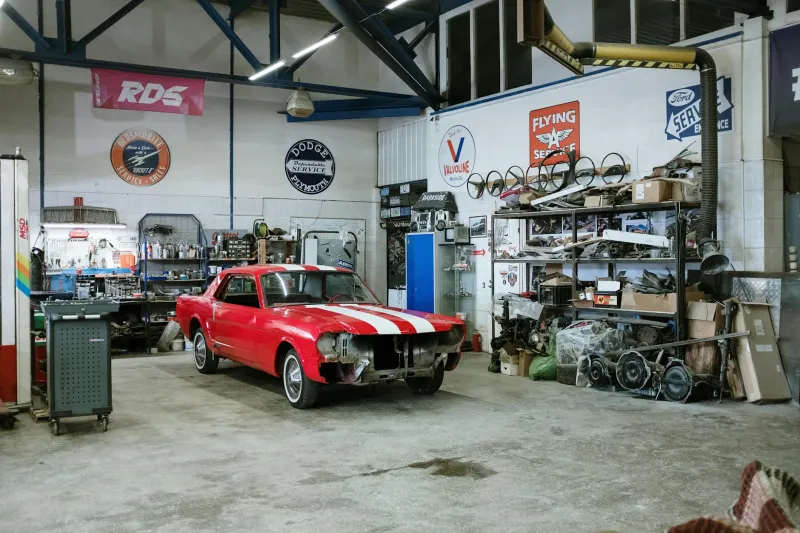
Pete's Auto Shop sat on the corner of Main and Third, where the smell of motor oil mixed with fresh coffee from the diner next door. For thirty years, Pete knew every car in town by sound alone. He could diagnose a transmission problem from the parking lot and explain it to you while wiping his hands on a rag that had seen better decades.
Walk into Pete's shop in 1985, and you'd find him elbow-deep in an engine bay, surrounded by tools that looked like they belonged in a museum. A socket wrench set, some screwdrivers, maybe a timing light if he was feeling fancy. He'd pull out whatever was broken, show it to you, and explain exactly why your alternator decided to give up on life.
"See this bearing here?" he'd say, holding up a worn piece of metal. "That's your problem right there. Thirty-seven dollars for the part, two hours of labor. You'll be good for another hundred thousand miles."
You believed him because Pete had fixed your dad's Buick, and your dad's dad's Ford before that. The bill came to $89, and you paid it without question because Pete had never steered you wrong.
The Digital Fortress
Fast-forward to today, and your car is essentially a computer on wheels. Modern vehicles contain more lines of code than the Space Shuttle. When that check engine light flickers on, you're not heading to Pete's corner shop anymore. You're making an appointment at the dealership, where a technician plugs a $10,000 diagnostic computer into your dashboard to read error codes that might as well be hieroglyphics.
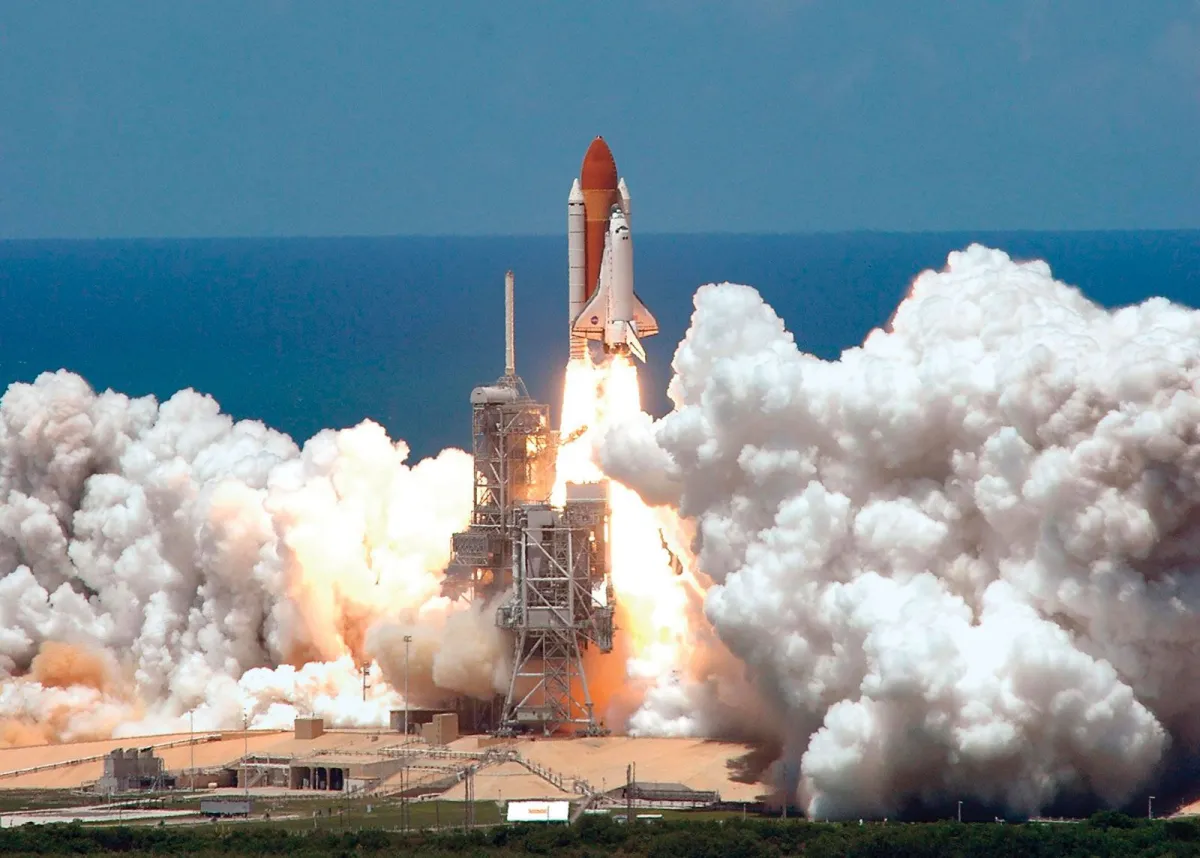 Photo: Space Shuttle, via cdn.britannica.com
"Your vehicle is showing a P0420 code," the service advisor announces, consulting his tablet. "We'll need to run a comprehensive diagnostic to determine if it's the catalytic converter, oxygen sensors, or a software glitch. The diagnostic fee is $150, and depending on what we find, repairs could range from $400 to $2,800."
The mechanic never actually looks under the hood. The computer does the looking, the thinking, and increasingly, the fixing. Software updates arrive over WiFi. Parts are ordered based on VIN numbers and computer recommendations. The human element has been systematically engineered out of the equation.
The Trust Economy
What we've lost isn't just the ability to understand our cars—it's the relationship that made car ownership manageable for ordinary Americans. Pete's shop operated on handshake economics. He'd start work on your car and present the bill when it was fixed. If money was tight, you could pay him next month. If the repair didn't hold, he'd fix it again for free.
That trust flowed both ways. Pete knew you weren't trying to cheat him, and you knew Pete wasn't trying to sell you unnecessary repairs. The relationship was built on decades of shared history, not quarterly profit margins.
Today's automotive repair industry operates more like healthcare—complex, expensive, and largely incomprehensible to the patient. Dealerships present repair estimates that read like medical bills, full of technical jargon and inflated labor charges. Independent mechanics, the inheritors of Pete's tradition, find themselves locked out of newer vehicles by proprietary software and "right to repair" restrictions.
The Knowledge Divide
Pete learned his trade through apprenticeship and experience. He could rebuild a carburetor blindfolded and diagnose engine problems by listening to the rhythm of pistons. That knowledge was transferable—he could teach his nephew Mike everything he needed to know over a few summers of working together.
Modern automotive technology requires specialized training that changes every model year. Technicians attend manufacturer-specific courses to learn how to service electric vehicles, hybrid systems, and computer-controlled transmissions. The barrier to entry has grown so high that many small shops simply can't keep up.
The irony is that while cars have become more reliable, they've also become more mysterious. Your grandfather could probably fix his 1967 Chevelle with a basic tool kit and a Chilton manual. Your Tesla requires a software update and a certified technician with access to proprietary diagnostic equipment.
The Price of Progress
None of this is to say that automotive technology hasn't improved dramatically. Modern cars are safer, more efficient, and more reliable than anything Pete worked on. Anti-lock brakes, airbags, and electronic stability control have saved countless lives. Fuel injection systems and computer-controlled engines have reduced emissions while improving performance.
But progress came with a hidden cost. We traded the transparency and accessibility of mechanical systems for the efficiency and precision of electronic ones. In the process, we lost something valuable—the ability to understand and maintain the machines that define American freedom.
The New Mechanics
Today's automotive technicians are highly skilled professionals who combine mechanical knowledge with computer expertise. They're not better or worse than Pete—they're different, adapted to serve a different kind of machine. But the relationship between car and owner has fundamentally changed.
Where Pete could show you exactly what was wrong and why, today's diagnostic process often feels like consulting an oracle. The computer says your car needs a new catalytic converter, and you either trust the computer or get a second opinion from another computer.
The corner shop with the coffee smell and the honest mechanic hasn't disappeared entirely. But it's becoming as rare as a manual transmission—a relic of an era when Americans could still look under the hood and understand what they were looking at.
In losing Pete's shop, we gained reliability and efficiency. But we also lost something harder to quantify: the confidence that comes from understanding your own machine, and the trust that comes from knowing the person who fixes it actually cares whether you make it home safely.