Stools, Soda Jerks, and Social Change: When America's Meals Came With Conversation
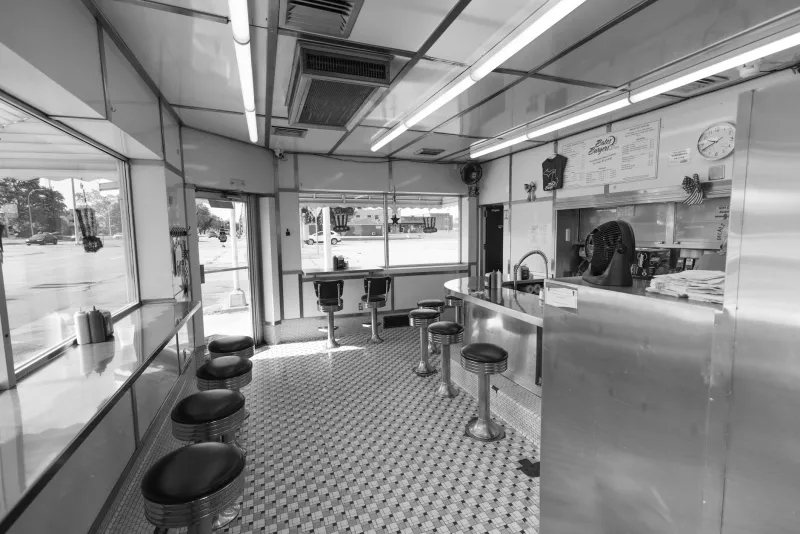
Picture this: It's 1955, and you're hungry in downtown Cleveland. You don't pull into a drive-thru lane or tap an app on your phone. Instead, you push through the glass doors of Woolworth's, slide onto a red vinyl stool at the lunch counter, and nod to the regular sitting two seats down. The waitress — they called her that, not a "team member" — knows your order before you say it.
This wasn't just how Americans ate. It was where they belonged.
The Golden Age of Counter Culture
For nearly half a century, from the 1920s through the 1960s, lunch counters were America's unofficial town squares. Tucked inside five-and-dime stores, drugstores, and department stores, these U-shaped serving areas fed millions of Americans daily. Woolworth's alone operated over 2,000 lunch counters at its peak, serving simple fare: grilled cheese for 35 cents, coffee for a nickel, and pie that someone's grandmother might have made.
The setup was brilliantly efficient. Customers sat shoulder-to-shoulder on swiveling stools, facing a grill where short-order cooks performed their daily theater. Orders traveled just inches from preparation to plate. No drive-thru windows, no delivery drivers, no third-party apps taking a cut. Just people, food, and the ancient ritual of eating together.
More Than Just a Meal
These counters served as democracy in action — at least for those allowed to participate. Office workers grabbed quick lunches next to construction crews. Teenagers sipped cherry Cokes after school while their mothers shopped for fabric. Traveling salesmen found familiar comfort in unfamiliar towns, knowing that a Woolworth's counter in Phoenix served the same tuna melt as one in Pittsburgh.
The lunch counter waitress became an American archetype: efficient, wise-cracking, maternal. She remembered how you liked your eggs, asked about your kids, and somehow managed to keep eight orders straight without writing anything down. Tips were modest but personal — a relationship, not a transaction.
But this communal dining had clear boundaries. In the segregated South, lunch counters became flashpoints for civil rights activism. The 1960 Greensboro sit-ins began when four Black college students sat at a whites-only Woolworth's counter, demanding service and dignity. Their courage transformed lunch counters from symbols of exclusion into catalysts for change.
The Drive-Thru Revolution
Everything changed when America fell in love with cars and speed. The first drive-thru appeared in 1947 at Red's Giant Hamburg in Missouri, but it took decades to reshape how we ate. McDonald's perfected the model: standardized food, minimal human interaction, and the promise that you could eat without ever leaving your car.
By the 1970s, shopping malls were replacing downtown shopping districts. Department stores closed their lunch counters, unable to compete with food courts that offered variety over community. Woolworth's shuttered its last lunch counter in 1997, ending an era that had fed America for generations.
Today's fast-casual chains promise "fresh" and "artisanal," but they've inherited the drive-thru's essential philosophy: food as fuel, dining as transaction. Even sit-down restaurants encourage customers to order through apps, pay through screens, and minimize contact with staff.
What We Gained and Lost
Modern food service offers undeniable advantages. Drive-thrus serve customers faster than any lunch counter could. Delivery apps bring restaurant meals to your door. Food trucks provide gourmet options in unexpected places. We can eat cuisine from dozens of cultures without leaving our neighborhoods.
But something irreplaceable vanished with those vinyl stools and Formica counters. Lunch counters forced interaction — with servers, with fellow diners, with your community. You couldn't eat there without acknowledging other people existed. The food might have been simple, but the experience was rich with human connection.
Consider the numbers: Americans now eat alone for over half their meals, up from 20% in the 1950s. We spend more time choosing what to eat (scrolling through delivery apps) than our grandparents spent actually eating. The average fast-food transaction takes 90 seconds; a lunch counter meal took 20 minutes, minimum.
The Echoes That Remain
A few lunch counters survive as museum pieces or nostalgic recreations. Diners still dot American highways, serving as pale echoes of their downtown predecessors. Some trendy restaurants now feature counter seating, though customers often stare at phones instead of talking to neighbors.
The lunch counter's DNA persists in unexpected places: airport bars where travelers strike up conversations, coffee shops where regulars claim favorite spots, food trucks where customers wait together for their orders. These spaces remind us that eating was once inherently social, that meals could build community instead of just satisfying hunger.
The next time you tap "order now" on your phone, imagine instead walking into Woolworth's, claiming a stool, and asking the person next to you how their day is going. That simple act — eating together, talking to strangers, belonging somewhere — once defined how America fed itself. The food was ordinary, but the ritual was extraordinary.