The Sacred Shoebox Economy
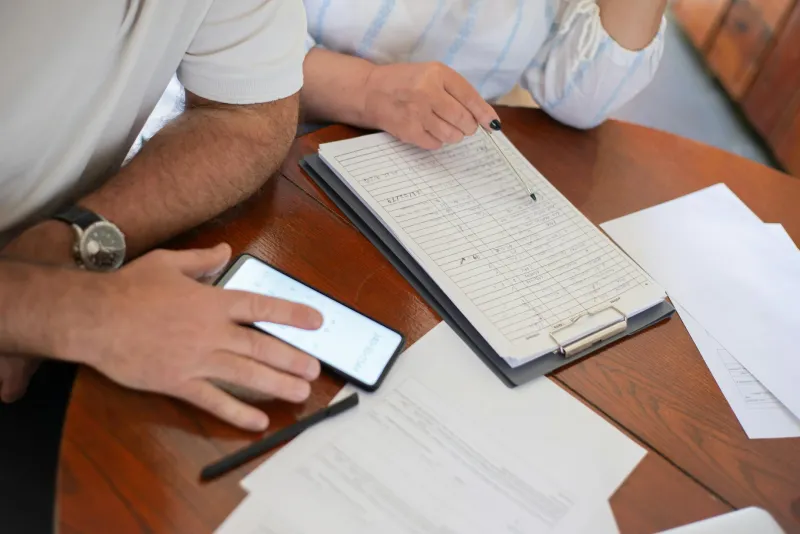
Every American household once contained at least one shoebox stuffed with papers. Not photographs or letters, but the essential documents of daily life: receipts, warranties, insurance cards, bank statements, and handwritten records that proved you'd paid for something, owned something, or were covered for something.
These weren't just papers — they were lifelines. Lose the receipt for that television repair, and you'd lost your warranty forever. Misplace your insurance card, and you might face full medical bills at the hospital. Forget to save the bank deposit slip, and you'd have no proof that check was ever deposited.
This paper economy shaped how Americans lived, worked, and planned. Every important transaction generated a physical document, and keeping track of these documents became a crucial life skill that parents taught their children alongside balancing checkbooks and driving cars.
The Ritual of Record-Keeping
Walk into any American home in 1975 and you'd find elaborate systems for managing paper records. Kitchen drawers held current receipts and bills. Filing cabinets contained organized folders for taxes, insurance, warranties, and medical records. Desk drawers housed checkbooks with carbon copies, savings passbooks that recorded every deposit and withdrawal, and stock certificates that proved ownership of investments.
Paying bills was a weekly ritual that involved actual paperwork. You'd write checks, record them in your register, stuff them in envelopes with paper bills, and mail them with stamps. The canceled checks that came back in your monthly bank statement served as proof of payment — physical evidence that you'd met your obligations.
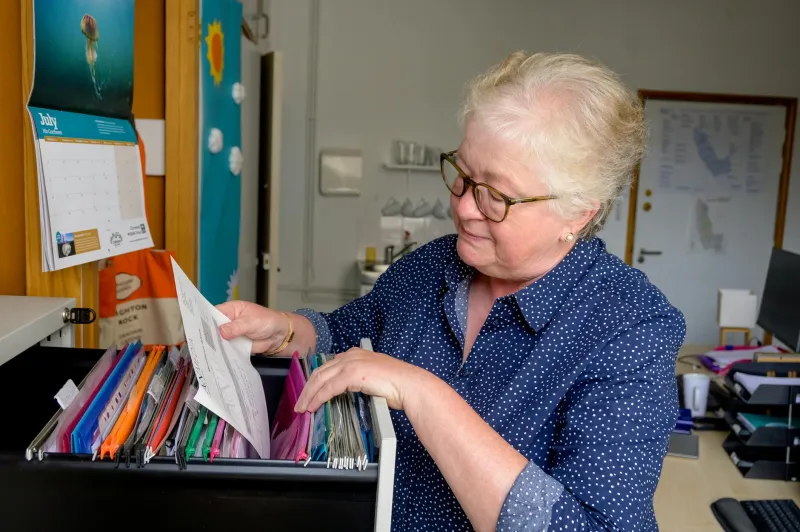
People developed personal systems for managing this paper flood. Some used accordion files with alphabetized sections. Others relied on manila folders labeled with careful handwriting. Many simply used shoeboxes, rubber bands, and hope. But everyone had a system, because losing important papers could have serious financial consequences.
When Your Wallet Was Your Database
Before plastic cards and digital records, your wallet contained the essential documents of daily life. Your driver's license was a paper document, often laminated at home with clear plastic and electrical tape. Your Social Security card was typed on cardstock that you were explicitly told never to laminate (though many people did anyway).
Insurance meant carrying multiple cards for health, auto, and homeowners coverage. Each card contained policy numbers, phone numbers, and coverage details that you'd need in an emergency. Lose your insurance cards, and you'd have to call your agent to get new ones — a process that could take days.
Credit cards were less common, but they generated paper receipts for every transaction. The carbon-copy credit card imprinters — those manual machines that pressed card numbers through multiple layers of paper — created receipts that customers signed and kept. These receipts were your only proof of purchase and the only way to dispute charges.
The Banking Passbook Era
Savings accounts came with small books that recorded every transaction by hand or machine. These passbooks were updated each time you visited the bank, creating a physical record of your financial history. You'd hand the teller your passbook along with your deposit or withdrawal slip, and they'd record the transaction with stamps, handwriting, or machine printing.
Losing your passbook was a genuine crisis. Without it, you couldn't easily prove your account balance or transaction history. Banks could recreate the information, but it took time and paperwork. Many people treated their passbooks like cash, keeping them in safe deposit boxes or home safes.
Checking accounts worked similarly, but with monthly statements mailed to your home. These statements included your canceled checks — the actual paper checks you'd written, processed by the bank, and returned as proof of payment. People saved these canceled checks for years, using them as receipts for tax purposes and dispute resolution.
Medical Records in Manila Folders
Healthcare records were entirely paper-based and largely patient-managed. You'd receive paper bills from doctors, hospitals, and labs, then submit paper claims to insurance companies using forms you filled out by hand. Reimbursement came as checks mailed to your home weeks later.
Patients often maintained their own medical files, especially for family members with chronic conditions. These files contained test results, prescription records, specialist reports, and insurance correspondence. Moving to a new doctor meant physically transferring these paper records or requesting that files be mailed between offices.
Prescription records were maintained by individual pharmacies in paper files. If you moved or switched pharmacies, your prescription history didn't follow you. Patients often carried handwritten lists of their medications and dosages, especially when traveling or seeing new doctors.
Tax Season and the Paper Mountain
Preparing taxes meant gathering a year's worth of paper documents: W-2 forms from employers, 1099 forms for interest and dividends, receipts for deductible expenses, and records of charitable donations. Many families spent January and February organizing shoeboxes full of papers into categories for their tax preparer.
Business owners faced even more complex record-keeping requirements. Every business expense needed a paper receipt, every business mile needed to be logged by hand, and every business meal required documentation of the business purpose. The phrase "save every receipt" wasn't advice — it was survival strategy for tax season.
People developed elaborate systems for tracking tax-deductible expenses throughout the year. Some used dedicated envelopes for different categories of receipts. Others relied on detailed handwritten logs. Everyone understood that the IRS required paper documentation for any claimed deduction.
The Great Digital Transition
The shift from paper to digital records happened gradually, then suddenly. ATMs began providing electronic transaction records in the 1980s. Credit card companies started offering electronic statements in the 1990s. Banks introduced online banking in the early 2000s.
Each step in this transition eliminated some paper from American homes. Electronic statements replaced mailed bills. Online banking eliminated the need for paper registers and canceled checks. Digital receipts began replacing paper ones for many purchases.
By 2010, many Americans had transitioned to largely paperless financial lives. Bank statements, insurance policies, tax documents, and receipts increasingly existed only in digital form, stored on company servers and accessed through websites and apps.
What We Gained in the Cloud
Digital record-keeping offers obvious advantages. Documents can't be lost in house fires or floods. Multiple people can access the same records simultaneously. Search functions make finding specific information nearly instantaneous. Storage space is unlimited, and organization happens automatically.
The convenience is undeniable. Today's consumers can access years of bank statements, insurance policies, and purchase records from their phones. Disputing charges, filing insurance claims, and preparing taxes can often be done entirely online using records that are automatically organized and searchable.
This digital transformation has also enabled new financial services. Automated budgeting tools analyze spending patterns from digital records. Tax preparation software imports information directly from banks and employers. Investment platforms provide real-time portfolio tracking that would have required hours of manual calculation in the paper era.
The Invisible Dependencies
Yet this digital convenience creates new vulnerabilities that the paper generation never faced. When records exist only in the cloud, access depends on internet connections, passwords, and company policies. Account lockouts, server outages, or company closures can suddenly make your records inaccessible.
The paper economy, for all its inconveniences, was fundamentally under individual control. You owned your documents physically. You could access them without electricity, internet, or corporate permission. You could make copies, share them, or store them wherever you chose.
Digital records, despite feeling more secure, actually depend on the continued existence and cooperation of the companies that store them. When businesses close, merge, or change policies, customer records can disappear or become inaccessible. The permanence of paper has been replaced by the convenience — and fragility — of digital storage.
Remembering the Weight of Paper
The paper document economy wasn't just about storage — it was about responsibility and attention. When every important transaction generated a physical document that you had to keep, file, and protect, people paid closer attention to their financial lives. The act of writing checks, recording transactions, and filing receipts created awareness and engagement that automatic digital processes have largely eliminated.
There was something grounding about the physical weight of financial responsibility. Your shoebox of receipts represented real purchases, real commitments, and real consequences. The ritual of organizing papers for tax season forced an annual review of spending and financial decisions.
Today's digital convenience has eliminated much of this friction — and perhaps some of the awareness that came with it. When records are automatically stored and organized, when transactions happen invisibly, when bills are paid automatically, we gain efficiency but lose the tactile connection to our financial lives that paper documents once provided.
The shoebox full of papers wasn't just storage — it was proof that your life had weight, that your transactions mattered, and that the evidence of your financial existence was something you could hold in your hands.