The Monday Morning Pilgrimage
Every Monday morning in 1985, Frank Deluca would put on his best suit, polish his shoes until they gleamed, and drive through industrial Cleveland with a stack of résumés on his passenger seat. He'd park outside Westinghouse, TRW, or any of the dozens of manufacturing companies that lined the shores of Lake Erie, walk through the front door, and ask to speak with someone in personnel.
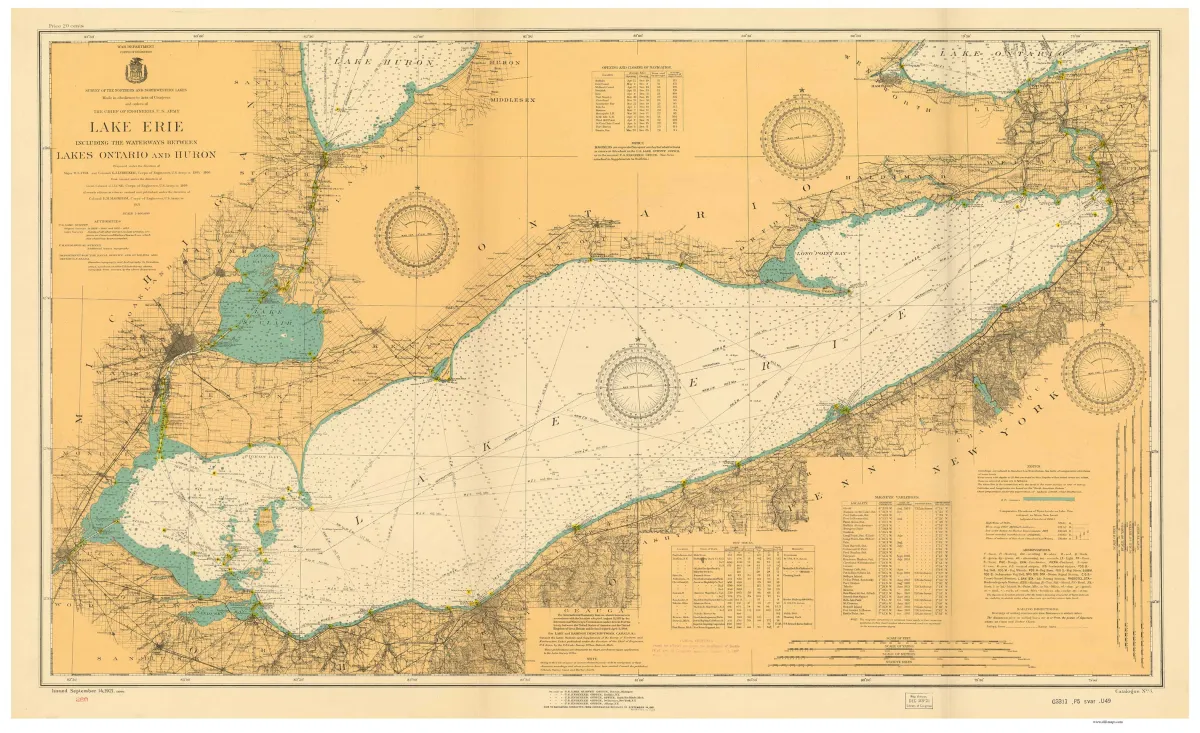 Photo: Lake Erie, via www.old-maps.com
Sometimes he'd wait three hours in a lobby chair. Sometimes he'd be turned away at the reception desk. But sometimes — just often enough to keep the ritual alive — he'd find himself shaking hands with a hiring manager who liked his handshake, appreciated his punctuality, and decided to give him a shot.
Frank got his job at Lincoln Electric this way in 1986. Thirty-seven years later, he's still there.
When Persistence Was a Qualification
The walk-in job application wasn't just a method — it was a test. Companies understood that someone willing to dress up, drive across town, and risk rejection in person possessed qualities that couldn't be captured on paper. Initiative. Resilience. The ability to represent themselves under pressure.
Receptionist desks across America served as the first filter in a hiring process that began the moment you walked through the door. How did you present yourself? Did you make eye contact? Could you explain what you wanted clearly and politely? These weren't formal interview questions — they were real-time demonstrations of character.
Employers could assess things that no online application captures: how someone carries themselves, how they respond to unexpected questions, whether they seem like the type of person who'd show up on time and get along with the crew.
The Geography of Opportunity
Job hunting meant knowing your city intimately. You'd drive through industrial districts, noting which companies had "Help Wanted" signs, which parking lots looked busy (a good sign), and which buildings seemed to be expanding. The Yellow Pages became a strategic resource — you'd call companies directly, asking if they were hiring, when their personnel office was open, what kind of workers they needed.
This geographic approach to employment created a different relationship between workers and their local economy. People understood their region's industries because they'd physically visited them. They knew which companies were growing, which were struggling, and which treated their employees well — information that came from walking through doors and talking to people, not from reading Glassdoor reviews.
The Résumé as Calling Card
A résumé in 1985 was a single page, typed (not printed), on good paper. You'd get maybe fifty copies made at Kinko's and guard them carefully because each one cost money. This scarcity made every application deliberate — you couldn't spray your résumé across hundreds of companies with a few mouse clicks.
The physical nature of résumé submission meant timing mattered. You'd hand your résumé directly to a person, usually with a brief explanation of why you were there. "I'm looking for work in your accounting department" or "I have experience in warehouse operations" became elevator pitches delivered across reception desks.
Compare this to today's digital applications, where résumés disappear into algorithmic sorting systems that screen for keywords before any human ever sees them. The personal handoff — that moment when your paper landed on an actual desk — has been completely automated out of existence.
The Economics of Showing Up
Walk-in applications required investment: gas money, dry cleaning, time off from your current job (if you had one), and the psychological cost of repeated rejection. This barrier to entry meant that only seriously motivated candidates would persist through multiple attempts.
Companies understood this economic reality. Someone who'd spent their Tuesday morning driving to six different factories was demonstrating something that couldn't be faked. They weren't just browsing opportunities online during their lunch break — they were actively, expensively, publicly seeking work.
When Human Chemistry Trumped Algorithms
The most powerful aspect of walk-in applications was the unpredictability of human connection. A hiring manager might be having a particularly good day, or they might see something in a candidate that reminded them of their younger self. These intangible factors — personality, timing, gut instinct — played huge roles in hiring decisions.
Sometimes it worked against people, of course. Bias and discrimination were often more blatant when hiring happened face-to-face. But it also created opportunities for people whose strengths couldn't be captured in a list of qualifications — the veteran whose military bearing impressed a manager, the recent graduate whose enthusiasm overcame their lack of experience, the career-changer whose life story resonated with someone making hiring decisions.
The Death of the Cold Call
By the late 1990s, corporate security and liability concerns began closing the open-door era. Companies started requiring appointments, implementing badge systems, and directing all applications through centralized HR departments. The 2001 recession accelerated the shift toward online applications as companies looked for ways to manage higher volumes of applicants more efficiently.
Today's job seekers apply through company websites, LinkedIn, Indeed, and other platforms that promise efficiency but eliminate the human element that once defined the hiring process. The algorithms that sort résumés optimize for keywords and qualifications, but they can't measure determination, assess character, or recognize potential.
What We Lost in Translation
The digitization of job applications represents more than technological efficiency — it's the elimination of one of capitalism's most fundamentally human transactions. The walk-in application rewarded courage, persistence, and the ability to make a good first impression. It gave both employers and job seekers information that no online profile can provide.
Today's hiring process is undoubtedly more systematic, more measurable, and less prone to certain kinds of bias. But it's also more impersonal, more algorithmic, and less likely to reward the kind of determination that once got Frank Deluca through the doors at Lincoln Electric.
In our rush to make hiring more efficient, we may have lost something irreplaceable: the idea that getting a job should require more than filling out forms online, that employment is fundamentally about human relationships, and that sometimes the best candidates are the ones brave enough to show up uninvited and ask for a chance to prove themselves.