The Cathedral of Sound
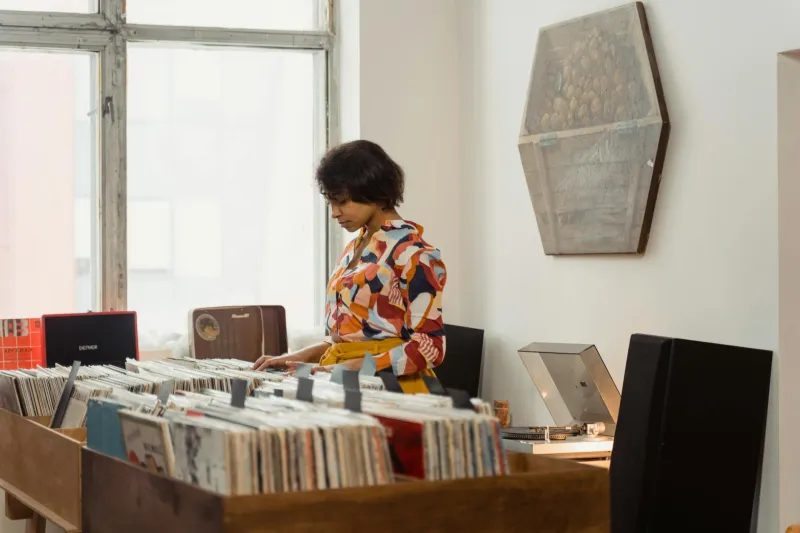
Walk into any American city in 1985, and you'd find them: the record stores that served as temples to musical discovery. Tower Records stretched across entire city blocks, while smaller independent shops tucked themselves into strip malls and downtown corners, their walls lined floor-to-ceiling with vinyl, cassettes, and eventually CDs. These weren't just retail spaces—they were cultural institutions where Saturday afternoons disappeared into the hypnotic rhythm of flipping through album after album.
The experience began before you even entered. Record stores had a distinct smell—a mixture of cardboard, plastic, and that indefinable mustiness of thousands of albums that had passed through countless hands. The lighting was usually harsh fluorescent, casting everything in a slightly clinical glow that somehow made the colorful album covers pop even more dramatically.
The Art of the Accidental Find
In those pre-internet days, finding new music was an exercise in faith and serendipity. You might walk in looking for the latest Madonna album and leave with something by a band you'd never heard of, simply because the cover art caught your eye or because the guy with the impressive record collection ahead of you in line was buying it.
The browsing ritual was methodical yet meandering. You'd start in the section you knew—maybe classic rock or new wave—but inevitably drift into unfamiliar territory. Jazz, world music, soundtracks, classical—each section offered the possibility of stumbling onto something that would reshape your musical identity. There was no algorithm suggesting "listeners also enjoyed" or "similar artists." There was just you, thousands of albums, and time.
Record store clerks were the original human recommendation engines. These weren't teenagers working a summer job—they were music obsessives who could discuss the merits of obscure B-sides and knew which pressing of "Pet Sounds" had the best sound quality. Ask them about a band, and you'd get a dissertation. Mention you liked one artist, and they'd disappear into the stacks to emerge with three albums you'd never considered but absolutely needed to hear.
The Economics of Musical Risk
Buying music in the analog era required commitment. A new album cost anywhere from $8 to $15—real money when minimum wage hovered around $3.35 an hour. You couldn't sample every track or read instant reviews from thousands of listeners. You made decisions based on limited information: maybe you'd heard one song on the radio, seen the band on late-night TV, or simply trusted the judgment of a friend or record store employee.
This economic reality created a different relationship with music. When each album represented a significant investment, you listened differently. You gave difficult albums multiple chances, discovered hidden gems on deep cuts, and often found that your initial disappointments grew into your most treasured possessions. The album you bought reluctantly might become the soundtrack to an entire summer.
The Digital Revolution Arrives
The transformation didn't happen overnight. First came the CD, which promised perfect sound forever but began the slow death of album art as a meaningful canvas. Then Napster arrived in 1999, offering infinite music for free—if you didn't mind the legal ambiguity and occasional virus. Suddenly, the economic barrier to musical exploration vanished.
Streaming services completed the revolution. Spotify, Apple Music, and their competitors offered millions of songs for less than the cost of a single CD per month. The algorithm became your personal curator, analyzing your listening habits and serving up an endless stream of recommendations. Discovery became effortless, instantaneous, and eerily accurate.
What We Gained and Lost
Today's music landscape offers unprecedented convenience and choice. You can hear any song ever recorded within seconds, discover artists from every corner of the globe, and create the perfect playlist for any mood or moment. The barriers to entry for both listeners and musicians have largely disappeared.
Yet something intangible vanished with those Saturday afternoon record store expeditions. The physical act of discovery—the weight of an album in your hands, the large-scale artwork, the liner notes that became reading material—created a different kind of connection between listener and music. There was ceremony in the process, anticipation in the purchase, and genuine surprise in the discovery.
The algorithm, for all its sophistication, tends toward the familiar. It analyzes what you already like and suggests more of the same, refined and targeted but rarely genuinely surprising. The beautiful accident of finding music that challenged your preconceptions became increasingly rare.
The Last Record Stores
Record stores haven't entirely disappeared, but they've transformed into something closer to museums than discovery engines. The surviving shops cater largely to collectors and vinyl enthusiasts, selling nostalgia as much as music. Record Store Day has become an annual celebration of what we've lost, drawing crowds who remember when every day was record store day.
The ritual of getting lost in music—literally losing track of time while wandering through endless stacks of albums—now exists mainly in memory. We gained the world's music library at our fingertips but lost the particular joy of not knowing what we were looking for until we found it. In our rush to make discovery efficient, we may have discovered that efficiency and wonder don't always coexist.
The Saturday afternoon spent in a record store wasn't just about buying music—it was about the possibility of transformation, the chance that you'd walk out as a slightly different person than when you walked in. That particular magic, it seems, doesn't stream.