The Milkman Always Rang Twice: How America's First Delivery Economy Vanished, Then Returned
At 4:30 AM every weekday, Frank Kowalski would load his refrigerated truck with 200 glass bottles of milk, cream, butter, and eggs, then begin his route through the tree-lined streets of suburban Cleveland. By the time most families were eating breakfast, their daily dairy order would be waiting on the front porch, payment collected from the previous day's empty bottles.
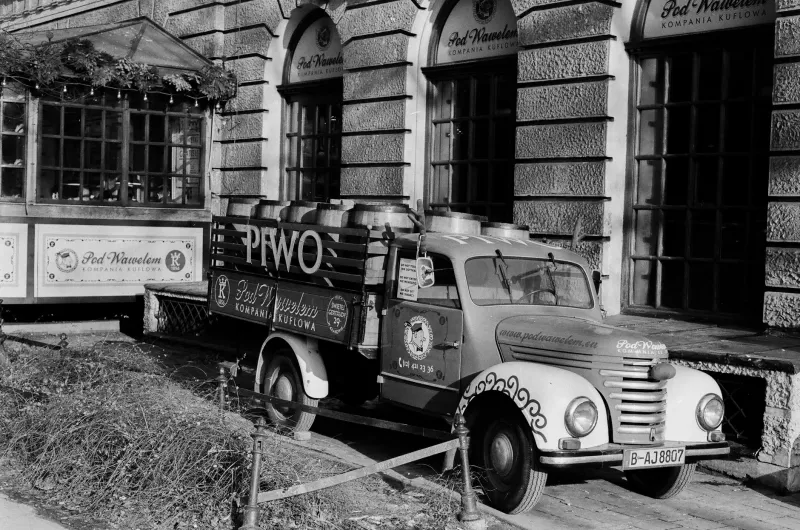
This was 1965, and Frank was part of an army of 29,000 milkmen who delivered fresh products to American doorsteps six days a week. It was the original subscription economy, the first just-in-time delivery service, and a business model so successful it seemed destined to last forever.
By 1985, Frank's route was gone. His dairy had closed. And the milkman had become a nostalgic relic, as extinct as the ice delivery man and the telegraph operator.
Today, as Amazon Fresh trucks and Instacart drivers navigate those same suburban streets, delivering groceries to doorsteps with algorithmic precision, we're witnessing the return of an idea America thought it had outgrown.
The Golden Age of Doorstep Delivery
At its peak in the 1950s, home milk delivery was a $2.5 billion industry serving over 30 million American households. The system was elegantly simple: customers left empty glass bottles on their porches with notes specifying their next order. Milkmen would collect the empties, deliver fresh products, and leave itemized bills tucked under the bottles.
This wasn't just about milk. Progressive dairies offered entire grocery services, delivering eggs, butter, cheese, bread, orange juice, and even ice cream. Some routes included non-dairy items like soap, light bulbs, and seasonal products. The milkman became a mobile general store, bringing the market directly to suburban kitchens.
The economics worked because of scale and routine. Milkmen knew their customers' preferences, adjusted orders based on family size and seasons, and maintained relationships that lasted decades. Children grew up knowing their milkman by name, and many families trusted him with house keys for deliveries when nobody was home.
The Infrastructure of Trust
The milk delivery system represented something remarkable in American commerce: an economy built on trust rather than transaction. Payments were often collected weekly or monthly, with customers maintaining running tabs that could stretch for weeks without formal contracts or credit checks.
Milkmen left products unattended on porches and stoops, trusting that customers would take only what they'd ordered and pay what they owed. Theft was virtually nonexistent because neighbors knew each other and the milkman was a community fixture who would notice irregularities.
This trust extended to quality control. Customers relied on their milkman to deliver the freshest products, often sourced from local dairies within hours of production. The glass bottle system created a closed loop of reuse that was environmentally sustainable decades before anyone used that term.
The Perfect Storm of Disruption
Several factors converged in the 1960s and 70s to destroy the milk delivery industry:
Refrigeration Revolution: Home refrigerators became larger and more reliable, allowing families to store perishables for longer periods. The daily delivery that once seemed essential became unnecessary.
Supermarket Expansion: Chain grocery stores offered one-stop shopping with lower prices due to economies of scale. Why wait for the milkman when you could buy everything at once for less money?
Suburban Car Culture: As families moved to suburbs and car ownership became universal, driving to the store became easier than coordinating home deliveries. Shopping became a weekly expedition rather than a daily service.
Cost Pressures: Labor costs for individual delivery routes couldn't compete with the efficiency of centralized retail distribution. Supermarket milk cost significantly less than delivered milk, even accounting for convenience.
Lifestyle Changes: More women entered the workforce, changing household routines that had been built around home-based meal planning and daily deliveries.
By 1975, home milk delivery had dropped to serving just 7.5 million households. By 1990, fewer than 1,000 milkmen remained in the entire country.
The Wilderness Years
For nearly three decades, home delivery seemed like a quaint anachronism. Americans embraced the supermarket model so completely that the idea of having groceries delivered to your door felt almost medieval — inefficient, expensive, and unnecessary.
The few remaining milk delivery services survived by targeting niche markets: organic enthusiasts, elderly customers who remembered the old system, and wealthy families willing to pay premium prices for convenience. These operations were curiosities, not serious businesses.
Meanwhile, the infrastructure that had supported the original delivery economy disappeared. Dairy processing moved from local operations to massive regional facilities. Glass bottles gave way to plastic containers and cardboard cartons designed for shelf display, not doorstep delivery. The specialized refrigerated trucks, the route management systems, and the customer service culture all vanished.
The Digital Renaissance
The resurrection began quietly in the late 1990s with internet grocery pioneers like Webvan and Peapod. These early experiments failed spectacularly, burning through billions in venture capital while trying to recreate the milkman's route efficiency with 1990s technology and logistics.
But they planted seeds. Amazon's 2007 launch of Amazon Fresh in Seattle proved that consumers would pay for grocery delivery if the service was reliable and comprehensive. Smartphone apps solved the ordering complexity that had defeated earlier online grocery attempts.
The real breakthrough came when companies realized they didn't need to own the entire supply chain. Instead of building massive warehouses and delivery fleets, services like Instacart partnered with existing supermarkets and used gig economy drivers to recreate the milkman's personal service model at scale.
The New Milkmen
Today's delivery economy looks remarkably similar to the milkman era, just digitized:
Subscription Services: Companies like Thrive Market, HelloFresh, and Blue Apron deliver regular shipments of groceries and meal ingredients, just like milkmen delivered weekly dairy orders.
Personal Shoppers: Instacart and Shipt drivers learn customer preferences and make substitution decisions, recreating the relationship-based service that made milkmen valuable.
Doorstep Delivery: Amazon's delivery lockers and Ring doorbells solve the security issues that once required customers to trust milkmen with house keys.
Local Sourcing: Farm-to-table delivery services emphasize freshness and local production, echoing the milkman's promise of products delivered within hours of production.
What Changed, What Stayed the Same
The fundamental value proposition hasn't changed: Americans want fresh food delivered to their homes without the hassle of shopping. What's different is the scale and sophistication of the operation.
Modern delivery services can offer thousands of products instead of dozens, serve customers across entire metropolitan areas instead of neighborhood routes, and adjust to changing preferences in real-time instead of through weekly conversations.
But the core economics remain challenging. Delivery is labor-intensive and expensive, just as it was in the milkman era. The difference is that today's consumers are more willing to pay premium prices for convenience, and technology has made the logistics more efficient.
The Circle Completes
Frank Kowalski's grandson now drives for DoorDash in the same Cleveland suburbs where his grandfather once delivered milk. He uses GPS instead of memorized routes, accepts payment through apps instead of collecting cash, and delivers restaurant meals instead of dairy products.
But he's solving the same fundamental problem: bringing what people need directly to their doors, building relationships with regular customers, and making daily life a little easier for busy families.
The milkman never really disappeared. He just went digital, multiplied into thousands of independent contractors, and learned to deliver a lot more than milk. The doorstep delivery economy that seemed obsolete in 1985 turns out to have been ahead of its time — by about forty years.
In the end, Americans didn't reject home delivery. We just took a long detour through the supermarket aisles before remembering what we'd lost when the milkman stopped coming around.