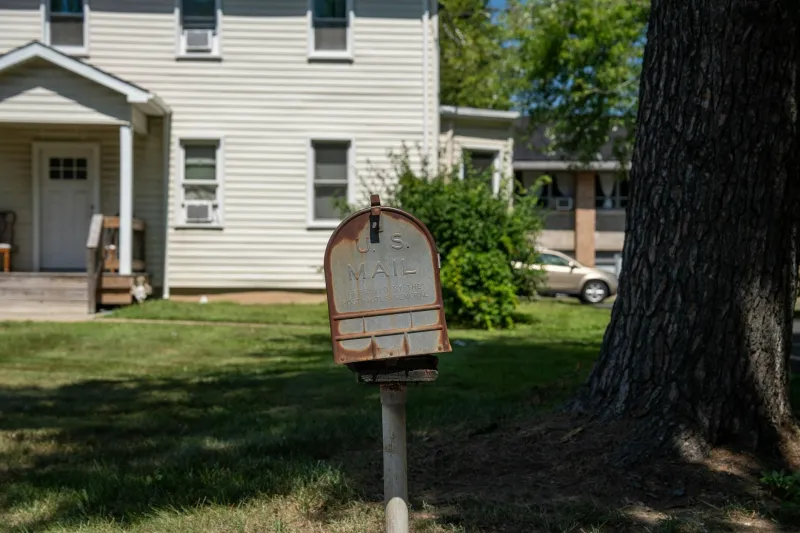
Every afternoon from February through April 1987, Jennifer Martinez walked the same route from her high school bus stop to her family's mailbox in suburban Phoenix. Heart pounding, she'd flip through bills and catalogs searching for the envelope that would determine whether she'd spend the next four years at Arizona State or pursuing her dream of studying journalism at Northwestern.
Thin envelope meant rejection. Thick envelope meant acceptance. There was no middle ground, no status updates, no way to know anything until that moment of truth arrived in your hands.
Today, students check admission portals obsessively, refreshing browsers every few minutes for real-time updates that arrive with the clinical efficiency of a text message notification.
The Analog Application Marathon
Applying to college in the pre-digital era was a months-long endurance test that began with requesting applications by mail. Students would send postcards to admissions offices and wait weeks for thick packets to arrive containing the actual application forms.
Each application was a unique document requiring careful handwriting or typing on actual typewriters. Make a mistake? Start over completely. Need to apply to eight schools? That meant eight separate essays, eight different forms, and eight different sets of requirements to track manually.
The Common Application existed but was accepted by only about 15 colleges — mostly small liberal arts schools. The vast majority of universities required their own proprietary forms, creating a logistical nightmare for students applying to multiple schools.
The Great Waiting Game
Once applications were mailed (with prayer that they'd arrive before postmark deadlines), the real torture began: months of absolute silence.
Families developed elaborate mailbox rituals. Some students arranged to be home when mail arrived to avoid the agony of wondering what might be waiting. Others couldn't bear the suspense and had siblings or parents check first. The mail carrier became an unwitting participant in thousands of teenage dramas, delivering life-changing news with the same casual efficiency as utility bills.
Parents learned to read their children's faces from across the room, knowing instantly whether the day's mail brought good news, bad news, or the continued purgatory of waiting.
When Rejection Came in Standard Size
The thin envelope versus thick envelope system was brutally efficient. Rejection letters were typically single sheets folded into standard business envelopes. Acceptance packages included enrollment forms, housing information, and course catalogs — requiring larger envelopes that gave away the good news before students even opened them.
Some colleges became notorious for their rejection letter timing. Students would joke bitterly about schools that seemed to coordinate mass rejection mailings, creating neighborhood-wide disappointment on the same afternoon.
The physical nature of these letters made rejection feel more final somehow. A piece of paper you could hold, reread, and eventually throw away in frustration. There was something almost ceremonial about the process — even if the ceremony was often one of disappointment.
The Information Blackout
Perhaps most striking was how little information students had throughout the process. No application tracking, no confirmation that materials had arrived, no way to know if you were even being considered. Students sent transcripts and recommendation letters into what felt like a void, hoping everything would somehow find its way to the right desk.
High school guidance counselors became crucial intermediaries, maintaining relationships with college admissions officers and sometimes making phone calls to check on application status. But for the most part, students simply had to trust that the system would work and wait for the outcome.
Financial aid information was equally mysterious. Students might receive acceptance letters weeks before finding out whether they could actually afford to attend. The FAFSA process was entirely paper-based, requiring mailed forms and weeks of processing time.
The Digital Revolution
The transformation began gradually in the late 1990s as colleges started accepting online applications. The Common Application went digital in 1998, eventually expanding to serve over 900 schools. Suddenly, students could apply to multiple colleges with largely the same information, uploaded once and distributed electronically.
Status portals followed, giving students unprecedented visibility into their applications. They could see when transcripts arrived, when recommendations were received, and when decisions were being made. The black box of admissions became increasingly transparent.
Today's students receive instant email notifications, text alerts, and push notifications. They can track their applications like Amazon packages, knowing exactly where they stand in the process at all times.
What Changed Beyond the Technology
The digital transformation didn't just change how students applied to college — it fundamentally altered the emotional experience of this crucial life transition.
The Anxiety Shifted: Instead of months of wondering followed by a moment of truth, today's students experience constant low-level stress as they obsessively check status updates and compare notes with classmates online.
The Timeline Compressed: What once took months now happens in weeks or even days. Early decision programs deliver results by December, while rolling admissions can provide answers within weeks of applying.
The Scale Exploded: When applying was difficult and expensive, students typically applied to 3-5 schools. Today's digital ease has led to students applying to 15, 20, or even 30+ colleges, creating a numbers game that was impossible in the analog era.
The Lost Art of Patience
There was something valuable about the forced patience of the mailbox era that today's instant-feedback culture has lost. Students had to learn to live with uncertainty, to continue their daily lives while major decisions hung in the balance.
The waiting period created space for reflection and preparation. Students used the months between application and acceptance to research their options more deeply, to imagine different possible futures, and to develop resilience in the face of uncertainty.
Parents and students also bonded over the shared experience of waiting. Families would discuss backup plans, dream about possibilities, and support each other through the emotional roller coaster in ways that today's rapid-fire notification system doesn't really allow.
The Paradox of Progress
Today's college application process is undeniably more efficient, transparent, and fair. Students from rural areas can easily apply to schools they might never have known about in the analog era. The digital divide is real, but it's smaller than the information gap that once separated connected families from those without guidance counselor relationships or college-educated parents.
Yet something intangible was lost when we traded the mailbox lottery for instant notifications. The ritual of waiting, the ceremony of the envelope, the shared experience of not knowing — these created a rite of passage that marked the transition from childhood dependence to adult uncertainty.
Jennifer Martinez, now a successful journalist, still remembers the exact feeling of opening her Northwestern acceptance letter on a March afternoon in 1987. Today's students get their life-changing news through smartphone notifications while scrolling through social media.
Progress isn't always loss, but sometimes it is. And sometimes, what we lose is the very thing that made the victory feel earned.