The Great American Time Theft: How Commuting Stole Decades From Our Lives
The Great American Time Theft: How Commuting Stole Decades From Our Lives
In 1920, most Americans could walk to work in under 15 minutes. By 1990, the average commute had ballooned to 22 minutes each way — nearly an hour of every working day spent in cars, trains, and buses, going nowhere productive.
Do the math on a 40-year career, and it's staggering: the typical American worker was losing over four years of their life just traveling to and from their job. But for millions living in sprawling metro areas like Los Angeles, Atlanta, or Washington D.C., the reality was even worse. Two-hour daily commutes weren't uncommon, meaning some workers sacrificed an entire decade of their lives to the ritual of getting to work.
When Work Was Around the Corner
A century ago, the American workplace looked radically different. Factory workers lived in company towns or dense urban neighborhoods within walking distance of their jobs. Office workers took streetcars a few stops downtown. The longest "commute" most people faced was a 20-minute trolley ride.
This wasn't just about transportation — it was about how we organized our entire lives. Families ate lunch together. Kids walked home from school to find their parents nearby. Work ended, and life immediately began.
The typical worker in 1920 spent less than 30 minutes a day traveling to work. That's 2.5 hours per week, or roughly 130 hours per year. Over a lifetime, it added up to about eight months total.
The Suburban Sprawl Trap
The transformation began after World War II, when government policies pushed Americans toward the suburbs. The GI Bill, federal highway funding, and mortgage subsidies all encouraged families to move farther from city centers. What seemed like progress — bigger houses, quieter neighborhoods, the American Dream — came with a hidden cost.
By the 1980s, the average American commute had more than doubled. Workers were spending 44 minutes a day in transit, losing 3.7 hours weekly to the simple act of getting to work. But averages tell only part of the story.
In sprawling Sun Belt cities, "super commuters" emerged — people traveling 90 minutes or more each way. These weren't outliers; they were growing segments of the workforce. In the San Francisco Bay Area, workers routinely drove two hours from affordable housing in the Central Valley to Silicon Valley jobs. Around New York, people commuted from Pennsylvania and Connecticut, turning their cars into mobile offices.
The Peak Commute Era
The 1990s and early 2000s represented peak commute in America. The average worker was losing 54 minutes daily to travel time — that's 4.5 hours per week, 234 hours per year, and over five full years across a career.
But time wasn't the only cost. Gas, car payments, insurance, parking fees, and vehicle maintenance consumed thousands of dollars annually. Stress levels soared. Family dinners disappeared. Evening activities became impossible when workers didn't get home until 7 PM.
Parents missed school plays and soccer games. Couples ate dinner separately. The commute wasn't just stealing time — it was reshaping American family life.
The Traffic Nightmare
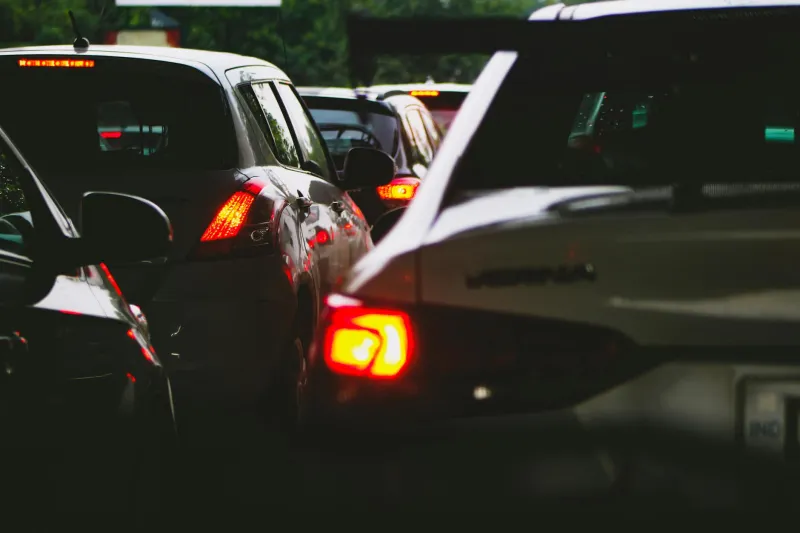
By 2010, American highways had become parking lots during rush hour. The Texas Transportation Institute calculated that the average commuter spent 38 hours per year stuck in traffic — nearly a full work week of sitting motionless on freeways.
In Los Angeles, drivers averaged 81 hours annually in traffic jams. That's two full work weeks of pure gridlock, not counting the actual driving time. Washington D.C. commuters lost 75 hours to congestion. Even smaller cities like Nashville and Austin saw commuters wasting 40+ hours yearly in stop-and-go traffic.
The psychological toll was immense. Studies linked long commutes to depression, anxiety, and divorce. Workers arrived at the office already exhausted. They returned home too drained for family time or personal pursuits.
The Remote Work Revolution
Then came 2020, and everything changed overnight. The pandemic forced a massive experiment in remote work that revealed something remarkable: for millions of jobs, the commute had been completely unnecessary.
Workers who had been losing two hours daily suddenly reclaimed that time. Parents could walk kids to school. People exercised during former commute hours. Families rediscovered shared meals.
The productivity gains were immediate and measurable. Without commute stress and interruptions, many workers became more efficient. Companies discovered they could operate effectively with distributed teams.
Getting Our Lives Back
Today, roughly 35% of American workers have some remote work option — a number that would have seemed impossible in 2019. For these workers, the commute has shrunk from hours to seconds, from their bedroom to their home office.
The time savings are extraordinary. A worker who previously commuted 90 minutes daily now gains 7.5 hours per week — equivalent to nearly an extra day off. Over a year, that's 390 hours returned to their personal life. Across a career, it's over eight years.
The New Geography of Work
Remote work is reshaping where Americans choose to live. Workers are leaving expensive commuter suburbs for small towns, mountain communities, and beach cities. The tyranny of proximity to an office has ended for millions.
Some companies have gone fully remote, eliminating commutes entirely for their workforce. Others offer hybrid models, reducing commute time by 60-80%. Even workers who still go to offices often have more flexibility about when and how they travel.
What We Learned
The great commuting experiment of the late 20th century taught us something profound: proximity to work doesn't guarantee productivity, and long commutes don't prove dedication. They just steal time.
For decades, Americans accepted the commute as inevitable, a necessary sacrifice for career advancement. We built our lives around rush hour schedules and weekend errands. We planned family time around traffic patterns.
Now millions of workers have discovered what their great-grandparents knew: work and life don't have to be separated by hours of daily travel. The commute, once seen as a symbol of American prosperity, has been revealed for what it always was — time we can't get back.
The clock has been reset. For the first time in generations, millions of Americans are getting their time back.