Dressed for Altitude: The Short, Glamorous Life of American Air Travel

Photo by Photo by Jean Carlo Emer on Unsplash on Unsplash
Picture yourself at O'Hare in 1962. You've arrived early because the occasion warrants it. You're wearing a suit, or at minimum a blazer — your traveling clothes, which are not the same as your everyday clothes, because flying is not an everyday thing. The terminal is airy and modern, a monument to postwar optimism in glass and steel. Fellow passengers look similarly composed. There's a quiet electricity to the place, the particular buzz of something that still feels genuinely remarkable.
In a few hours, you'll be in Los Angeles. In 1962, that still registers as a kind of miracle.
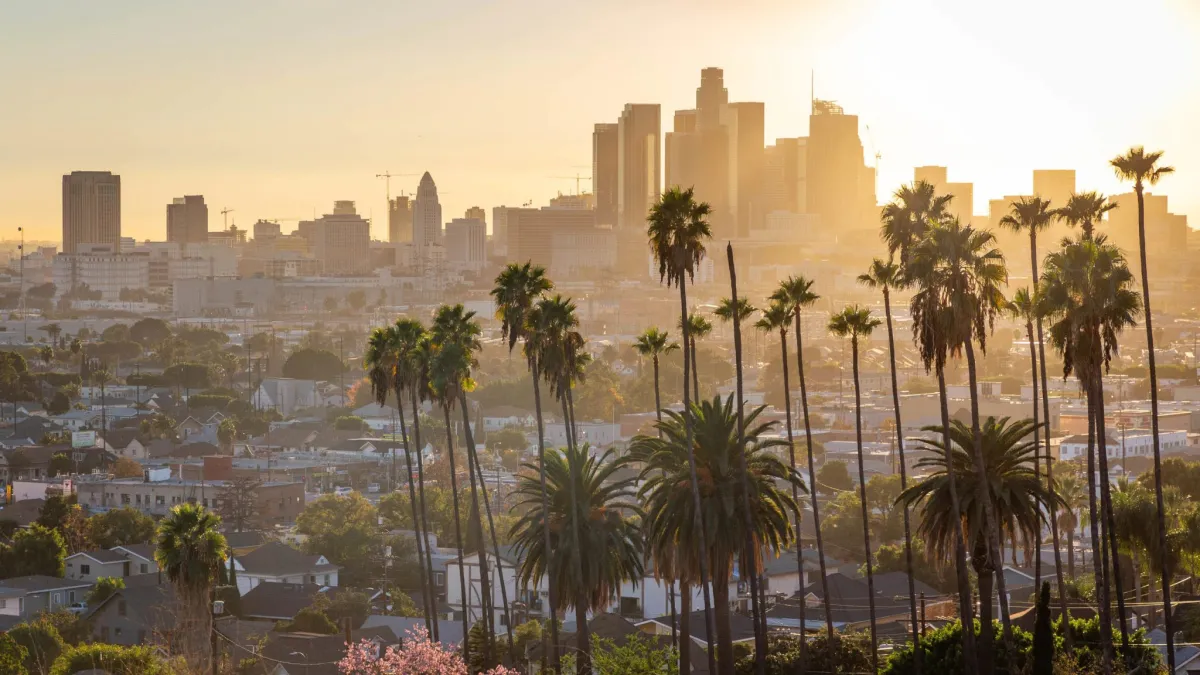 Photo: Los Angeles, via millionenfakten.de
When Flying Was an Event, Not an Errand
Commercial aviation in America came of age in the late 1940s and reached its cultural apex somewhere in the late 1950s and 1960s. The jets were new — the Boeing 707 entered domestic service in 1959 — and the industry was regulated by the Civil Aeronautics Board, which set fares at levels that kept flying expensive and, by extension, aspirational. A round-trip ticket from New York to Los Angeles in 1960 cost roughly $300, which translates to somewhere north of $3,000 in today's money. Flying wasn't something ordinary Americans did casually. It was a decision.
That price point shaped everything about the experience. Airlines competed not on cost — they couldn't, since fares were fixed — but on service. And the service, by contemporary standards, was extraordinary. Seats in coach were wider and had more legroom than many first-class configurations today. Meals were cooked on board and served on china with metal cutlery. Drinks were included and poured generously. Flight attendants — then called stewardesses, a gendered and problematic designation the industry has rightly moved past — were trained in hospitality to a standard that resembled fine dining service more than crowd management.
First class was something else entirely. On some transcontinental routes, passengers had access to sleeping berths, cocktail lounges, and meals that rivaled those of upscale restaurants. Pan Am's first-class service on international routes became something of a cultural benchmark — the thing you described to people who hadn't experienced it, because they wouldn't quite believe you otherwise.
The Psychology of Rarity
What the economics of early commercial aviation created, almost accidentally, was a sense of occasion. Because flying was rare and expensive, people treated it with a seriousness that amplified the experience in both directions — the anticipation beforehand and the memory afterward.
Families dressed for flights. Passengers arrived at airports with time to spare, not to navigate security theater but simply because the departure felt like the beginning of something. Children pressed their faces against terminal windows to watch the planes. Adults noted the type of aircraft the way enthusiasts note cars. The airport itself was a destination — a place where the future felt tangible.
This wasn't manufactured nostalgia. Contemporary accounts from the era describe a genuinely elevated atmosphere. Flying carried social weight. People mentioned it in conversation. They saved the ticket stubs. The experience was proportionate to the investment.
Deregulation and the Great Democratization
The Airline Deregulation Act of 1978 changed everything, and it changed it fast. With the government no longer controlling fares, airlines were free to compete on price. New carriers entered the market. Established carriers slashed costs to compete. Within a decade, the economics of flying had been fundamentally rewritten.
The results were genuinely democratic in the best sense of the word. Air travel became accessible to Americans who could never have afforded it under the regulated system. Families who might have driven three days to visit relatives could now fly in three hours. The number of Americans who had ever been on a plane grew dramatically through the 1980s and 1990s. By the early 2000s, flying had become, for many Americans, simply the expected way to cover long distances.
But democratization came with trade-offs that accumulated slowly and then all at once. Seats narrowed as airlines discovered they could fit more rows in the same fuselage. Meals disappeared — first from coach, then from most domestic routes entirely. Checked bags became free until they weren't. Overhead bin space became a resource people fought over. The airports, once relatively navigable, became crowded processing facilities where the primary design goal seemed to be maximum throughput rather than any particular quality of human experience.
Today, a domestic coach seat offers a pitch — the distance between your seat and the one in front — that averages around 28 to 31 inches on budget carriers. In the 1960s, coach pitch was typically 34 to 36 inches. That gap of a few inches, multiplied by an entire cabin, is the spatial expression of forty years of margin pressure.
Flip-Flops at 35,000 Feet
The informality of contemporary air travel isn't a moral failing. It's a rational response to what flying has become: a commodity, priced and experienced accordingly. When a round-trip ticket from Chicago to Miami can be had for $89 on the right Tuesday, dressing up for it would feel absurd. The transaction doesn't warrant the ceremony.
And yet something was genuinely lost in the transition, even if it was lost in exchange for something valuable. The golden age of American aviation was exclusive in ways that were unfair. The glamour was real, but it was purchased at a price that kept most Americans out of the terminal entirely. You can't be fully nostalgic for a system that was built on scarcity.
What you can acknowledge is that the sense of wonder surrounding flight — the idea that hurtling through the sky at 500 miles an hour was something to be marked, prepared for, and remembered — was a reasonable response to an extraordinary thing. Commercial aviation is one of the most remarkable achievements in human history. Somewhere between the white-glove service of 1962 and the $9 carry-on fee of 2024, we stopped treating it that way.
The altitude hasn't changed. Only our relationship to it has.