The Glove Compartment Library
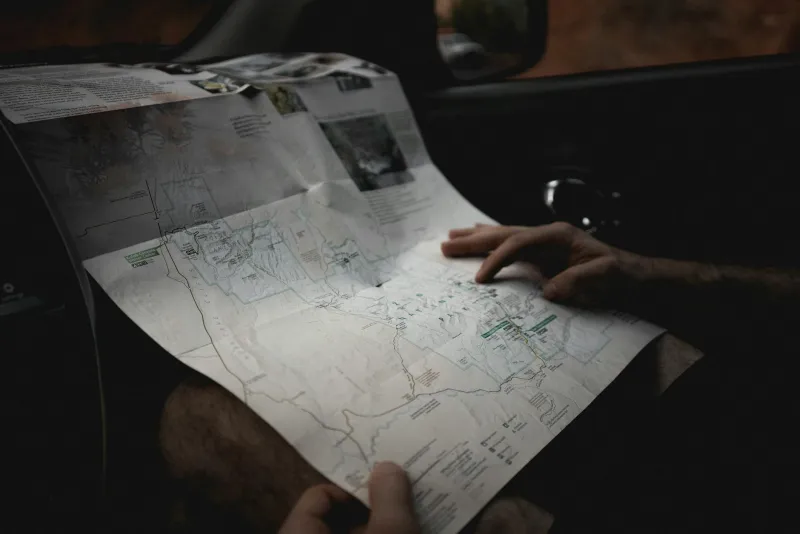
Open any American car's glove compartment in 1995, and you'd find a carefully folded road atlas—pages worn thin at the creases, highlighting marking favorite routes, coffee stains telling stories of roadside stops. That Rand McNally atlas wasn't just a book; it was your lifeline to everywhere beyond your neighborhood.
Getting from Chicago to Denver meant studying those pages like scripture. You'd trace Interstate 80 with your finger, memorizing exit numbers, noting which small towns offered gas stations. The smart traveler kept a backup route in mind, because construction could derail your entire plan with no warning system beyond orange barrels appearing in your windshield.
The Ritual of Getting Directions
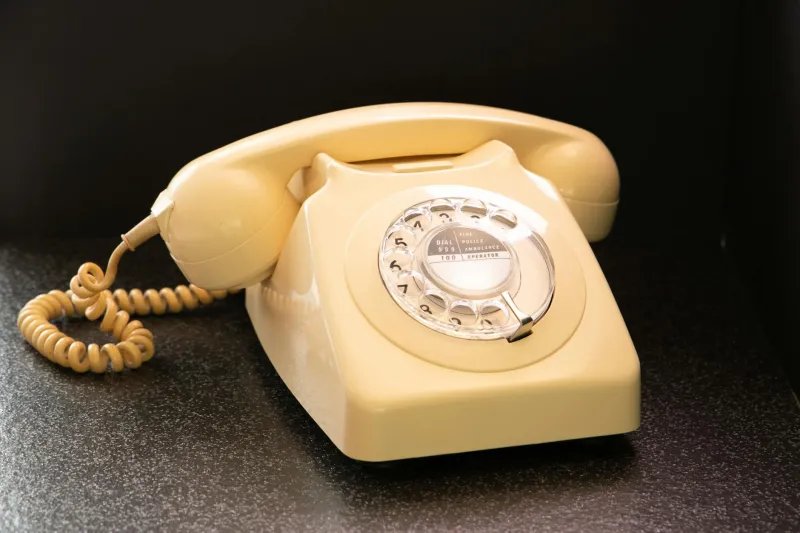
Before leaving for anywhere unfamiliar, Americans performed an elaborate information-gathering dance. You'd call your destination and ask someone to walk you through the route, scribbling notes on whatever paper was handy: "Left at the big oak tree, right after the red barn, if you hit the Dairy Queen you've gone too far."
These directions came with personality. Locals gave landmarks that meant everything to them and nothing to you. "Turn where the old Murphy's store used to be" assumed you knew Murphy's had closed in 1987. Gas station attendants became navigation consultants, sketching rough maps on napkins with the confidence of cartographers.
The Geography of Getting Lost
Being lost wasn't a momentary inconvenience—it was a state of being that could last hours. You'd realize your mistake only after driving twenty minutes in the wrong direction, watching familiar road signs disappear in your rearview mirror. The panic was real: no way to call for help, no digital breadcrumbs to follow back.
But getting lost also meant discovering America by accident. Wrong turns led to small-town diners with the best pie you'd ever taste, scenic routes that weren't in any guidebook, conversations with strangers who became part of your travel story. Every journey carried the possibility of genuine surprise.
Reading the Landscape
Americans developed an intuitive sense of direction that today feels almost mystical. You learned to read the sun's position, notice which side of trees grew moss, understand how highway numbers worked. Interstate highways with even numbers ran east-west; odd numbers went north-south. Routes ending in 5 or 0 were major arteries. This wasn't trivia—it was survival knowledge.
City navigation required different skills entirely. You memorized neighborhood grids, learned which streets ran one-way, figured out parking patterns. Every metropolitan area had its own logic: Boston's colonial cow paths, Manhattan's numbered grid, Los Angeles's freeway spaghetti. Mastering your city's geography was a badge of local citizenship.
The Social Network of Navigation
Without GPS, Americans relied on each other. Stopping to ask directions wasn't admitting defeat—it was community interaction. Gas stations, convenience stores, and police officers became waypoints in a human navigation network. People took pride in giving good directions, and receiving them created momentary connections between strangers.
Road trips involved teamwork. The passenger became the navigator, responsible for reading maps while the driver focused on traffic. Couples developed their own systems: one person tracked the big picture while the other watched for upcoming exits. These partnerships required communication, trust, and shared responsibility that today's automated guidance has made unnecessary.
What the Satellites Took Away
Modern GPS delivers us from point A to point B with ruthless efficiency, but it's also delivered us from the experience of truly understanding our surroundings. We follow blue lines on screens without learning street names, neighborhood boundaries, or the logic of how cities fit together.
The old system forced Americans to develop spatial intelligence. You had to understand where you were in relation to where you'd been and where you were going. Now we outsource that understanding to satellites, trusting turn-by-turn instructions without building mental maps of our own movements.
The Death of Serendipity
Perhaps most importantly, we've lost the productive accident of exploration. GPS calculates the optimal route and keeps us locked onto it, eliminating the detours that once revealed hidden parts of America. The algorithm knows the fastest way, but it doesn't know about the antique shop you might discover, the scenic overlook you might stumble upon, or the local festival you might accidentally join.
Every journey has become predictable, efficient, and slightly sterile. We arrive exactly when the app predicted, having seen exactly what we expected to see, having learned nothing new about the geography we crossed.
The Price of Never Being Lost
Today's Americans live in a world where being genuinely lost is nearly impossible, but something essential disappeared along with that possibility. We traded the anxiety of uncertainty for the comfort of constant guidance, the thrill of discovery for the safety of predetermined routes.
The paper atlas in your glove compartment wasn't just about getting somewhere—it was about understanding your place in the larger landscape, building the confidence to venture into unknown territory, and accepting that the journey itself might be as important as the destination. In our rush to eliminate the inconvenience of getting lost, we might have lost something even more valuable: the adventure of finding our own way.