The Art of Medical Detective Work
In 1965, if you walked into a doctor's office complaining of persistent stomach pain, you were entering a world of medical uncertainty that today's patients can barely imagine. There were no CT scans, no MRI machines, no ultrasounds to peer inside your body. Your doctor had a stethoscope, their hands, their experience, and time — lots of time.
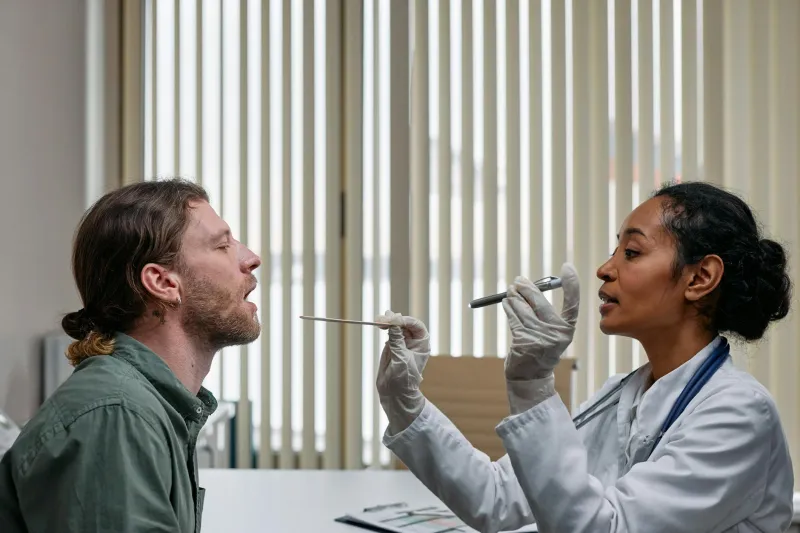
Diagnosis was an art form built on careful observation, patient history, and educated guesswork. Doctors pressed on your abdomen, listened to your heart, looked in your eyes, and asked detailed questions about your symptoms. They were medical detectives working with limited clues, and sometimes the mystery took months or years to solve.
When Your Body Kept Its Secrets
Consider what it meant to have abdominal pain in 1960. Your doctor could feel for obvious masses, listen for unusual sounds, and test your blood for basic markers. But if the problem was deeper — a small tumor, an inflamed organ, internal bleeding — it remained invisible until symptoms became severe enough to point toward an obvious diagnosis.
Patients lived with uncertainty that would seem unbearable today. "We'll keep watching it," doctors would say about mysterious lumps or persistent pain. "Let's see how you feel in a few weeks." This wasn't medical negligence; it was the reality of practicing medicine before technology could see through skin and bone.
Exploratory surgery often served as both diagnosis and treatment. Surgeons would open patients up simply to look around and see what was wrong. The phrase "we won't know until we get in there" was common medical language, and patients accepted these invasive procedures as necessary steps toward answers.
The Waiting Game of Serious Illness
Cancer diagnosis exemplified this era of medical uncertainty. Without imaging technology, doctors relied on physical symptoms that often appeared only after tumors had grown large enough to feel or cause obvious problems. A small breast lump might be monitored for months. Persistent headaches could remain mysterious until neurological symptoms appeared.
Patients and families lived with weeks or months of not knowing. Was that persistent cough tuberculosis, pneumonia, or something worse? Was that abdominal pain appendicitis, an ulcer, or cancer? The waiting wasn't just emotionally difficult — it was medically necessary. Doctors needed time to observe how symptoms developed and progressed.
This uncertainty shaped relationships between doctors and patients differently. Physicians spent more time with patients, not just because they had fewer patients, but because diagnosis required careful, repeated observation over time. They knew their patients' families, medical histories, and life circumstances in ways that informed their diagnostic thinking.
When Hearts Were Black Boxes
Cardiac care illustrates how dramatically medical diagnosis has changed. In 1955, if you experienced chest pain, your doctor could listen to your heart, take your pulse, and maybe perform a basic EKG. But they couldn't see your coronary arteries, measure blood flow, or visualize heart muscle damage in real-time.
Heart attacks were often diagnosed after the fact, through symptoms and basic tests. The phrase "silent heart attack" was common because many cardiac events went unrecognized until much later. Patients might suffer significant heart damage without knowing it, only discovering the problem during routine exams months or years later.
Cardiac catheterization, which today allows doctors to see blocked arteries and immediately insert stents, wasn't widely available until the 1970s. Before then, coronary artery disease was often a guessing game based on symptoms, family history, and hope.
The Revolution of Seeing
The transformation began in the 1970s with CT scans, which could create cross-sectional images of the body. Suddenly, doctors could see inside patients without surgery. Brain tumors, internal bleeding, and organ damage became visible for the first time.
MRI technology, developed in the 1980s, provided even more detailed images of soft tissues. Ultrasound made pregnancy monitoring routine and allowed real-time visualization of organs. Each advancement shortened the time between symptoms and diagnosis, often from months to minutes.
Today, a patient with chest pain can receive a CT angiogram that shows every coronary artery in vivid detail within an hour of arrival at the emergency room. Abdominal pain that once required exploratory surgery can be diagnosed with a CT scan in fifteen minutes. Brain tumors invisible to doctors in 1960 are now detected when they're smaller than grapes.
The Speed of Modern Certainty
Walk into any emergency room today and witness the diagnostic revolution. Patients receive CT scans, MRIs, and ultrasounds as routine parts of evaluation. Conditions that once took weeks to diagnose are identified before patients finish their paperwork.
This speed has transformed patient expectations and medical practice. We now expect immediate answers to medical questions that previous generations accepted as mysteries. The phrase "we'll need to run some tests" usually means hours, not months, of uncertainty.
Doctors today have access to images and information that would have seemed magical fifty years ago. They can see blood flow in real-time, measure organ function precisely, and detect diseases at their earliest stages. The art of diagnosis hasn't disappeared, but it's now supported by technology that eliminates much of the guesswork.
What We Gained and What We Lost
Modern diagnostic imaging has undoubtedly saved countless lives through early detection and precise treatment. Conditions that were once death sentences are now routine procedures. The uncertainty and waiting that characterized medical care fifty years ago would seem cruel and primitive today.
Yet something was lost in this transformation. The slower pace of medical diagnosis once forced doctors and patients to develop different relationships. Without immediate answers, physicians relied more heavily on careful observation, detailed histories, and intuitive understanding of their patients.
Patients, too, developed different relationships with their bodies and health. Living with medical uncertainty was a normal part of life, not a temporary inconvenience to be solved immediately. This created a different kind of patience and acceptance that modern medicine, with its promise of immediate answers, has largely eliminated.
The Invisible Revolution
The transformation of medical diagnosis represents one of the most dramatic changes in human experience over the past fifty years. We've moved from a world where the inside of the human body was largely invisible to one where every organ, vessel, and tissue can be examined in real-time.
This revolution happened so gradually that we barely noticed it occurring. Each new imaging technology seemed like a natural progression rather than a fundamental transformation of medical practice. But the cumulative effect has been extraordinary: we've eliminated much of the mystery that once surrounded human health and disease.
Today's patients live in a world where medical questions have immediate answers, where uncertainty is measured in hours rather than months, and where the phrase "we won't know until we get in there" has become largely obsolete. It's a remarkable achievement that has fundamentally changed what it means to be sick in America.