The Great American Sit
There was a time when Americans were really, really good at sitting still. Not by choice, mind you, but because modern life demanded it in ways that seem almost unimaginable today.
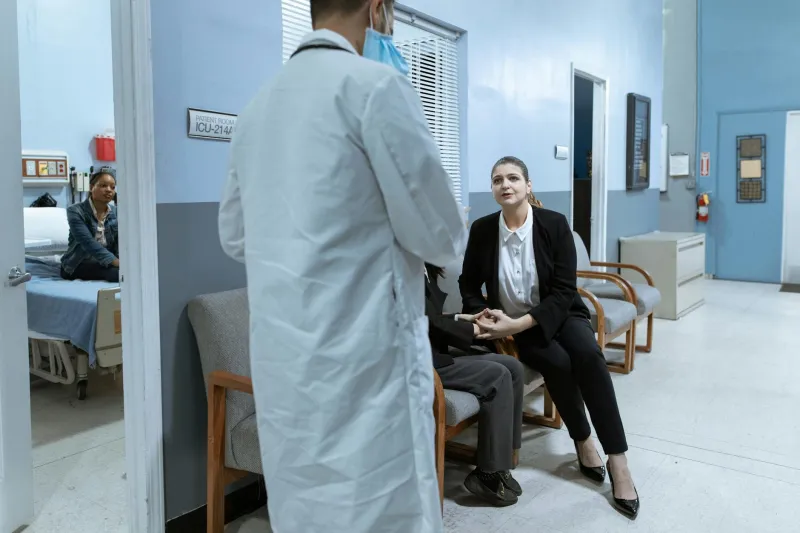
Walk into any doctor's office in 1985, and you'd find something that's become as extinct as the dodo: people actually sitting in waiting rooms. Not scrolling, not texting, not even listening to music through tiny headphones. Just sitting. Waiting. Being present with their thoughts, the outdated magazines, and the strangers sharing the same vinyl chairs.
The DMV was perhaps the ultimate test of American patience. Citizens would arrive with a book, maybe a crossword puzzle, and the resigned acceptance that they'd be there for hours. There was no checking your place in line on an app, no text notifications when your number was close. You sat, you waited, and you watched the slow march of bureaucracy unfold in real time.
The Barbershop Philosophy
Neighborhood barbershops operated on a different temporal rhythm entirely. Men would show up knowing they might wait an hour or more, but that was part of the experience. The waiting wasn't dead time—it was social time. Conversations would flow between the barber, the customer in the chair, and the men waiting their turn. Politics, sports, neighborhood gossip, life advice—all of it shared in a space where time moved at the speed of careful scissor work.
These weren't just service appointments; they were community rituals. The enforced waiting created space for connections that couldn't be rushed or optimized away.
When Unemployment Meant Actually Showing Up
Perhaps nowhere was waiting more profound than at unemployment offices. Before online applications and direct deposit, claiming benefits meant physically showing up, often multiple times per week. Lines would form before dawn, filled with people carrying folding chairs and thermoses of coffee.
The shared experience of waiting in those lines created an unexpected solidarity. Strangers would hold each other's spots, share job leads, and offer encouragement. The waiting room became an accidental support group, bound together by circumstance and the slow machinery of government assistance.
The Digital Disruption
Today's world has systematically eliminated waiting wherever possible. We check in for flights from our phones, schedule exact appointment times, and get real-time updates on everything from pizza delivery to prescription pickups. Virtual queues let us "wait" while living our lives elsewhere.
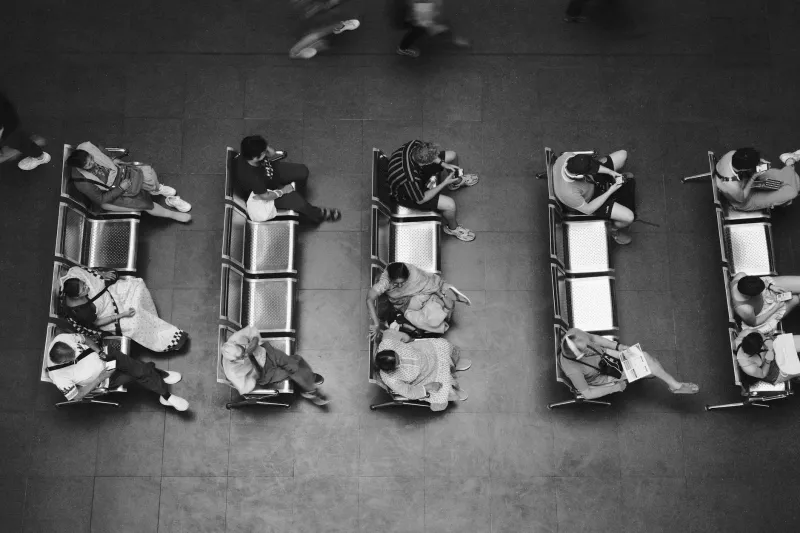
Modern waiting rooms, when they exist at all, are filled with people staring at screens. We've traded communal patience for individual distraction. The person next to you might as well be on another planet, absorbed in their digital universe.
What We Lost in the Optimization
This shift represents more than mere convenience—it's a fundamental change in how we relate to time and each other. The old waiting culture taught valuable lessons: that some things can't be rushed, that boredom is survivable, and that strangers often have interesting stories if you're stuck together long enough.
We've gained efficiency but lost something harder to quantify. The forced stillness of waiting rooms created space for reflection, observation, and unexpected human connection. It was democracy in action—rich and poor, young and old, all equally subject to the same temporal constraints.
The Patience Deficit
Modern Americans struggle with any delay that can't be skipped or fast-forwarded. We've become a culture of immediacy, where even two-day shipping feels sluggish. The ability to sit quietly with our thoughts, to observe our surroundings without digital mediation, has atrophied like an unused muscle.
The irony is that while we've eliminated most waiting, we've also eliminated many of the small moments that made life richer. The conversations with strangers, the time to think without distraction, the shared experience of being human together in the same physical space.
The New Waiting Game
Today's waiting happens differently—in digital queues we can't see, in loading screens and buffering videos. We wait for apps to update, for emails to send, for content to stream. But this waiting is isolated, individual, and often invisible.
We've solved the problem of wasted time but created a new problem: the loss of shared time. The old waiting rooms were inefficient, frustrating, and often uncomfortable. They were also uniquely human spaces where time moved at human speed and connections happened at human scale.
The next time you find yourself actually waiting—really waiting, without a screen to escape to—notice how it feels. Uncomfortable? Boring? Maybe. But also, perhaps, surprisingly peaceful. A small reminder of what America used to know about the value of sitting still.